
Hanoi Villages
Ban Yen Nhan Village | Unique Traditional Soy Sauce Village
24
Apr
Apr
Ban Yen Nhan Soy Sauce Village in Hung Yen province stands as one of the oldest and most iconic craft villages in Northern Vietnam. More than simply a production site, this soy sauce village near Hanoi represents a living museum of culture, craftsmanship, and agricultural wisdom that has been refined over more than seven centuries.
For travelers looking to step beyond typical tourist paths, this traditional village offers an immersive gateway into Vietnamese rural life, where every jar of soy sauce carries the imprint of heritage, meticulous skill, and the unmistakable flavor of the region.
Join our Hanoi tours to explore the sights, smells, and flavors of this cultural treasure, where every bottle of soy sauce embodies the craftsmanship and tradition of the region.
Where is Ban Yen Nhan Village?
Ban Yen Nhan Soy Sauce Village is situated in Ban Yen Nhan Town, My Hao District, Hung Yen Province, approximately 25km from central Hanoi. Its advantageous location has allowed the craft village to thrive, becoming both a production hub and a cultural tourism destination well-known across Northern Vietnam.
Today, the village produces over 11 million liters of soy sauce per year, generating an annual revenue of approximately 165 billion VND—a testament not only to the local demand for this beloved condiment but also to the enduring craftsmanship that sustains its reputation.
Often called the “pride of My Hao,” the village is recognized for providing one of the best-quality soy sauces in Vietnam, making it a popular stop on many Hanoi village tours.
Want to experience this unique soy sauce craft up close? Join our exclusive Ban Yen Nhan Soy Sauce Village Tour now and immerse yourself in hands-on activities, learn from local artisans, and bring home a bottle made with your own hands.
Exploring the Cultural Heart of Ban Yen Nhan Soy Sauce Village
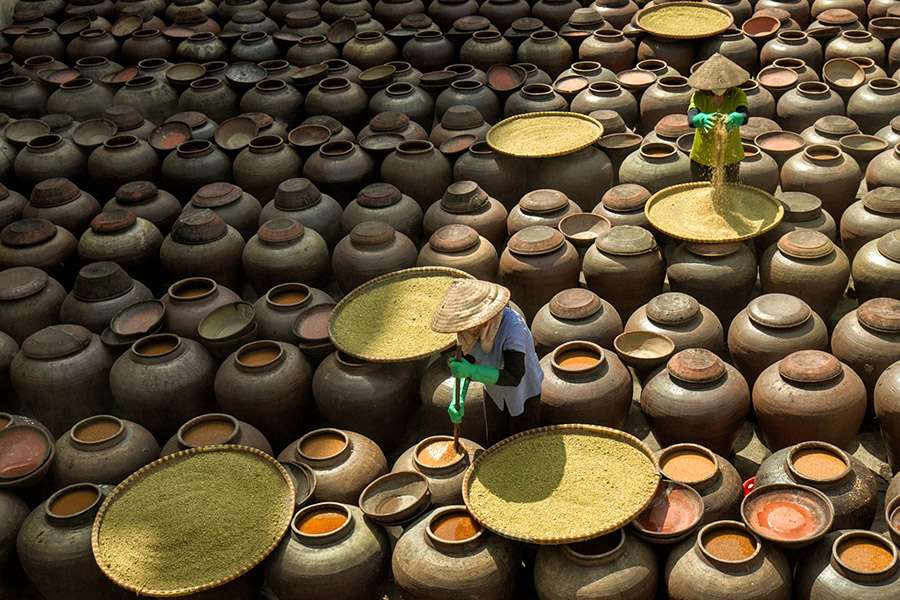
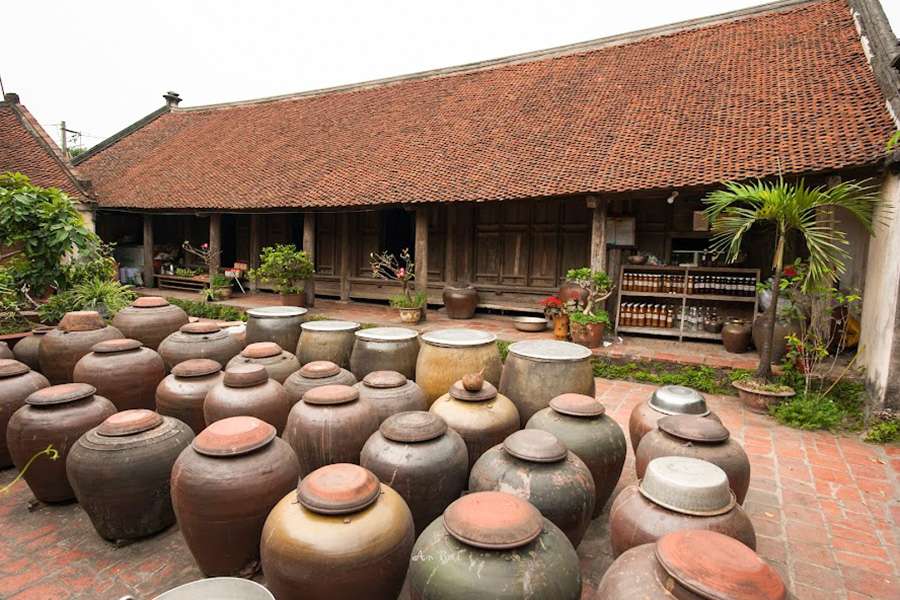
Stepping into Ban Yen Nhan Soy Sauce Village, visitors immediately sense the distinct aroma of fermenting rice and soybeans wafting through the air. Rows of clay jars line courtyards and gardens, basking under the harsh summer sun – each jar representing a batch of sauce that has been carefully nurtured for weeks or even months.
As one of Northern Vietnam’s most famous craft villages, Ban Yen Nhan is widely known among locals and visitors alike. Its signature product, “tương Bần” (Ban soy sauce), has long been considered a must-buy specialty when traveling around the Red River Delta or Hanoi.
Despite modern innovations, the village continues to preserve its ancient production methods. Families pass down techniques through generations, maintaining their connection to ancestry, tradition, and community identity.
What Makes Ban Yen Nhan Soy Sauce Special?
The enduring popularity of soy sauce from Ban Yen Nhan soy sauce village lies not only in its taste but also in its compelling story. Although many new seasonings and condiments have emerged, households throughout rural Northern Vietnam still rely on this sauce as an essential element of daily meals.
Some jokingly refer to it as “the soy sauce of the poor”—but in reality, it once served as tribute to kings. Over time, its image became linked to Vietnamese simplicity and humility, celebrated in poems, songs, and collective memory.
The distinctive characteristics of Ban soy sauce come from three key ingredients:
The ingredients for making Ban soy sauce include three main components:
- Premium Glutinous Rice: Only high-quality glutinous rice, particularly the “golden flower sticky rice” variety, is chosen to create the rich, sweet base of the sauce
- Pure Sea Salt: Locals carefully select clean, naturally harvested sea salt to ensure balanced salinity and proper fermentation.
- Local Soybeans: Thin-skinned golden soybeans – grown in nearby provinces – are roasted and fermented to create the characteristic umami aroma.
Although the ingredients are simple, the process is anything but. It requires deep knowledge of fermentation, weather patterns, and flavor development. Every batch takes 1–2 months to complete, depending on sunlight, temperature, and the skill of the artisan.
Learning the Process of Making Soy Sauce in Ban Yen Nhan Village
Soy sauce making in Ban Yen Nhan village has been passed down through generations for hundreds of years. The moment visitors set foot in this village, they are impressed by the aroma of soy sauce permeating the air, with rows of shops selling soy sauce and every household engaged in soy sauce making. All the soy sauce bottles here are produced by families in the village following the “from father to son” tradition.
Soy sauce production in this soy sauce village near Hanoi has been preserved for centuries. Every household is involved in the craft, and many families use techniques inherited from their ancestors.
Below is the authentic three-stage process that creates the iconic flavor of Ban soy sauce:
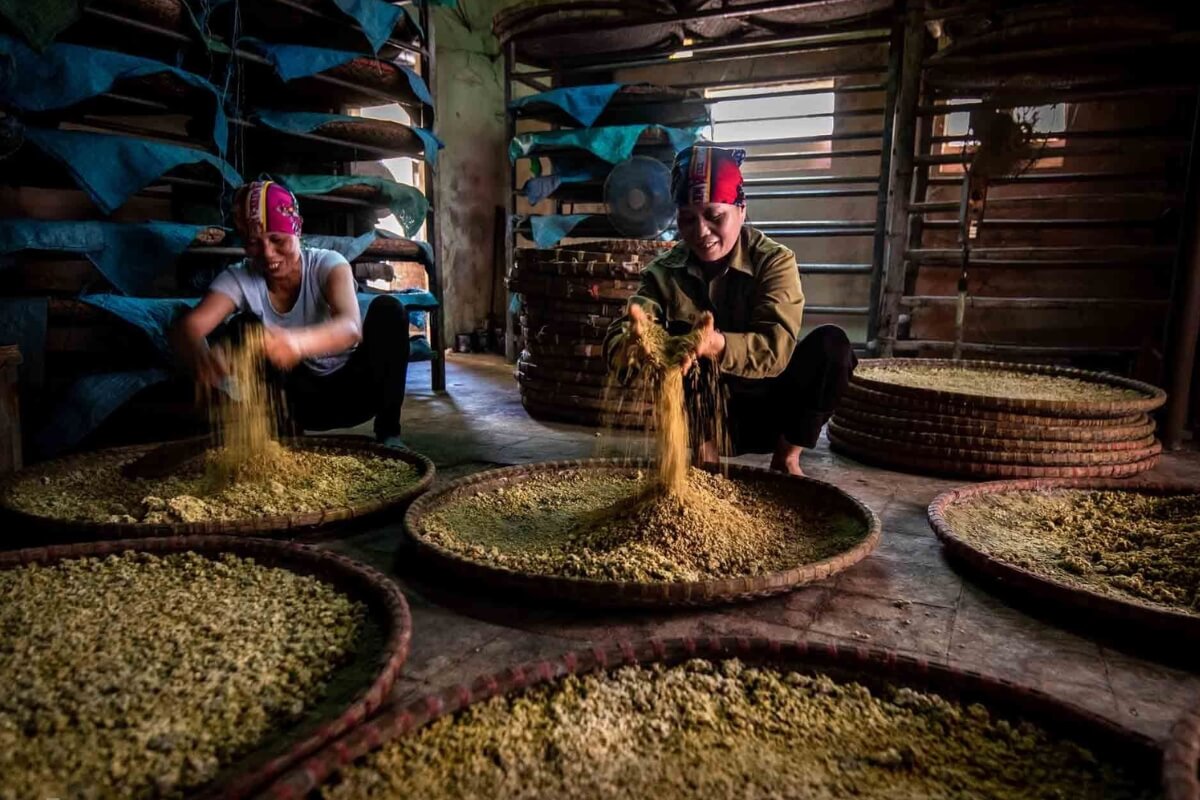
Stage 1: Preparing the Rice Mold (Nuôi mốc gạo)
Rice is soaked and cooked until it becomes a sticky paste. When cooled, it is spread out in large bamboo trays and allowed to ferment for two days and nights.
The rice turns golden with a floral aroma and soft texture.
Some families wrap the rice in dried longan leaves, believed to enhance sweetness and fragrance.
Stage 2: Fermenting the Soybeans (Ngâm đậu)
Soybeans are roasted until aromatic, then ground and soaked in earthen jars for 7–10 days.
As the mixture ferments, the soybeans gradually turn yellow-red and release a deep umami scent.
Stage 3: Combining & Sun-Drying the Mixture (Phơi tương)
The soybean liquid is carefully poured over the fermented rice mold and left for another day and night.
Then, the rice and soybeans are blended with pure sea salt and placed in clay jars under direct sunlight.
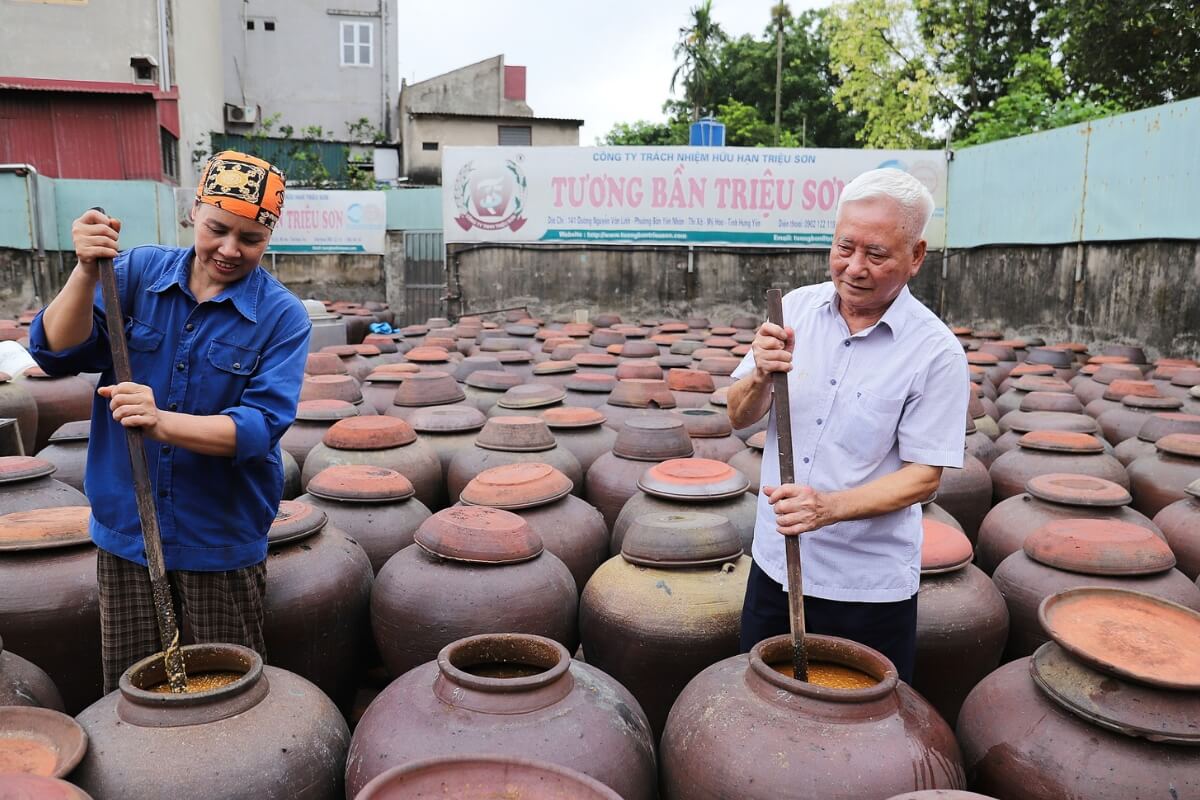
The jars must be stirred every day, allowing the sun to naturally enhance color and flavor over 4–6 weeks.
Sunlight is the most crucial factor in determining quality. Strong, consistent heat creates a rich, golden-brown color, a thick, smooth texture, a sweet aftertaste, and the distinctive aroma that defines Ban Yen Nhan Soy Sauce Village
Not enough sun results in a lighter color and milder flavor, delaying the fermentation cycle. This is why summer is considered the best season to produce soy sauce in the village.
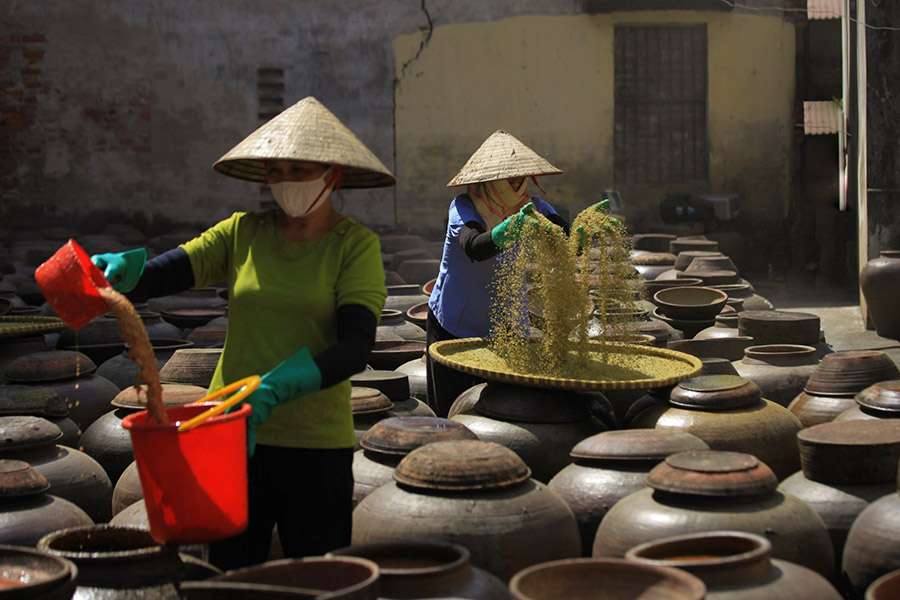
Sunlight is a crucial factor in determining the excellent flavor of Ban soy sauce. The stronger the sunlight, the more mature and golden the sauce becomes. If there is not enough sunlight, the sauce will be lighter in color, less fragrant, and take longer to ferment. Therefore, the ideal time to make Ban soy sauce is during the summer.
To meet the “standard” of Ban Yen Nhan soy sauce, it must have a deep yellow color, a sticky texture, a rich, sweet taste, and the rice grains should be soft. At this point, people bottle it, label it, and distribute it. Currently, in Ban Yen Nhan soy sauce village, there are about 300 workers who are preserving the traditional practices passed down by their ancestors. However, with the development of technology, people in the village have applied various machinery and equipment to increase the productivity and quality of this renowned condiment.
What To Do When Visiting Ban Yen Nhan Soy Sauce Village
Courtyards Filled With Clay Jars
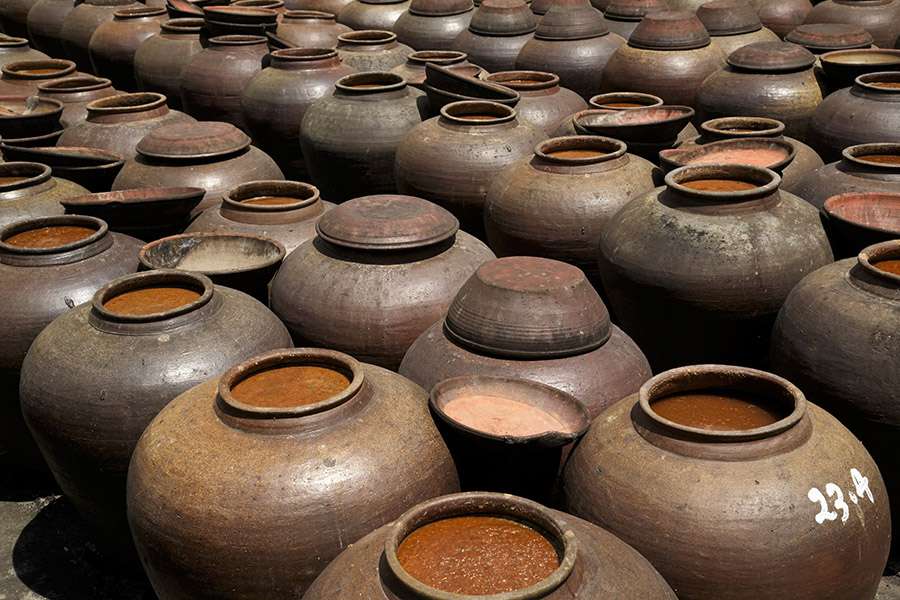
Most households in Ban Yen Nhan Soy Sauce Village own dozens, sometimes hundreds, of traditional clay jars. You’ll see them arranged neatly in open yards, on rooftops, and in large communal spaces.
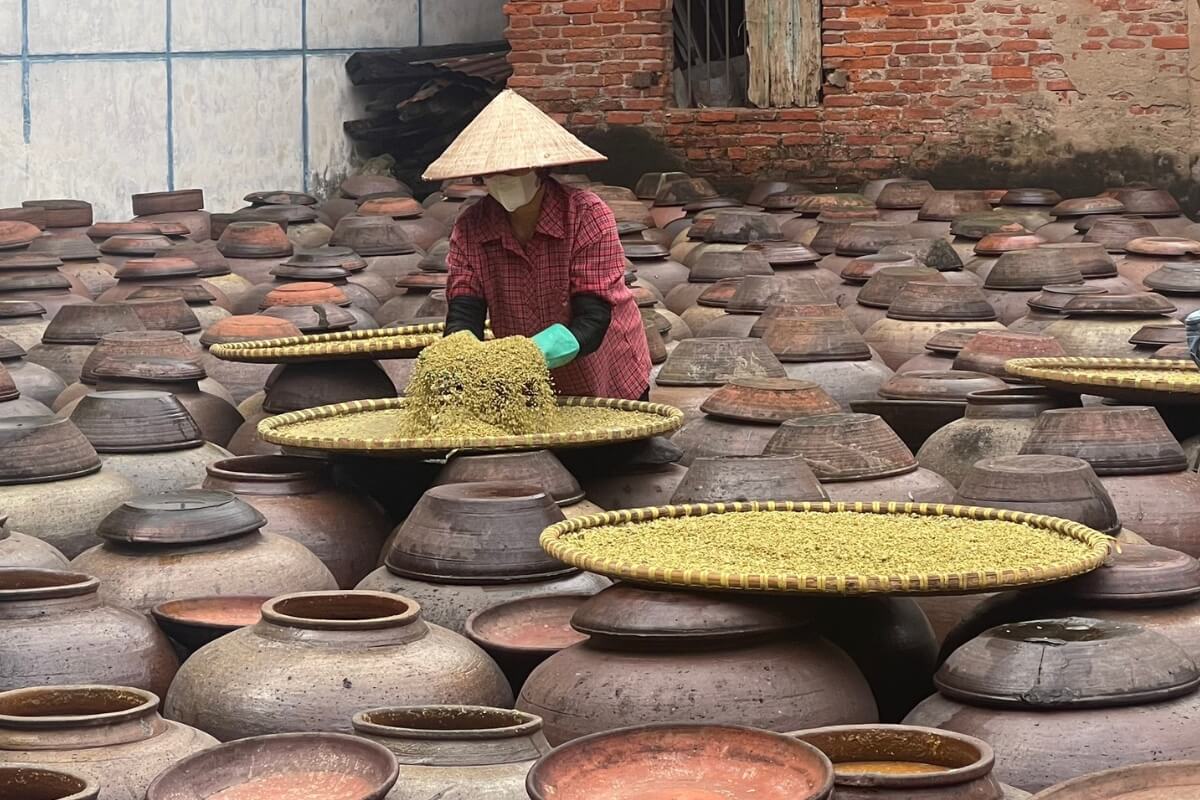
These jars, called chum tương, are essential for natural sun fermentation. During the summer months, the spectacle becomes even more striking—entire courtyards shimmering in golden-brown hues.
Experience the Daily Life of Local Artisans
Unlike staged cultural villages, Ban Yen Nhan remains a genuinely active craft community where the rhythm of daily life revolves around soy sauce making. As you walk through the village, you’ll notice locals calmly stirring large fermentation jars with long bamboo paddles, maintaining the perfect balance needed for each batch.
The aroma of roasted soybeans drifts through the air as men tend to iron pans over traditional stoves, ensuring each handful of beans reaches the ideal level of fragrance.
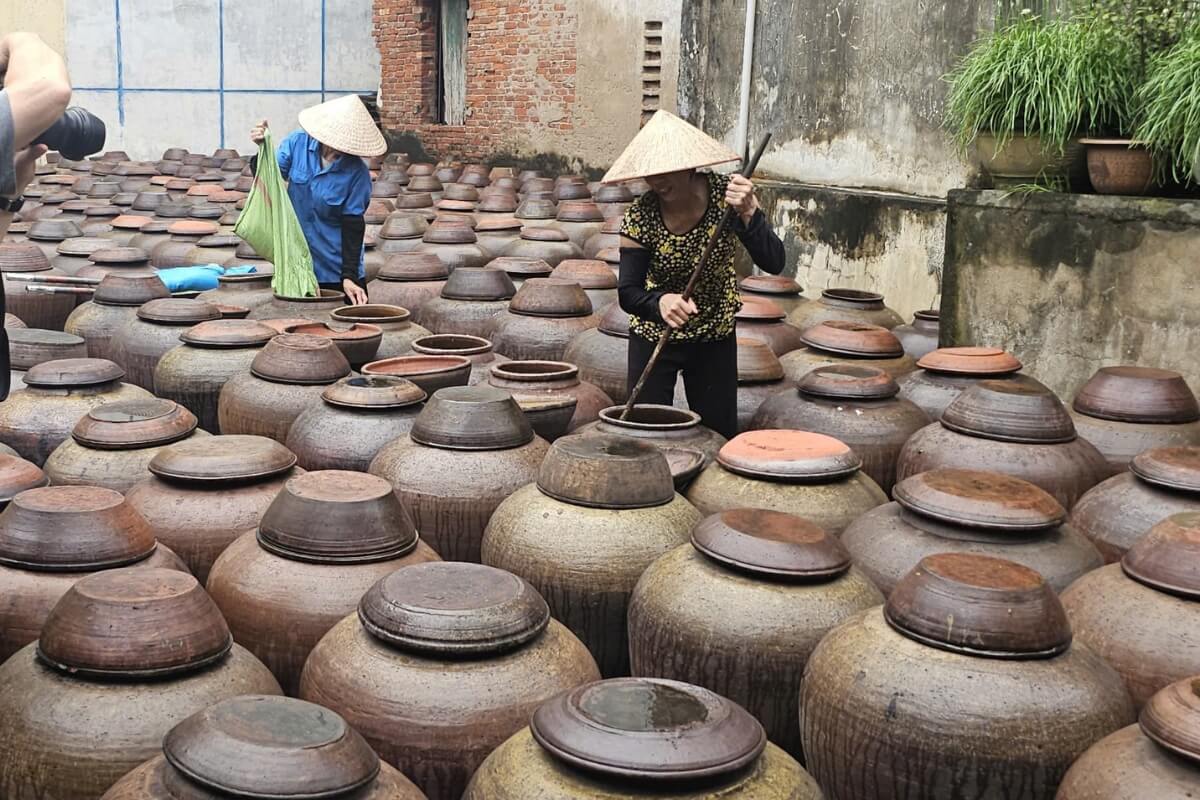
Every household in Ban Yen Nhan follows its own inherited techniques, creating subtle variations in taste, aroma, and color—proof that the beauty of the village lies not only in its tradition but also in the personal touch of each artisan family.
Locals love sharing tales about the village’s origin—how its soy sauce was once offered as tribute to the kings, or how families guarded fermentation secrets for generations. Visitors often gain insight into the craft’s spiritual significance, seasonal rituals, and the connection between weather and fermentation.
Tasting Sessions With Multiple Flavors
At nearly every home or workshop, visitors are warmly invited to sample different varieties of Ban soy sauce, allowing you to compare sweeter batches with saltier ones, explore the deeper richness of long-fermented jars versus the lighter notes of newly completed batches, and even distinguish the subtle nuances between entirely handmade sauces and those produced with modern semi-automated methods.
These tasting moments offer an eye-opening experience, revealing how factors such as fermentation time, sunlight intensity, and each family’s unique technique come together to shape the complexity and character of the final flavor.
Buying Authentic Souvenirs in Ban Yen Nhan Village
Travelers can purchase freshly made soy sauce directly from artisan families, bringing home a piece of Ban Yen Nhan’s culinary heritage.
Many households offer their products in beautifully presented forms, from traditional glass bottles and hand-labeled ceramic jars to elegant gift sets arranged on lacquered trays or bundled together with local rice wine and pickled vegetables.
Each item carries the personal touch of the family who crafted it, making these souvenirs far more meaningful than typical travel mementos—they represent the care, pride, and generations of craftsmanship that define the identity of the village.
A Perfect Place to Capture Beautiful Moments
Ban Yen Nhan Village is an exceptionally photogenic village, especially on bright, sun-filled days when the entire landscape comes alive with warm colors and textures.
Photographers are often captivated by the sight of clay jars arranged in precise geometric patterns, the golden glow of rice mold drying on bamboo mats, and the quiet concentration of artisans working inside rustic workshops.
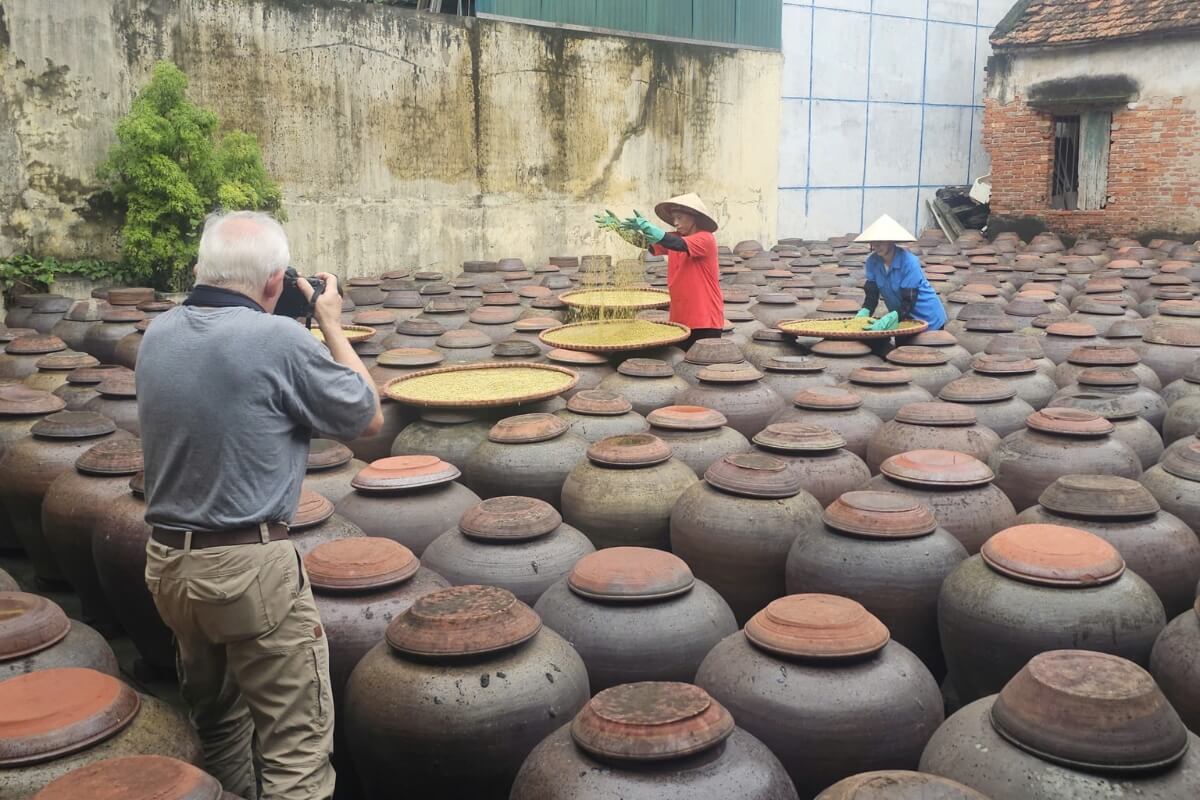
Traditional homes, bathed in sunlight and framed by earthy tones, add even more depth and authenticity to every shot. Whether you’re a professional photographer, a food blogger, or someone who simply loves capturing cultural beauty, this village offers endless compositions and storytelling moments that you won’t find anywhere else near Hanoi.
A journey to Ban Yen Nhan soy sauce village tour offers something far more meaningful than a simple day trip from Hanoi—it invites you into a world where heritage is woven into every gesture, every courtyard, and every sunlit jar of fermenting soy. This quiet village stands as a reminder that true craftsmanship doesn’t rush; it grows patiently through seasons, through family traditions, and through the dedication of those who have safeguarded its flavors for centuries.
Wandering its lanes, listening to artisans speak with pride, and tasting sauces shaped by time and sunlight, you begin to understand why this soy sauce village near Hanoi holds such a cherished place in the region’s culinary story. Whether you come for culture, photography, gastronomy, or simple curiosity, the experience lingers long after you leave—subtle, warm, and deeply human.
Looking to explore more hidden gems around Hanoi? Visit our Hanoi Village Tours to take you beyond the city into authentic rural life, where you’ll discover craft villages, ancient traditions, and genuine Vietnamese hospitality.