Hanoi Travel Blog - Hanoi Introduction & Information
Vietnam National Village for Ethnic Culture and Tourism – Ultimate Travel Guide Updated 2026
07
Mar
Mar
Vietnam is home to 54 officially recognized ethnic groups, each with its own traditions, languages, costumes, architecture, and spiritual beliefs. For travelers interested in culture and history, few places capture this diversity better than the Vietnam National Village for Ethnic Culture and Tourism.
Located just outside Hanoi, the Vietnam National Village for Ethnic Culture and Tourism offers visitors a rare opportunity to experience the traditions of many Vietnamese ethnic communities in one destination. Rather than being a typical museum, it functions as a living cultural complex, where traditional houses are reconstructed, festivals are celebrated, and artisans demonstrate crafts that have been passed down for generations.
This guide covers everything you need to know about visiting the Vietnam National Village for Ethnic Culture and Tourism, including history, highlights, architecture, ethnic communities, travel tips, and the best ways to Hanoi tours.
Overview of the Vietnam National Village for Ethnic Culture and Tourism
The Vietnam National Village for Ethnic Culture and Tourism is a large cultural complex located in Dong Mo, Son Tay, about 40 kilometers west of Hanoi. The project was designed as a national cultural center to preserve and promote the traditions of Vietnam’s many ethnic groups.
Covering over 1,500 hectares, the Vietnam National Village for Ethnic Culture and Tourism sits within a scenic area of rolling hills and lakes. The landscape was carefully chosen to reflect the geographical environments where many ethnic communities traditionally live, from mountainous areas to valleys and plains.
The main goal of the Vietnam National Village for Ethnic Culture and Tourism is to protect and celebrate the cultural identity of Vietnam’s ethnic minorities while creating an educational and tourism destination for both local and international visitors.
The complex includes reconstructed villages representing many ethnic groups, such as the Tay, Thai, Hmong, Dao, Ede, Ba Na, Khmer, and others. These traditional houses are built using authentic techniques and materials, giving visitors a realistic view of how people live in different regions of Vietnam.
Unlike conventional museums with glass displays, the Vietnam National Village for Ethnic Culture and Tourism emphasizes interactive cultural experiences. Visitors can observe traditional crafts, watch performances, taste regional cuisine, and sometimes interact directly with ethnic artisans who stay in the village during special cultural events.
Why the Vietnam National Village for Ethnic Culture and Tourism Is Unique
The Vietnam National Village for Ethnic Culture and Tourism is often described as a “mini Vietnam” because it represents the country’s cultural diversity in a single location.
Vietnam stretches from the mountains of the north to the Mekong Delta in the south, and each region has distinct traditions shaped by geography, climate, and history. Visiting all these communities across the country would take weeks of travel. However, the Vietnam National Village for Ethnic Culture and Tourism allows travelers to experience many of these cultural traditions within one day.
One of the most fascinating aspects of the Vietnam National Village for Ethnic Culture and Tourism is its architectural authenticity. Traditional houses are reconstructed according to the building styles of each ethnic group. Some are elevated wooden stilt houses found in the northern mountains, while others are long communal houses typical of Central Highlands communities.
Cultural demonstrations are another highlight. Visitors may see artisans weaving traditional fabrics, carving wood, playing indigenous musical instruments, or preparing regional dishes. These activities help preserve intangible heritage while allowing travelers to better understand the daily life of Vietnam’s ethnic minorities.
Because the Vietnam National Village for Ethnic Culture and Tourism is located close to Hanoi, it is an excellent destination for visitors who want to explore Vietnamese culture without traveling far into remote mountainous areas.
Architecture and Cultural Zones of the Village
The Vietnam National Village for Ethnic Culture and Tourism is divided into several major zones, each designed to showcase different aspects of Vietnamese heritage and tourism development.
Ethnic Villages Area
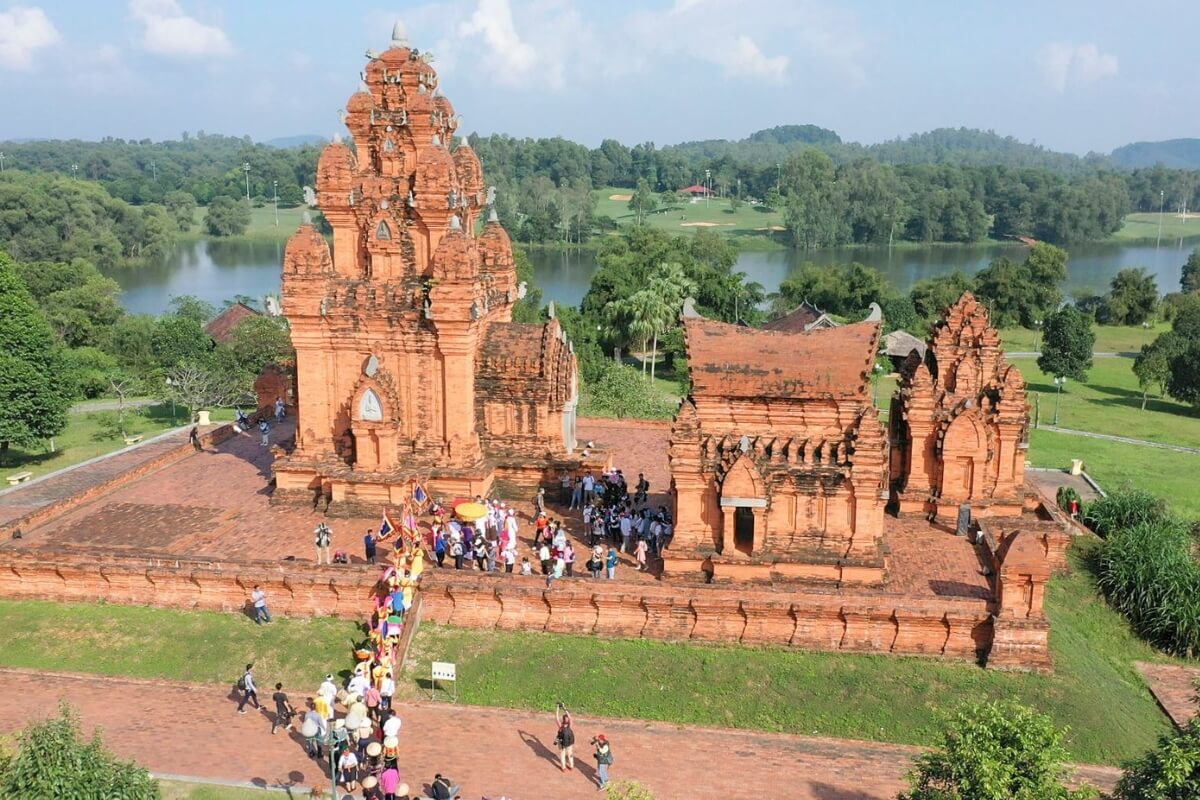
The most important section of the Vietnam National Village for Ethnic Culture and Tourism is the Ethnic Villages Area, where traditional houses of many ethnic communities are reconstructed.
These villages represent groups from different regions of Vietnam, including the northern mountains, central highlands, and southern delta areas. Walking through this zone feels like traveling across the country’s cultural landscape.
Visitors can explore distinctive houses such as:
- Tall stilt houses of the Thai and Tay ethnic groups
- Communal longhouses of the Ede people
- Unique earthen houses of some northern communities
- Elegant wooden structures decorated with symbolic carvings
Each architectural style reflects the lifestyle and environment of the ethnic group. For example, stilt houses protect residents from flooding and wild animals in mountainous regions.
Cultural and Entertainment Area
Another section of the Vietnam National Village for Ethnic Culture and Tourism is dedicated to cultural performances and public events. Traditional music, folk dances, and storytelling performances are occasionally held here.
During major Vietnamese holidays and festivals, the Vietnam National Village for Ethnic Culture and Tourism becomes particularly lively. Cultural showcases may include ceremonial dances, ethnic costume displays, and demonstrations of traditional rituals.
These events allow visitors to witness cultural traditions that might otherwise only be seen in remote villages.
Eco-Tourism Area
Surrounded by natural landscapes, the Vietnam National Village for Ethnic Culture and Tourism also incorporates eco-tourism elements. Lakes, forests, and hills provide a peaceful environment for walking and relaxation.
The natural setting enhances the experience of visiting traditional villages, making the complex feel closer to authentic rural landscapes rather than an urban museum.
Ethnic Groups Represented in the Village
Vietnam’s population includes 54 ethnic groups, and many of them are represented within the Vietnam National Village for Ethnic Culture and Tourism.
Tay and Nung
The Tay and Nung people traditionally live in northern mountainous regions. Their stilt houses are built from wood and bamboo, designed to accommodate large extended families.
Visitors at the Vietnam National Village for Ethnic Culture and Tourism can see traditional Tay houses, which are typically spacious and surrounded by agricultural landscapes.
Hmong
The Hmong ethnic group is well known for colorful textiles and intricate embroidery. Traditional Hmong houses are often built on mountain slopes and feature compact wooden structures.
Cultural displays in the Vietnam National Village for Ethnic Culture and Tourism sometimes include demonstrations of Hmong weaving and fabric dyeing techniques.
Dao
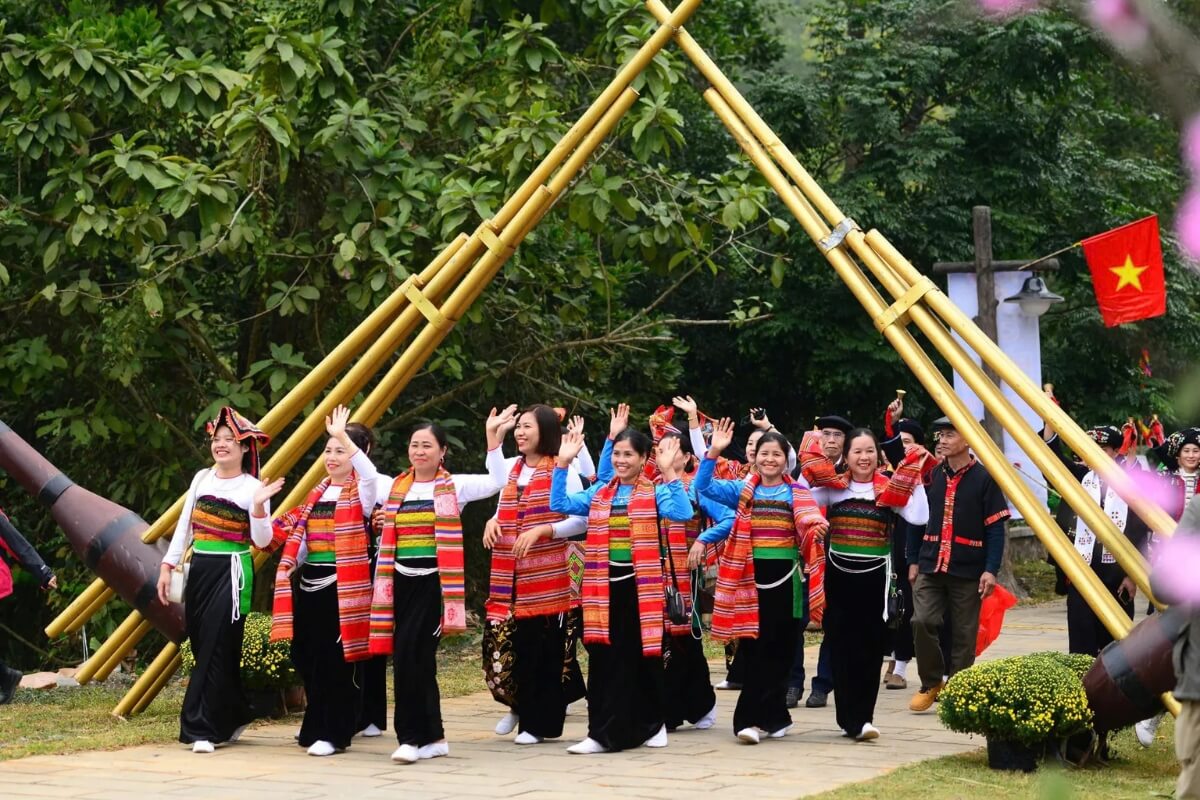
The Dao people are recognized for their vibrant ceremonial costumes and spiritual traditions. In the Vietnam National Village for Ethnic Culture and Tourism, visitors can learn about Dao architecture, rituals, and craftsmanship.
Ede and Ba Na
From the Central Highlands of Vietnam, the Ede and Ba Na communities are known for long communal houses where extended families live together.
These houses can reach impressive lengths and serve as both living spaces and community gathering places.
Seeing these architectural structures within the Vietnam National Village for Ethnic Culture and Tourism gives visitors a glimpse into the social structure of Central Highland cultures.
Cultural Activities and Experiences at the Vietnam National Village for Ethnic Culture and Tourism
One of the most rewarding aspects of visiting the Vietnam National Village for Ethnic Culture and Tourism is the opportunity to experience living traditions rather than simply observing static displays. Unlike a typical museum, the village is designed as an immersive cultural environment where visitors can explore the everyday life, rituals, and craftsmanship of Vietnam’s many ethnic communities.
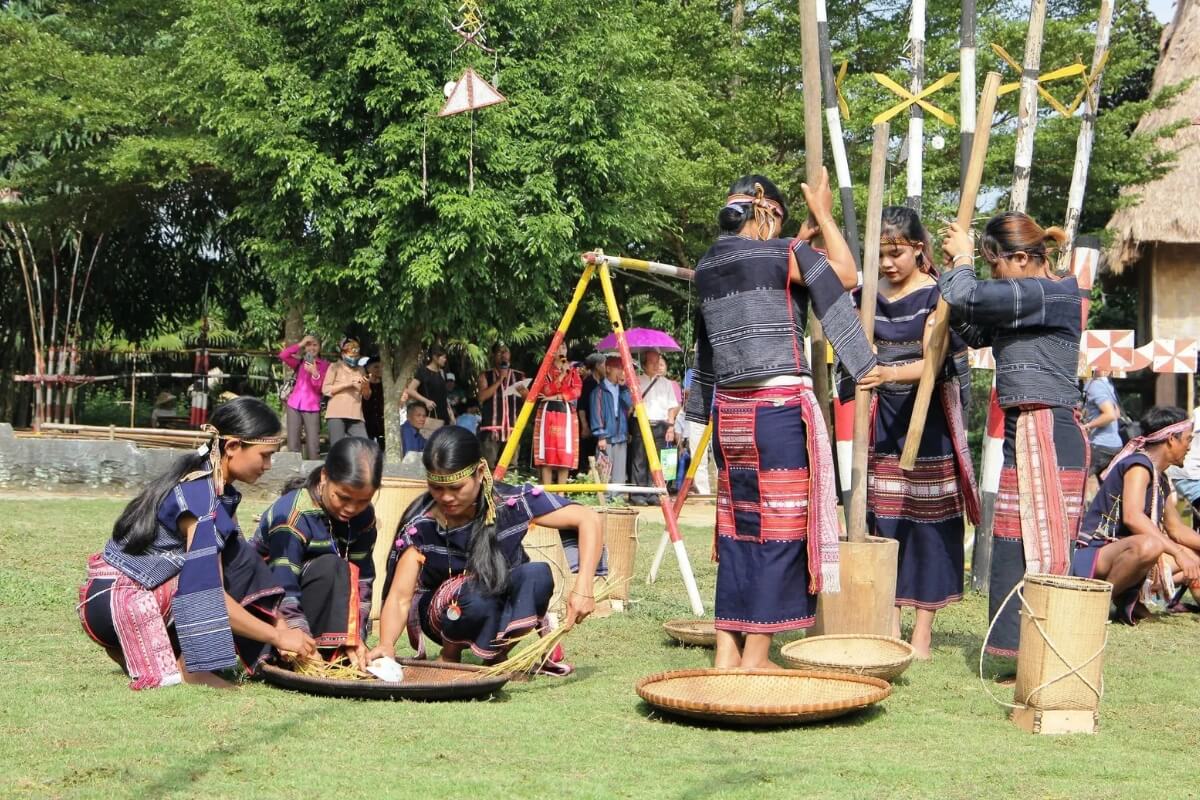
The Vietnam National Village for Ethnic Culture and Tourism regularly hosts cultural demonstrations, performances, and interactive experiences that bring the country’s diverse heritage to life. From traditional music and dance to craft workshops and local cuisine, these activities allow travelers to gain a deeper appreciation of the customs that have shaped Vietnam’s cultural identity for centuries.
Traditional Music and Dance Performances
Music and dance play an important role in the cultural expression of many Vietnamese ethnic groups, and the Vietnam National Village for Ethnic Culture and Tourism often features performances that showcase these traditions.
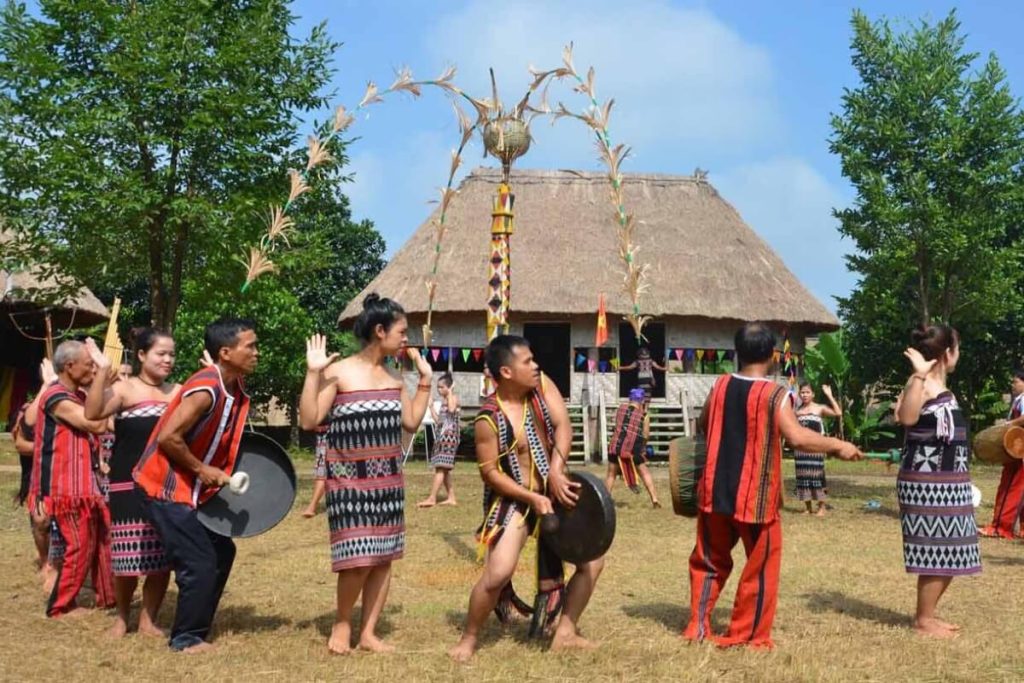
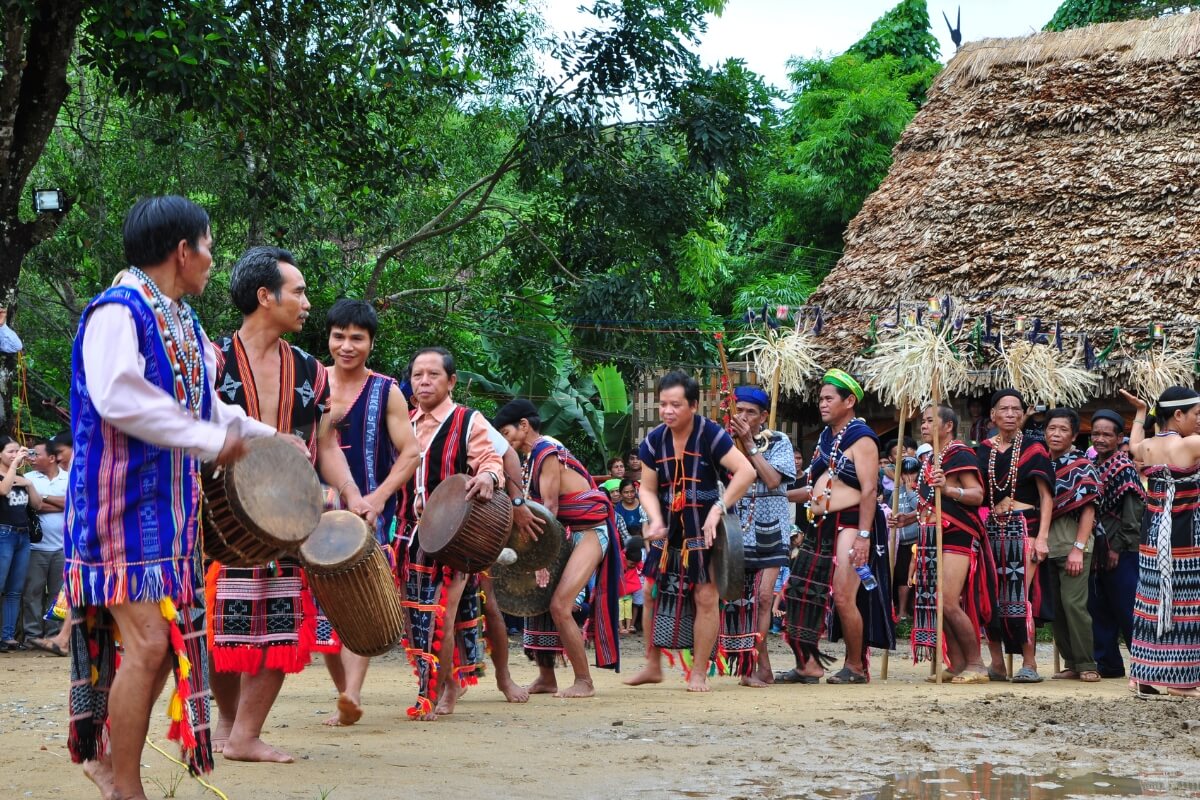
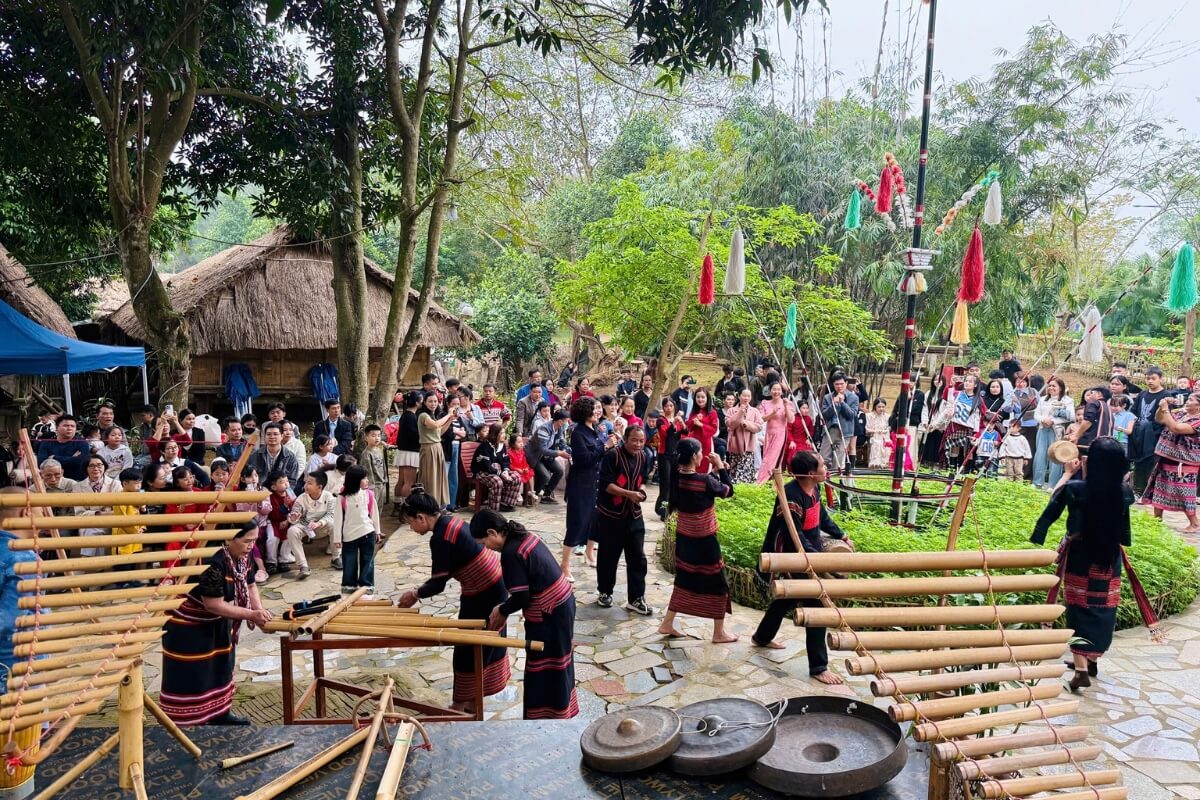
Visitors may have the chance to watch captivating folk dances accompanied by traditional instruments such as bamboo flutes, gongs, drums, and stringed instruments. Each ethnic group has its own musical style and ceremonial dance, often connected to agricultural cycles, spiritual beliefs, or community celebrations.
For example, Central Highlands communities such as the Ede or Ba Na are known for their powerful gong performances, which are recognized as part of UNESCO’s intangible cultural heritage. During special events at the Vietnam National Village for Ethnic Culture and Tourism, these performances recreate the atmosphere of traditional festivals held in the highland villages.
In northern ethnic communities, music often accompanies graceful group dances performed during celebrations or village gatherings. Watching these performances provides insight into how music, rhythm, and storytelling are woven into the cultural life of different ethnic groups.
Traditional Craft Demonstrations
Another highlight of visiting the Vietnam National Village for Ethnic Culture and Tourism is witnessing the craftsmanship that has been preserved through generations.
Many ethnic groups in Vietnam are renowned for their handmade products, including textiles, bamboo tools, wooden carvings, and silver jewelry. At the village, visitors may observe artisans demonstrating traditional techniques such as weaving, embroidery, basket-making, and wood carving.
Textile weaving is particularly fascinating. Ethnic groups such as the Hmong, Thai, and Dao produce intricate fabrics using hand-operated looms. These textiles often feature symbolic patterns and vibrant colors that represent stories, beliefs, and cultural identity.
Watching these artisans at work offers a rare glimpse into traditional production methods that are increasingly rare in modern society. The Vietnam National Village for Ethnic Culture and Tourism plays an important role in preserving these skills and introducing them to new audiences.
Ethnic Culinary Experiences
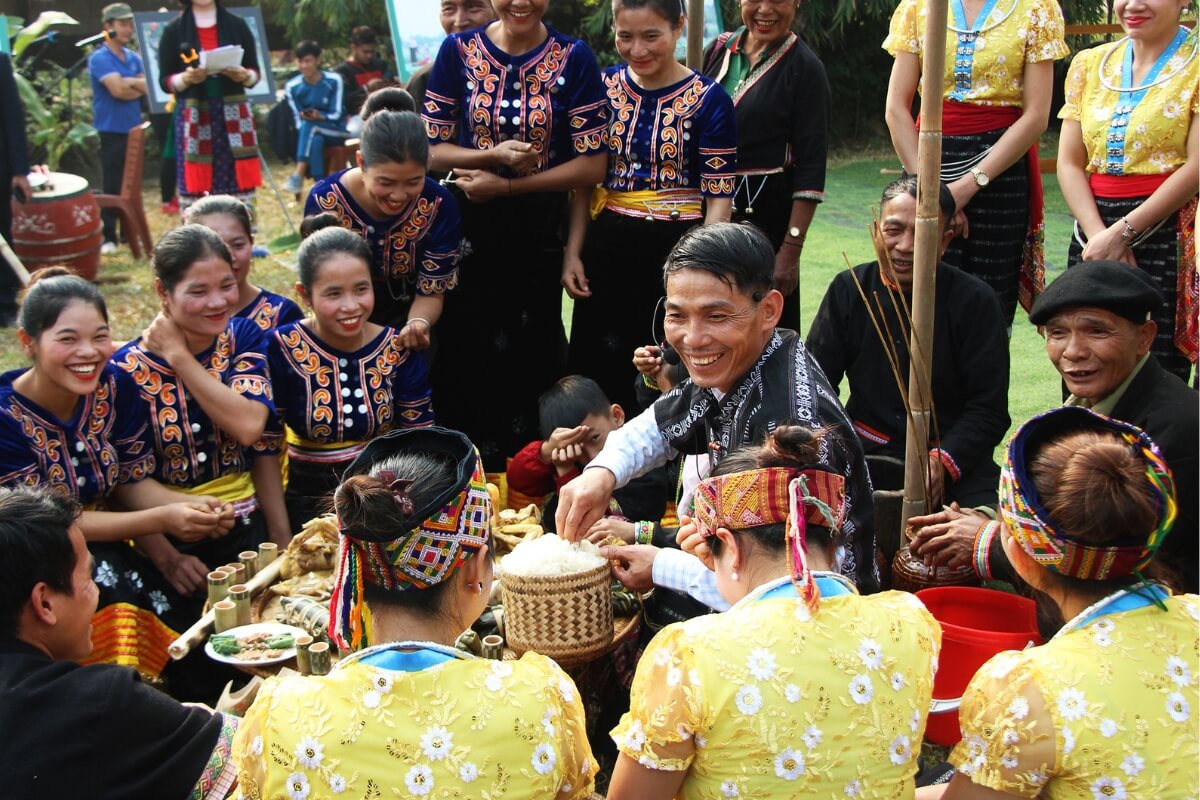
Food is another important part of cultural exploration at the Vietnam National Village for Ethnic Culture and Tourism. During special cultural events and festivals, visitors can sample regional dishes that reflect the culinary traditions of various ethnic communities.
Different ethnic groups across Vietnam prepare food using local ingredients and cooking techniques that have been shaped by their environment. Mountain communities often rely on grilled meats, sticky rice, forest vegetables, and herbs, while Central Highlands cuisine may feature dishes cooked in bamboo tubes or over open fires.
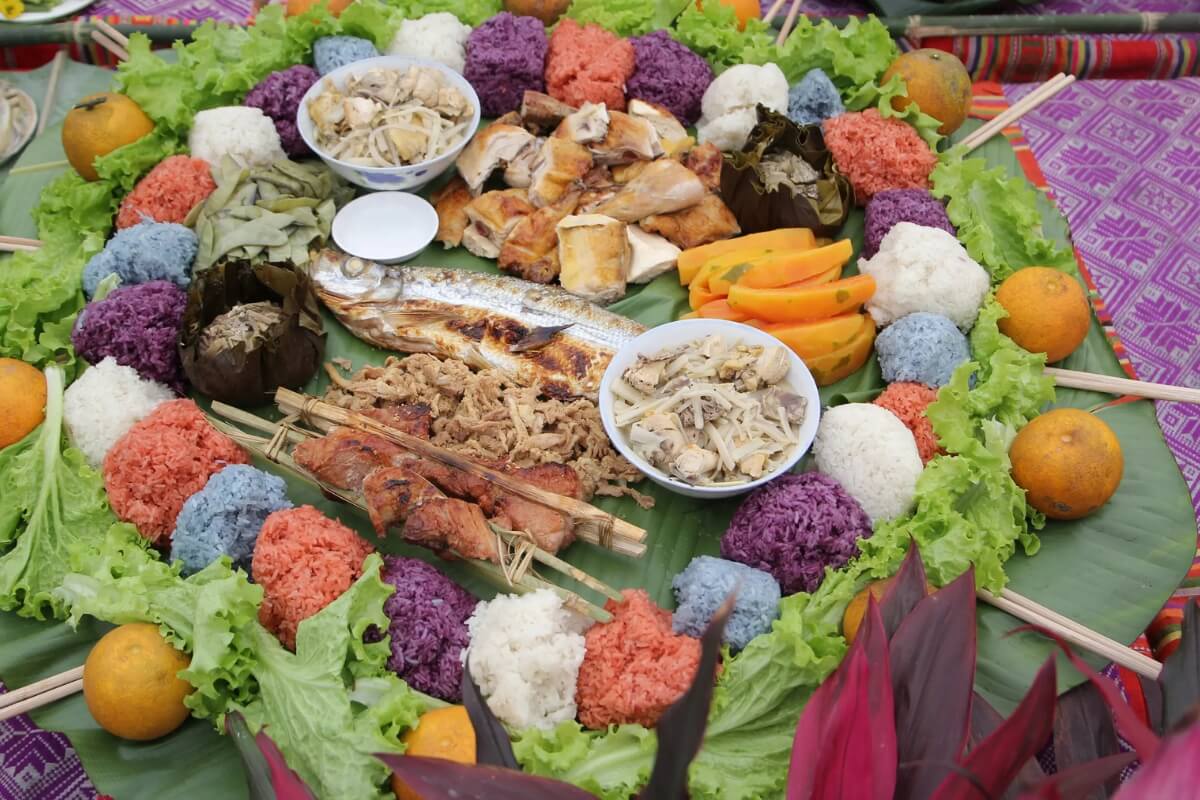
Visitors to the Vietnam National Village for Ethnic Culture and Tourism may have the opportunity to taste traditional dishes prepared according to authentic recipes. These culinary experiences provide insight into how food connects to cultural identity, community celebrations, and daily life in ethnic villages.
Cultural Festivals and Seasonal Events
Throughout the year, the Vietnam National Village for Ethnic Culture and Tourism hosts cultural festivals that celebrate the traditions of different ethnic groups.
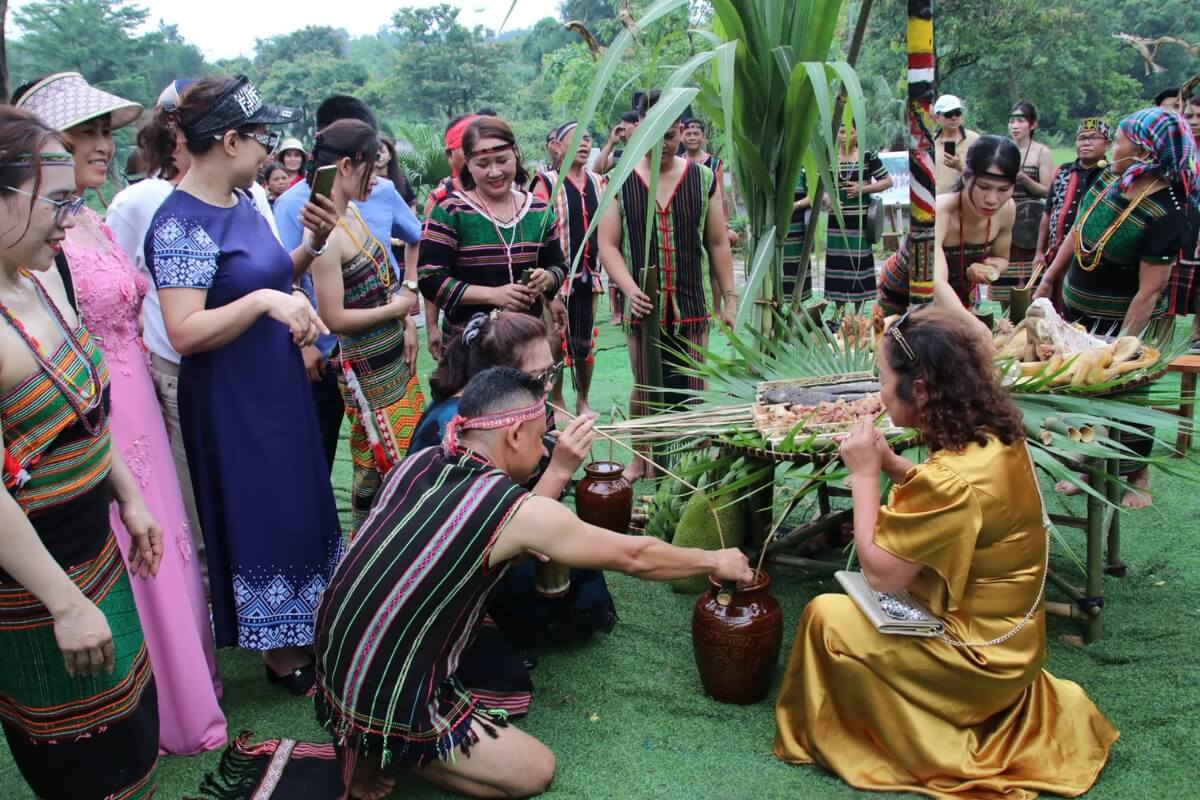
These events often recreate traditional ceremonies such as harvest festivals, New Year celebrations, or spiritual rituals that mark important moments in community life. During these festivals, the village becomes lively with colorful costumes, music performances, ceremonial dances, and cultural exhibitions.
In March 2026, the village hosts a special program titled “Spring and Youth” (March 1–31), featuring more than 100 representatives from 16 ethnic groups across Vietnam. Highlights include the Muong Spring Festival (March 7–8) with the traditional Vi Du ritual for blessings and good fortune, as well as folk performances like “Spring Flowers of Muong Land.” Visitors can also experience the S’tieng Spring blessing ceremony on March 22, cultural shows, brocade fashion displays, and weekend performances celebrating the cultures of the Central Highlands and northern ethnic groups.
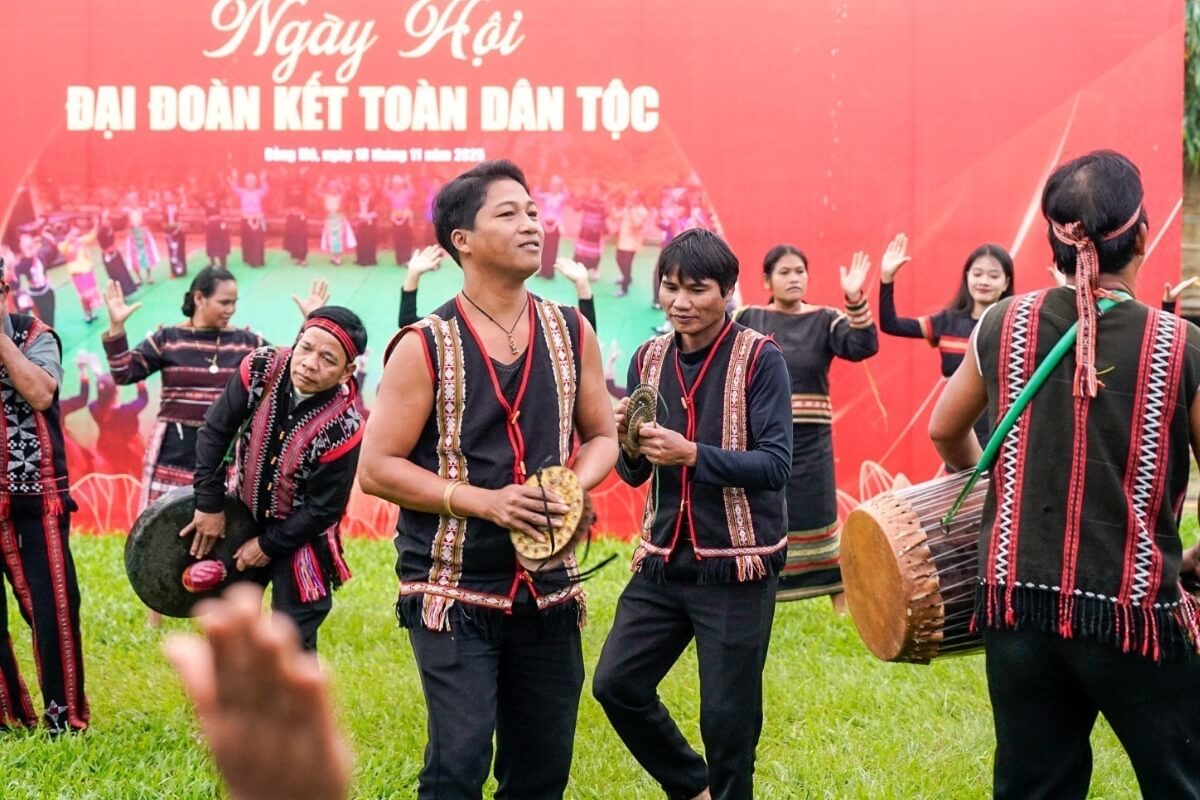
Visitors to the Vietnam National Village for Ethnic Culture and Tourism can enjoy a variety of cultural performances, craft demonstrations, and interactive experiences that showcase the traditions of Vietnam’s ethnic communities. Activities often include folk music, traditional dances, brocade costume displays, local cuisine introductions, and hands-on cultural games.
These events create a vibrant cultural atmosphere and allow travelers to experience Vietnam’s rich ethnic heritage engagingly and authentically.
Interactive Cultural Learning
The Vietnam National Village for Ethnic Culture and Tourism is also an educational destination where visitors can learn about the traditions, beliefs, and daily life of Vietnam’s ethnic minorities.
Informational displays and guided tours provide background on architecture, social structures, and spiritual practices. Some areas allow visitors to enter traditional houses and observe how living spaces are arranged according to cultural customs.
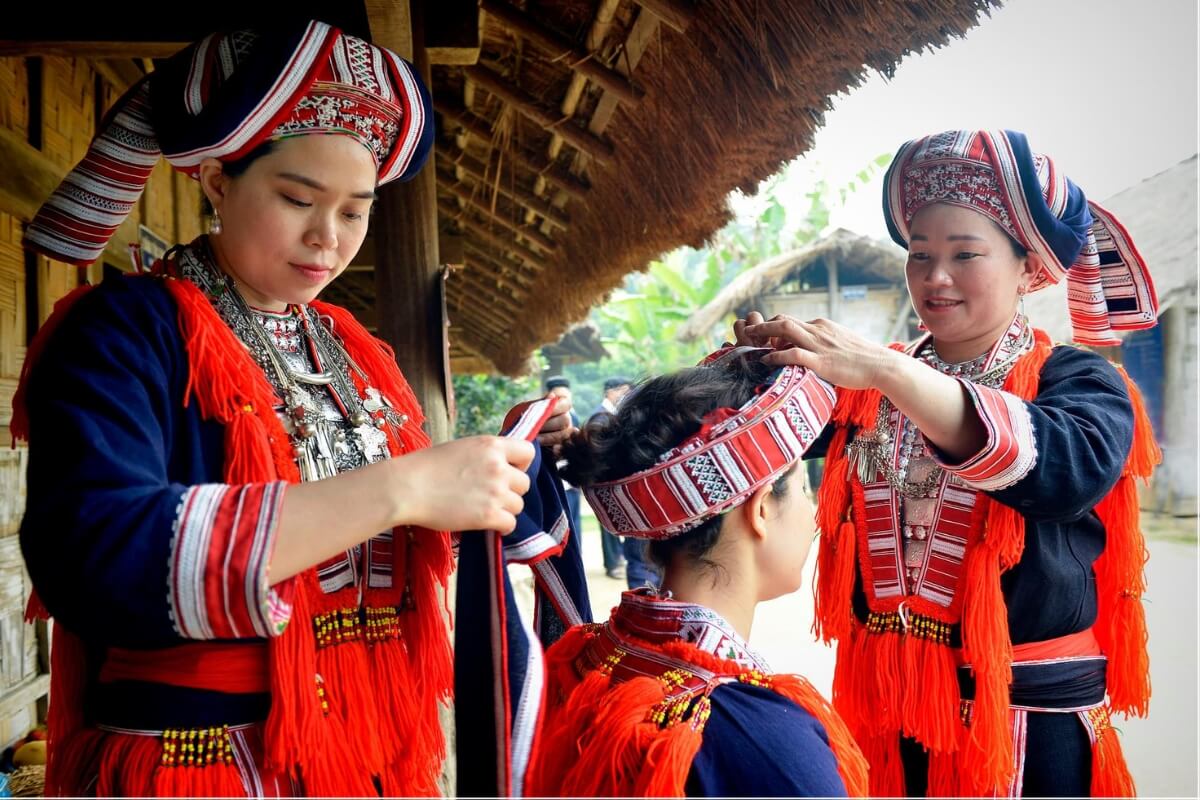
For travelers who want to understand Vietnam beyond its major cities and tourist attractions, the Vietnam National Village for Ethnic Culture and Tourism offers a valuable cultural context. The interactive nature of the village helps visitors appreciate how traditions continue to shape the lives of many communities across the country.
Photography and Cultural Exploration
With its traditional architecture, colorful costumes, and scenic natural surroundings, the Vietnam National Village for Ethnic Culture and Tourism is also an excellent destination for photography.
Travelers interested in cultural photography will find countless opportunities to capture images of traditional houses, handicrafts, performances, and landscapes. The peaceful environment surrounding the village’s lakes and hills further enhances the visual experience.
For many visitors, simply walking through the Vietnam National Village for Ethnic Culture and Tourism and exploring the reconstructed ethnic villages is a rewarding cultural journey. Each section of the complex reveals a different aspect of Vietnam’s heritage, allowing travelers to appreciate the remarkable diversity that defines the country.
Travel Tips for Visiting the Village
Because the Vietnam National Village for Ethnic Culture and Tourism covers a large area, comfortable walking shoes are recommended.
Visitors should plan to spend at least half a day exploring the complex to fully appreciate its architecture and cultural displays.
Bringing a camera is highly recommended, as the village offers many picturesque scenes of traditional houses and landscapes.
If possible, check the schedule of cultural events before visiting. Festivals and cultural performances greatly enhance the experience of exploring the Vietnam National Village for Ethnic Culture and Tourism.
Frequently Asked Questions about the Vietnam National Village for Ethnic Culture and Tourism
Where is the Vietnam National Village for Ethnic Culture and Tourism located?
The Vietnam National Village for Ethnic Culture and Tourism is located in Dong Mo, Son Tay town, about 40 km west of Hanoi city center. It takes roughly 1 hour by car to reach the site, making it a convenient day trip from Hanoi.
What is the Vietnam National Village for Ethnic Culture and Tourism?
The Vietnam National Village for Ethnic Culture and Tourism is a cultural complex that showcases the traditions, architecture, and lifestyles of Vietnam’s 54 ethnic groups. It functions as a living museum, where visitors can explore traditional houses, cultural performances, crafts, and festivals.
How long should I spend visiting the village?
Most travelers spend 3–4 hours exploring the Vietnam National Village for Ethnic Culture and Tourism. If you want to attend cultural performances or festivals, planning half a day is recommended.
How do I get to the Vietnam National Village for Ethnic Culture and Tourism?
The Vietnam National Village for Ethnic Culture and Tourism is located about 40 km west of Hanoi. Visitors can reach the site by car, taxi, or guided tour, and the trip usually takes around one hour. Many travelers join tours from Hanoi that combine the village with nearby attractions such as Ba Vi National Park or Son Tay Ancient Citadel.
When is the best time to visit the Vietnam National Village for Ethnic Culture and Tourism?
The Vietnam National Village for Ethnic Culture and Tourism can be visited all year, but spring (February–April) is considered the best time due to traditional festivals and cultural events. Autumn (September–November) is also a great season, offering cooler weather and comfortable conditions for exploring the large cultural complex.
What can visitors experience at the village?
Visitors to the Vietnam National Village for Ethnic Culture and Tourism can explore traditional ethnic houses, watch cultural performances, see craft demonstrations, and learn about the diverse heritage of Vietnam’s ethnic communities.
Is the Vietnam National Village for Ethnic Culture and Tourism worth visiting?
Yes. The Vietnam National Village for Ethnic Culture and Tourism is one of the best places near Hanoi to understand the cultural diversity of Vietnam in a single destination, especially for travelers interested in history, architecture, and ethnic traditions.
Can I visit the village as a day trip from Hanoi?
Yes. The Vietnam National Village for Ethnic Culture and Tourism is a popular day trip from Hanoi, thanks to its short travel distance and cultural significance. Many visitors combine the trip with nearby attractions in Son Tay or Ba Vi.
Exploring the Vietnam National Village for Ethnic Culture and Tourism is one of the best ways to understand the cultural diversity of Vietnam in a single destination. Whether you are passionate about culture, photography, history, or architecture, the Vietnam National Village for Ethnic Culture and Tourism offers a unique experience that reveals the true diversity of Vietnam. Visit our official website of Hanoi Local Tour: https://www.hanoilocaltour.com/, to have suggestions from our local experts today!