Hanoi Travel Blog - Hanoi Introduction & Information
Tet Holiday in Vietnam – 15 Best Things to Do & What To Know During Lunar New Year
20
Nov
Nov
Known internationally as the Vietnamese Lunar New Year, Tet is much more than a public holiday. It is a time for family reunions, honoring ancestors, welcoming a fresh beginning and wishing one another health, happiness, and prosperity. For international travelers, it offers a fascinating opportunity to see Vietnam through traditions that have been passed down through generations. Whether you are visiting for the festive atmosphere or looking to discover the country’s cultural heritage, exploring our Hanoi tours is a wonderful way to experience the local traditions, history, and everyday life of Vietnam.
However, visiting Vietnam during the Tet holiday is different from traveling at other times of the year. Some businesses temporarily close, transport services become busier before the holiday, and everyday life follows a different rhythm. At the same time, visitors can enjoy beautifully decorated streets, seasonal food, traditional ceremonies and a quieter atmosphere in some major cities.
So, is Tet a good time to visit Vietnam? What are the best things to do during the Tet holiday, and how can you make the most of your journey?
This guide covers everything you need to know about the Lunar New Year in Vietnam, including its traditions, cultural experiences, regional celebrations and practical travel advice.
What Is the Tet Holiday in Vietnam?
Tet, officially known as Tet Nguyen Dan (Vietnamese: Tết Nguyên Đán), marks the beginning of the Lunar New Year in Vietnam. It usually falls between late January and mid-February, depending on the lunar calendar.
As the most important celebration on the Vietnamese calendar, Tet represents a fresh beginning. It is traditionally associated with the arrival of spring, family reunions, gratitude to ancestors and hopes for a prosperous year ahead.
Unlike the Western New Year, which is generally celebrated on January 1, the Tet holiday follows the lunisolar calendar. Its exact date changes every year, and preparations often begin several weeks before the first day of the new lunar year.
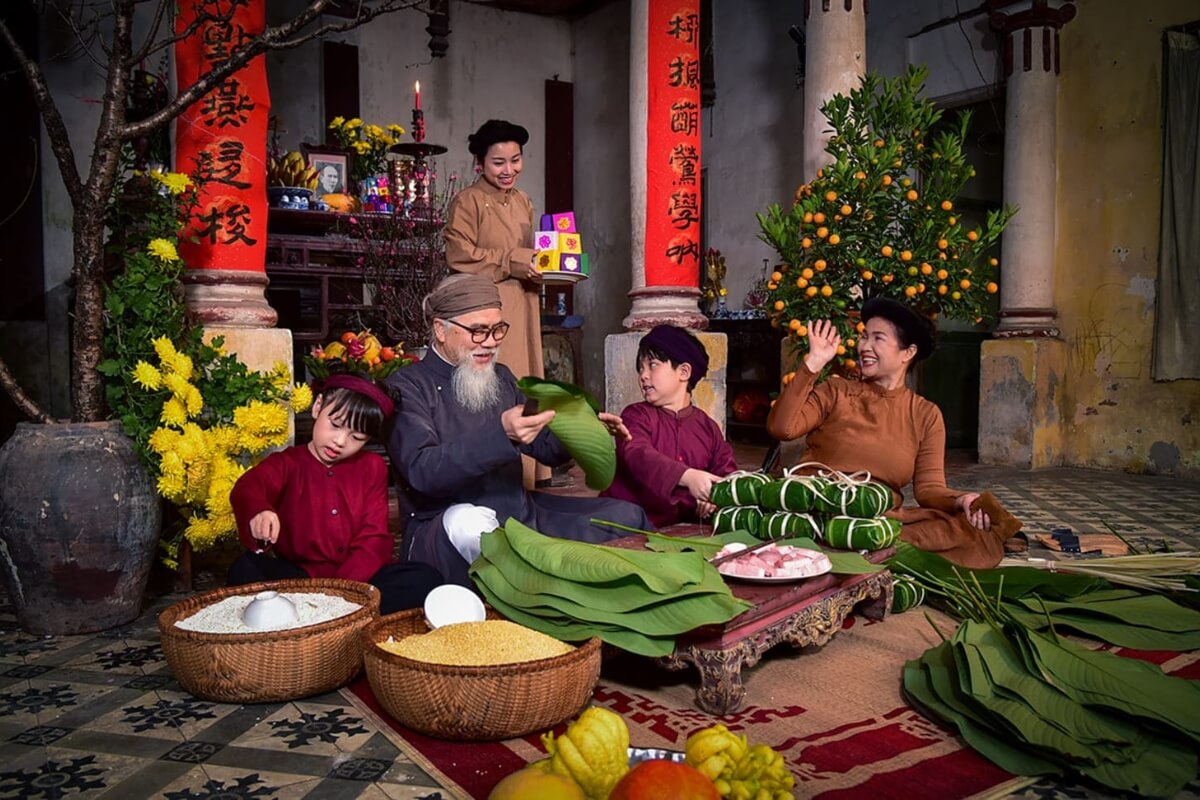
For Vietnamese people, Tet is a deeply personal occasion. Those who live and work far from their hometowns often make the journey home to spend time with their parents, grandparents and relatives. Families prepare special meals, clean and decorate their homes, visit temples and exchange New Year wishes.
The celebration also has a strong connection with Vietnamese beliefs about luck and new beginnings. Many people pay attention to the first visitor entering their home, the words they use and the activities they undertake during the opening days of the year.
For travelers, understanding this meaning makes the experience much more rewarding. Rather than seeing Tet simply as a festival, visitors can appreciate it as a reflection of Vietnamese family values, cultural identity and traditional ways of life.
When Is Tet Holiday in Vietnam?
The Tet holiday does not have a fixed date on the Gregorian calendar. Its timing is determined by the lunar calendar, which means the first day of the Vietnamese New Year changes annually.
It generally takes place between late January and mid-February. The official public holiday usually lasts several days, although celebrations and family preparations extend beyond that period.
For example, Tet in 2026 falls on February 17, while the first day of Tet in 2027 falls on February 6.
How Long Does the Tet Holiday Last?
Although the official public holiday is relatively short, the wider Tet season can last for several weeks.
Preparations usually begin well before New Year’s Eve. Families clean their homes, shop for food, purchase new clothes and decorate their living spaces with flowers and traditional ornaments.
The most important celebrations take place around three periods:
Before Tet: This is one of the liveliest times to explore Vietnamese cities. Traditional markets become crowded with people buying flowers, food, decorations and gifts. Streets are filled with peach blossoms, kumquat trees and festive displays.
New Year’s Eve: Families gather for reunion dinners and traditional ceremonies to welcome the new lunar year. At midnight, fireworks and public celebrations may take place in selected locations.
The first days of the New Year: These days are traditionally reserved for family visits, ancestor worship, temple visits and exchanging New Year wishes. Many independent businesses and family-run restaurants may close temporarily.
Understanding these different stages can help travelers decide when to arrive. If you want to experience the excitement of preparations and traditional markets, visiting before New Year’s Eve is particularly rewarding. If you prefer quieter streets and a more peaceful atmosphere, the first few days of the New Year may be more suitable.
Why Is Tet So Important in Vietnamese Culture?
To understand the Lunar New Year in Vietnam, it is important to look beyond the celebrations themselves.
Tet represents three important aspects of Vietnamese culture: family, gratitude and the hope for a better future.
Family Reunion and Togetherness
Family is at the heart of Tet. For many Vietnamese people, returning home for the New Year is one of the most important journeys of the year.
People working in major cities such as Hanoi and Ho Chi Minh City often travel back to their hometowns to reunite with their families. Even those living overseas may return to Vietnam if circumstances allow.
The reunion dinner is one of the most meaningful moments. Several generations sit together around the same table, sharing traditional dishes and talking about the year that has passed.
This emphasis on family makes Tet particularly special. It is not simply about celebrating a new calendar year but about reconnecting with the people who matter most.
Honoring Ancestors and Preserving Traditions
Ancestor worship is another central element of the Tet holiday.
Many Vietnamese households maintain an ancestral altar, which is carefully cleaned and decorated before the New Year. Families prepare flowers, fruit, incense and traditional food as offerings to express gratitude and remember previous generations.
These customs reflect the importance of family heritage and respect for ancestors in Vietnamese society.
Visitors may notice small offerings, incense and ceremonial arrangements in homes, temples and pagodas. These practices are an important part of the cultural landscape and should be approached with respect.
Welcoming Good Fortune and New Beginnings
Tet is also associated with luck, prosperity and positive energy.
People traditionally clean their homes before the New Year to leave behind the difficulties of the previous year. New clothes, fresh flowers and colorful decorations symbolize renewal.
Red and gold are particularly common colors during the celebrations. Red is associated with good fortune, while gold represents wealth and prosperity.
Many families also exchange lucky money, known as li xi, and offer one another wishes for health, happiness and success.
For international visitors, these traditions provide an interesting insight into how Vietnamese people welcome change and express their hopes for the future.
15 Best Things to Do in Tet Holiday in Vietnam
Traveling during the Tet holiday offers a different perspective on Vietnam. Instead of focusing only on major tourist attractions, visitors can explore the country’s traditions, seasonal food, local neighborhoods and festive atmosphere.
Here are some of the most rewarding things to do in Tet holiday, particularly for travelers who want to experience Vietnamese culture beyond the usual sightseeing itinerary.
Explore Traditional Tet Flower Markets
One of the most beautiful things to do before the Tet holiday is visiting a traditional flower market.
In the weeks leading up to Lunar New Year, Vietnamese cities become filled with colorful flowers and ornamental plants. Families purchase these decorations to bring freshness, beauty and good fortune into their homes.
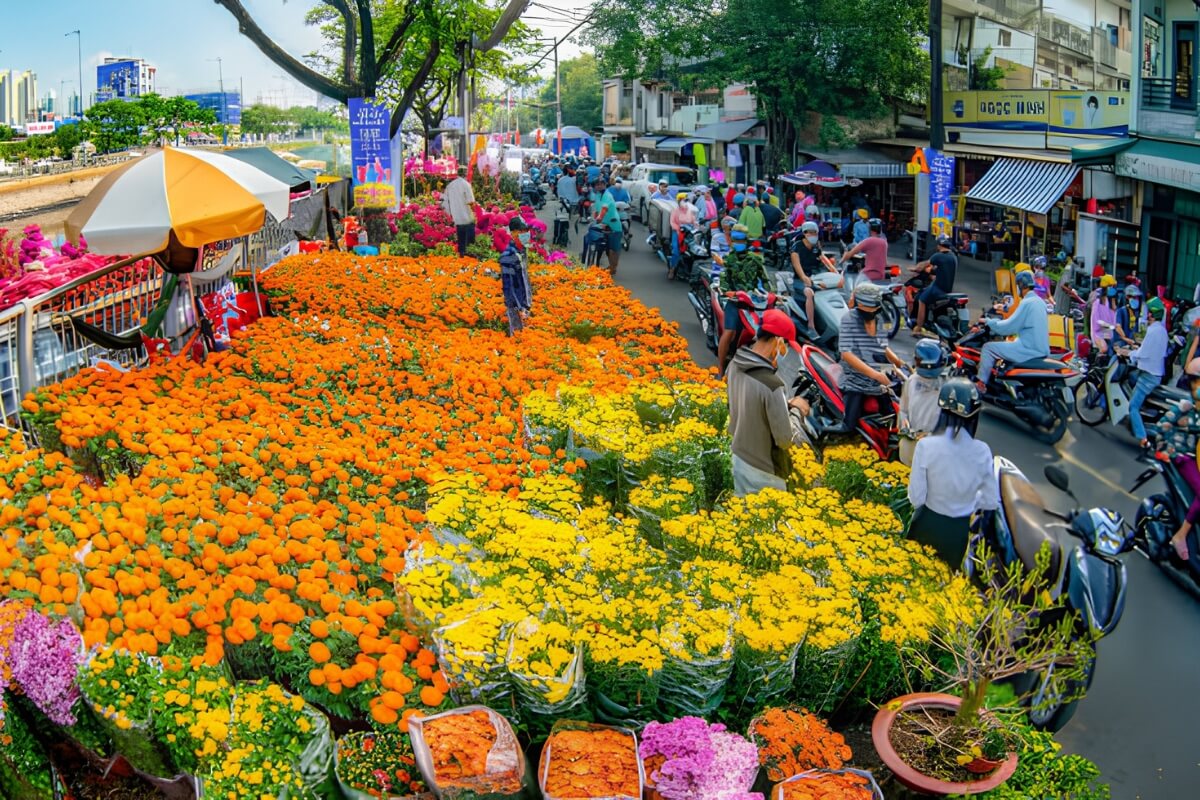
In northern Vietnam, peach blossoms are especially popular. Their delicate pink flowers symbolize renewal, happiness and the arrival of spring. Kumquat trees, with their bright orange fruits and green leaves, represent prosperity and abundance.
In southern Vietnam, yellow apricot blossoms are among the most recognizable symbols of Tet.
In Hanoi, Quang Ba Flower Market is particularly interesting for visitors who want to see the flower trade at its busiest. The market is known for its early-morning activity, when vendors and buyers gather to select fresh flowers for homes, shops and businesses.
Walking through a flower market allows travelers to observe everyday preparations for the New Year. It is also an excellent opportunity for photography, especially when the streets are filled with colorful arrangements and traditional decorations.
For the best atmosphere, consider visiting a few days before New Year’s Eve.
Discover Hanoi’s Old Quarter Before and During Tet
Hanoi’s Old Quarter is one of the most atmospheric places to explore during the Tet season.
Before the holiday, streets such as Hang Ma become especially colorful, with shops displaying red lanterns, paper decorations, lucky money envelopes and traditional ornaments.
The neighborhood offers a fascinating combination of historical architecture, local commerce and everyday Vietnamese life.
Visitors can walk through its narrow streets, admire the festive decorations and observe how local shopkeepers prepare for the New Year.
During the first few days of Tet, however, the Old Quarter becomes noticeably quieter. Many family-run shops and small restaurants temporarily close as their owners return home to celebrate with relatives.
This change creates a different experience from the usual busy atmosphere of Hanoi. The quieter streets can be ideal for photography, relaxed walks and appreciating the city’s historic buildings.
For travelers who enjoy discovering destinations on foot, exploring the Old Quarter during this period can be one of the most memorable things to do in Tet holiday.
Visit Hoan Kiem Lake and Enjoy the New Year Atmosphere
Hoan Kiem Lake is one of Hanoi’s most recognizable landmarks and an excellent place to experience the city during the Lunar New Year.
Located in the heart of the capital, the lake is surrounded by historical streets, cultural attractions and local gathering spaces.
During the Tet season, the surrounding area may feature festive decorations, seasonal flower displays and public celebrations. On certain occasions, the pedestrian area around the lake becomes a popular meeting place for local families, couples and visitors.
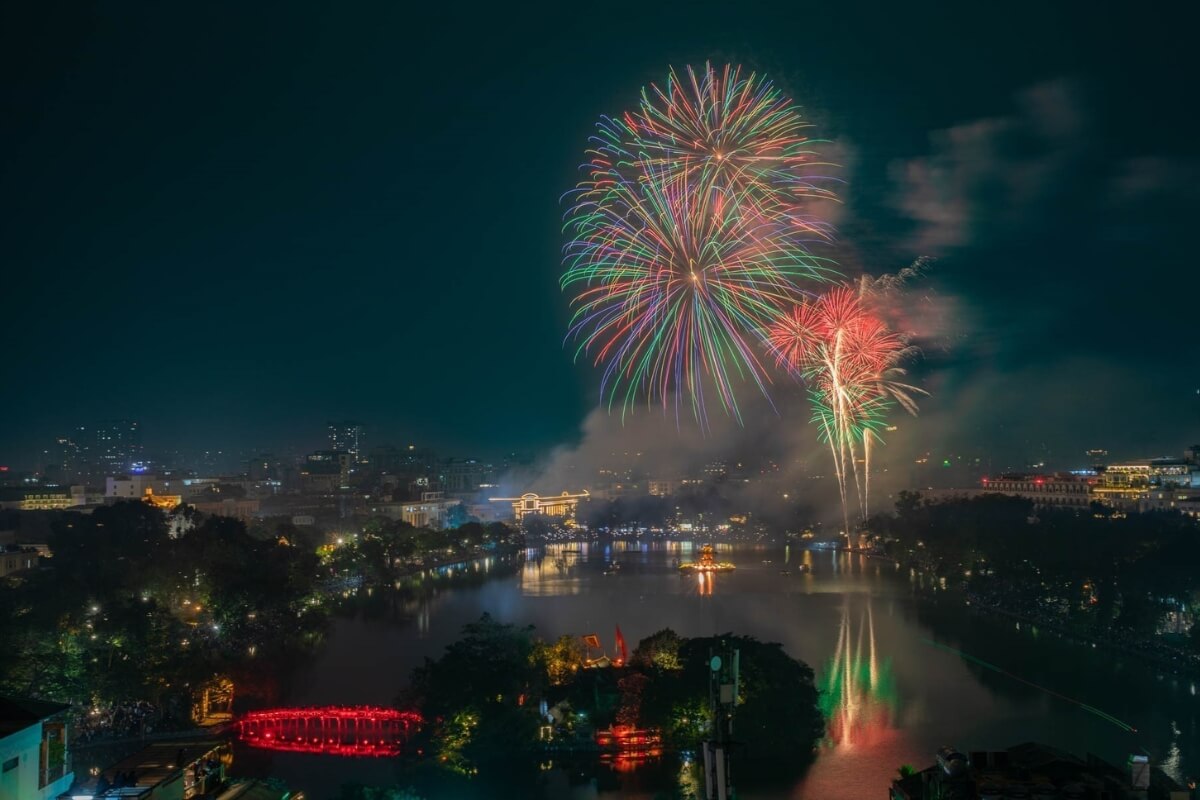
A morning walk around Hoan Kiem Lake is particularly pleasant. You may see older residents practicing tai chi, families taking photographs and young people enjoying the peaceful atmosphere.
The nearby Ngoc Son Temple, connected to the shore by the iconic red Huc Bridge, is also worth visiting when it is open.
Combining a walk around the lake with a visit to the Old Quarter provides a relaxed introduction to Hanoi’s cultural and historical character.
Experience Traditional Vietnamese Tet Food
Food is one of the most important parts of the Tet holiday.
Traditional dishes are carefully prepared, often using recipes that have been passed down through generations. Many foods are associated with prosperity, family unity and wishes for a successful year.
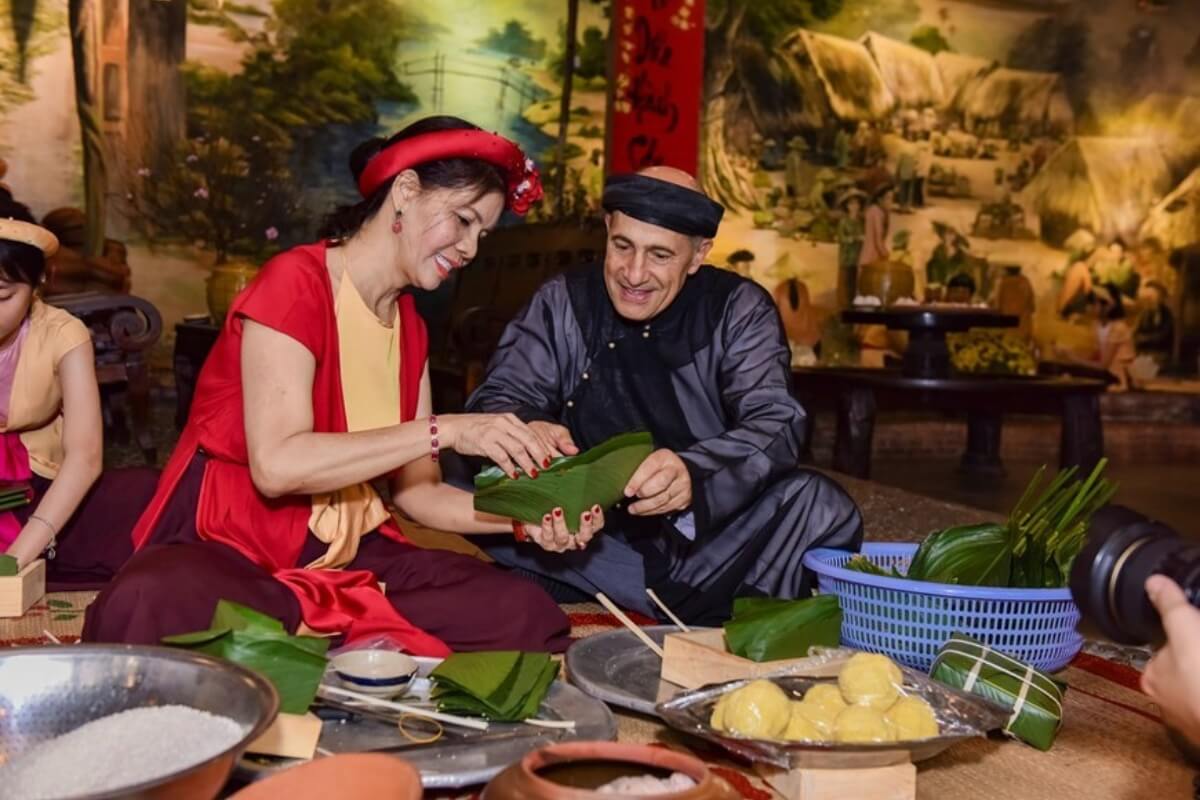
One of the most famous dishes is banh chung, a square sticky rice cake made with glutinous rice, mung beans and pork, traditionally wrapped in dong leaves.
In northern Vietnam, banh chung is an essential part of the New Year feast. Its square shape is traditionally associated with the earth.
In southern Vietnam, banh tet, a cylindrical sticky rice cake, is particularly popular.
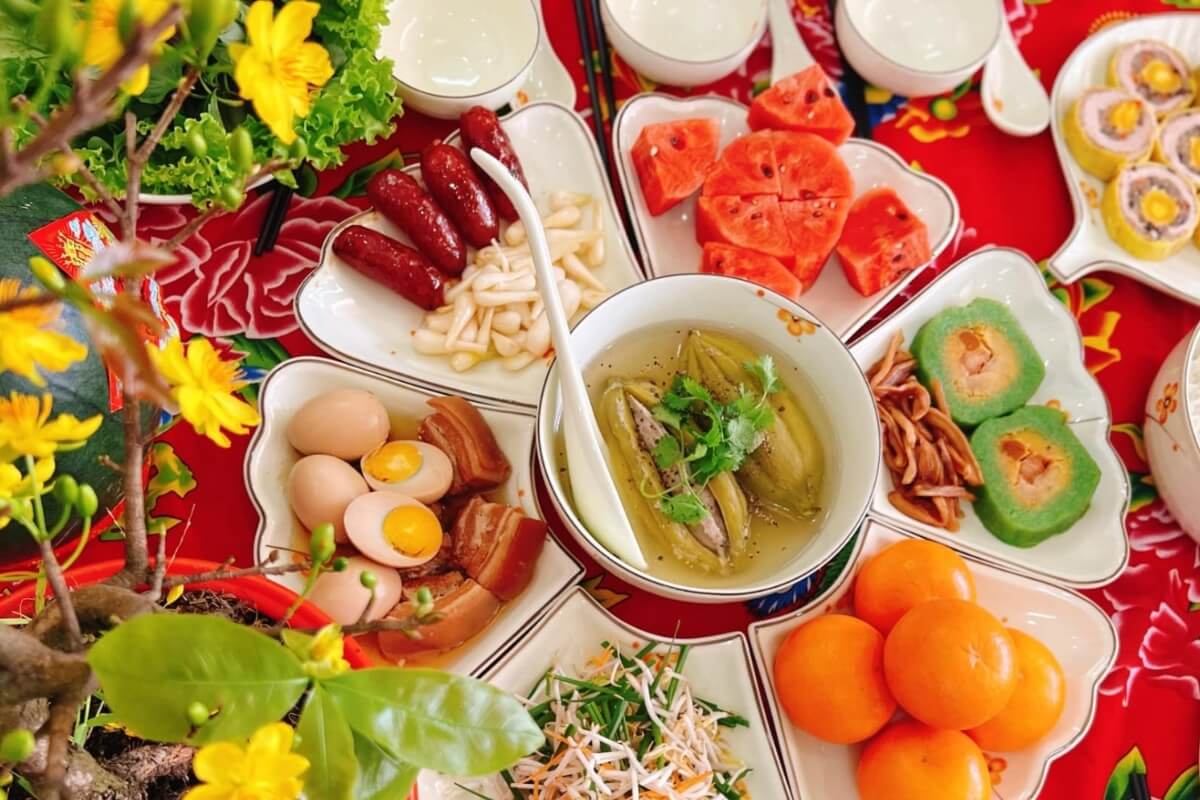
Other traditional dishes include boiled chicken, Vietnamese fried spring rolls (nem ran), pickled vegetables, braised pork and various seasonal sweets.
Another interesting part of the Tet food culture is mut Tet, a collection of candied fruits and vegetables served to guests. Ginger, coconut, lotus seeds and kumquat are among the popular varieties.
Trying these dishes is one of the most enjoyable things to do in Tet holiday because food offers a direct connection to Vietnamese family traditions.
Travelers should remember that many small restaurants close during the main holiday period. It is therefore worth checking opening hours in advance or arranging a meal through a hotel or tour operator.
Visit a Local Pagoda and Observe New Year Rituals
Visiting a pagoda is a meaningful way to understand the spiritual side of the Lunar New Year in Vietnam.
During Tet, many Vietnamese people visit temples and pagodas to pray for good health, happiness and prosperity. Some bring flowers, fruit and incense as offerings.
The atmosphere is often peaceful yet lively, with families dressed in their best clothes and visitors gathering to welcome the New Year.
In Hanoi, Tran Quoc Pagoda, located beside West Lake, is one of the city’s most well-known Buddhist sites. Its historical setting and lakeside surroundings make it an appealing place for visitors interested in Vietnamese religious architecture.
The Temple of Literature is another important cultural landmark in Hanoi, although its opening arrangements during public holidays should be checked beforehand.
When visiting religious sites, dress modestly, speak quietly and follow local instructions. Photography should never interfere with worshippers or ceremonies.
A guided visit can help explain the symbolism of the offerings and the significance of traditional New Year prayers.
Watch Lion and Dragon Dance Performances
Lion and dragon dances are among the most recognizable forms of entertainment during Vietnamese New Year celebrations.
These performances are traditionally associated with good luck, prosperity and the removal of negative energy. Accompanied by drums, cymbals and energetic movements, they bring excitement to streets, public spaces and community celebrations.
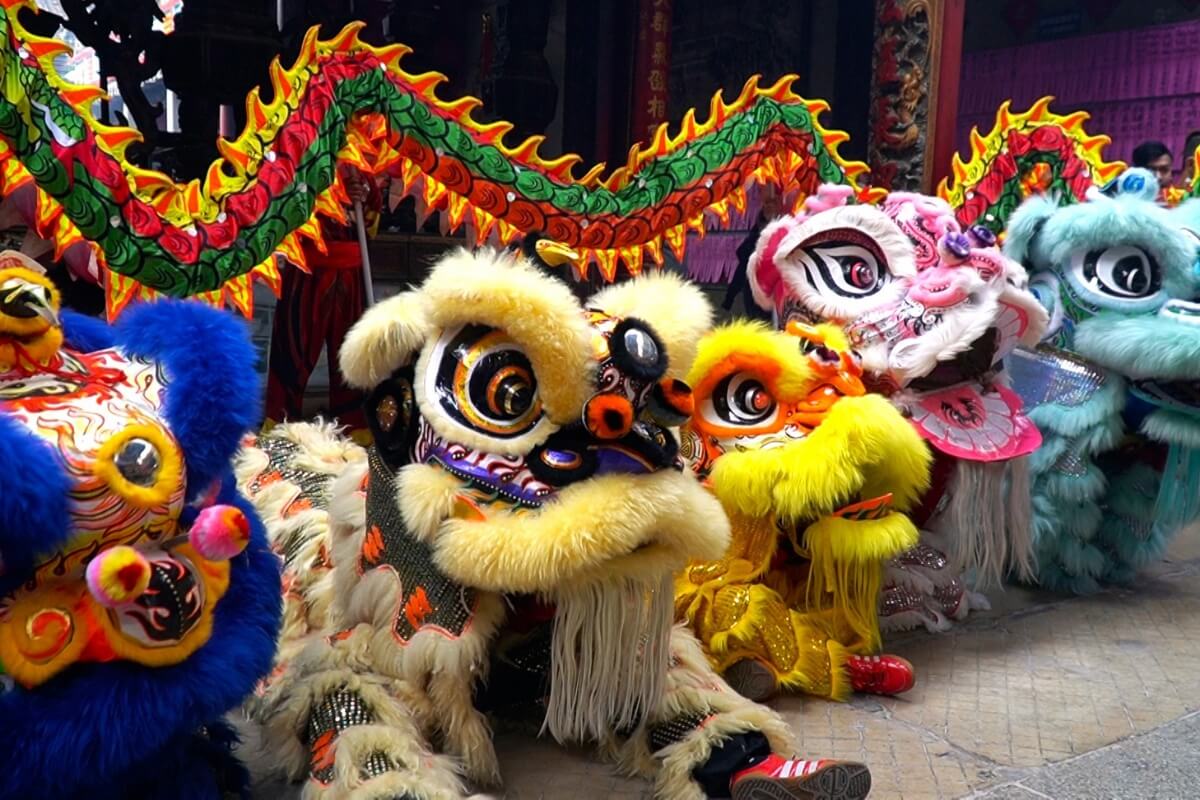
The lion dance is particularly popular during Tet. Performers wear elaborate costumes and move in coordinated patterns, often interacting with the audience.
In some places, the performances take place in front of shops and businesses as a way of welcoming good fortune for the coming year.
For international travelers, watching a lion dance is a lively cultural experience and an excellent opportunity to observe how traditional beliefs continue to shape modern Vietnamese celebrations.
Performance schedules vary by location, so visitors should check local announcements before planning their day.
Enjoy Traditional Vietnamese Water Puppet Theatre
Water puppetry is a distinctive Vietnamese performing art with roots in the agricultural communities of the Red River Delta.
Traditionally performed on a water stage, the show features wooden puppets controlled by skilled puppeteers hidden behind a screen.
The stories often depict village life, farming activities, folklore, historical legends and traditional festivals.
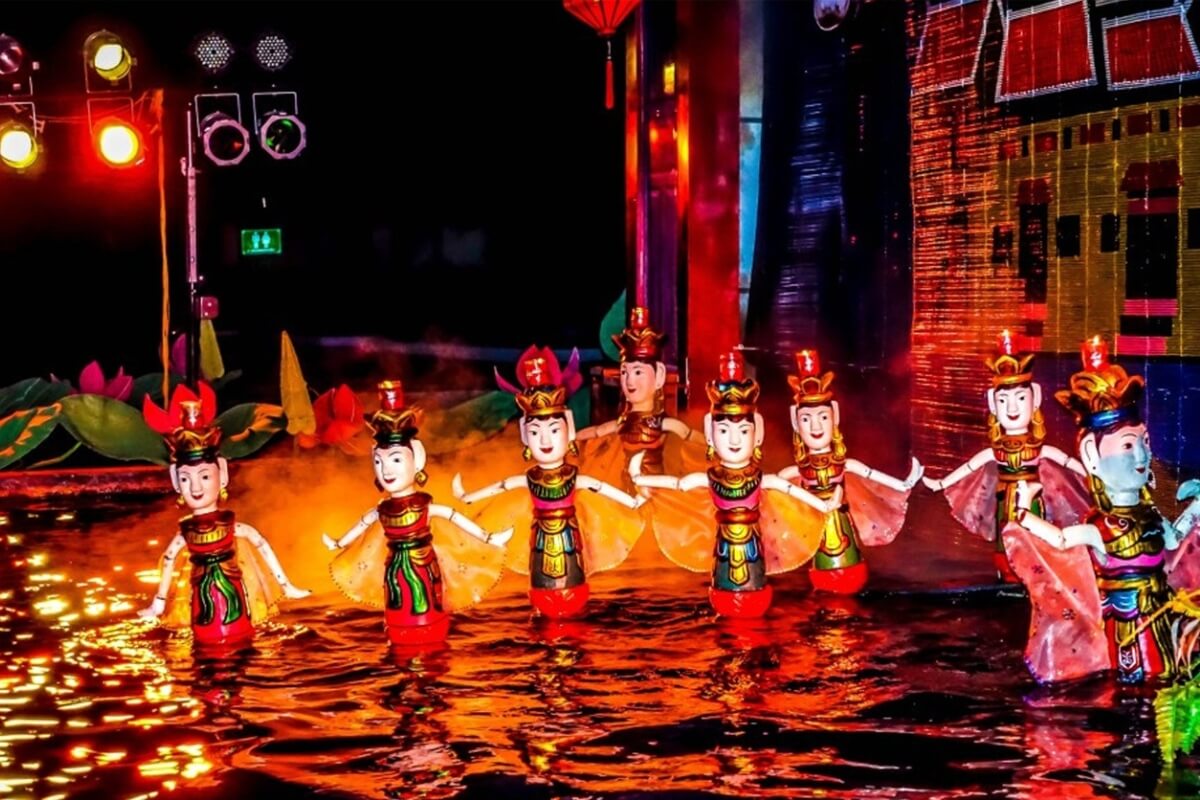
During the Tet holiday, attending a water puppet performance can be an excellent way to learn about Vietnamese cultural heritage in an entertaining setting.
In Hanoi, the Thang Long Water Puppet Theatre near Hoan Kiem Lake is one of the best-known venues for this traditional art form.
Shows typically combine puppetry, traditional music and storytelling, making them accessible even to visitors who do not speak Vietnamese.
Because holiday schedules may change, it is advisable to check performance times and reserve tickets in advance.
Wear an Ao Dai and Take Traditional New Year Photos
The ao dai is one of Vietnam’s most recognizable traditional garments.
This elegant outfit consists of a long tunic worn over trousers and is often associated with formal occasions, cultural events and celebrations.
During the Tet holiday, many Vietnamese people wear ao dai when visiting relatives, taking family photographs or attending festive gatherings.
In Hanoi, you may see people wearing traditional red, yellow, pink and pastel-colored ao dai around Hoan Kiem Lake, the Temple of Literature and other popular photography locations.
For visitors, renting an ao dai and arranging a cultural photography experience can be a memorable way to connect with Vietnamese traditions.
It is also a wonderful opportunity to learn about the garment’s history, design and cultural significance.
Explore Local Markets and Tet Decorations
Traditional markets provide an excellent insight into the preparations behind the Lunar New Year.
Before Tet, local markets become particularly busy as families purchase ingredients, fresh flowers, fruit, decorations and gifts.
Visitors can discover seasonal produce, traditional sweets, handmade ornaments and the everyday shopping habits of Vietnamese households.
In Hanoi, Dong Xuan Market is one of the city’s best-known traditional markets. Its surrounding streets are also worth exploring for their historic atmosphere and local businesses.
However, travelers should be aware that market activity changes considerably during the holiday itself. Some markets may operate with reduced hours or temporarily close, particularly on the first days of the New Year.
Visiting before New Year’s Eve generally offers the most complete market experience.
Take a Vietnamese Cooking Class
For travelers who enjoy food and cultural learning, a Vietnamese cooking class is another excellent experience to consider.
Food preparation is an important part of the Tet holiday, and many traditional dishes carry stories about family history, regional identity and seasonal customs.
A cooking class can introduce visitors to Vietnamese ingredients, cooking techniques and the cultural meaning behind popular dishes.
Depending on the program, travelers may learn how to prepare spring rolls, traditional dipping sauces, noodle dishes or other regional specialties.
Some experiences also include a visit to a local market, where participants can learn how Vietnamese people select fresh ingredients.
If you plan to take a cooking class during Tet, confirm that the instructor and venue are operating during your travel dates. Small family-run businesses may take a holiday break.
Enjoy a Quiet Walk or Cycling Tour Around Hanoi
One unexpected advantage of visiting Hanoi during the main Tet holiday is the change in traffic.
As many residents return to their hometowns, some central streets become significantly quieter than usual.
For travelers accustomed to Hanoi’s busy traffic, this creates a rare opportunity to appreciate the city at a slower pace.
A walking or cycling tour can take you through historical neighborhoods, around Hoan Kiem Lake and along selected streets near the city’s lakes and cultural landmarks.
The quieter atmosphere also creates excellent opportunities for photography.
However, traffic conditions are not identical throughout the city, and some areas remain busy. Visitors should still exercise caution when crossing roads and cycling.
Take a Day Trip to a Traditional Craft Village
Vietnam’s traditional craft villages offer a deeper understanding of the country’s cultural heritage.
Many villages around Hanoi have preserved specialized crafts for generations, including pottery, silk weaving, wood carving and traditional food production.
Bat Trang Ceramic Village is one of the most accessible destinations for visitors interested in traditional craftsmanship.
Located outside central Hanoi, the village is known for its pottery workshops, ceramic products and long-standing craft traditions.
A visit may include exploring local workshops, observing artisans at work and learning about the production process.
Other craft villages around Hanoi offer different cultural perspectives, although opening arrangements during Tet should be confirmed in advance.
For travelers who want to experience more than the usual city attractions, a craft village excursion can add depth to a Lunar New Year itinerary.
Discover Vietnamese Culture Through a Local Art Experience
Art is another meaningful way to explore Vietnam’s cultural identity.
Traditional Vietnamese art reflects a combination of local beliefs, historical influences, daily life and artistic craftsmanship.
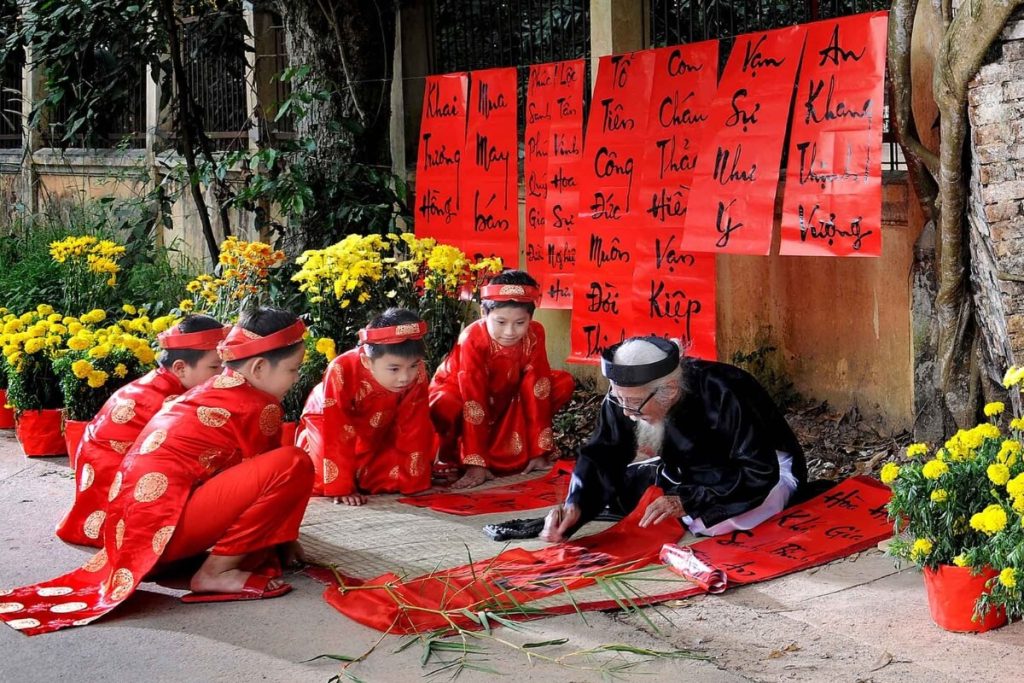
During the Tet season, visitors may encounter paintings, calligraphy, decorative objects and other forms of traditional artwork associated with wishes for happiness and prosperity.
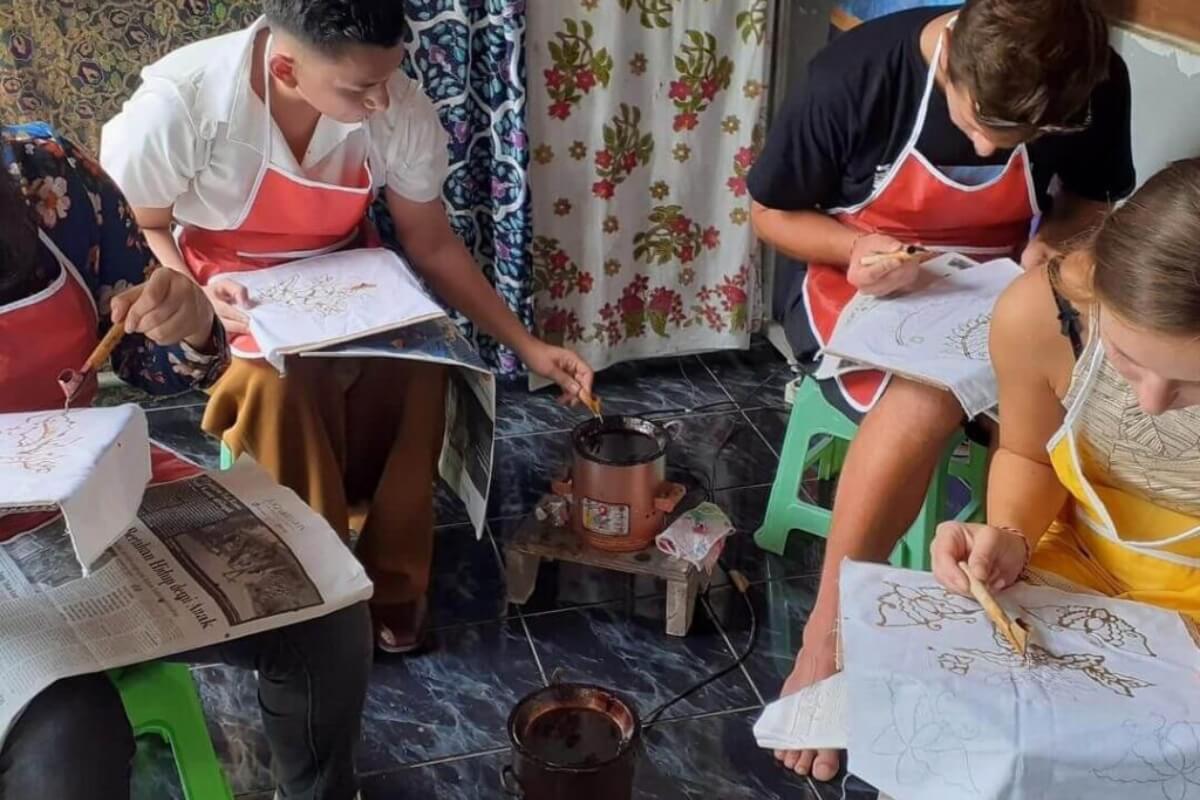
In Hanoi, cultural art experiences can help visitors understand the stories behind Vietnamese symbols, materials and artistic techniques.
Rather than simply viewing an artwork, a guided art experience allows travelers to learn about the people, traditions and creative processes behind it.
For those interested in Vietnamese culture, combining an art experience with a city tour provides a more personal and engaging way to discover the country.
Join a Guided Cultural Tour to Understand Tet Beyond the Surface
While exploring independently can be rewarding, a guided cultural tour offers a more detailed understanding of the Lunar New Year.
Some traditions may seem unfamiliar to international visitors. Why do families prepare ancestral offerings? What do peach blossoms and kumquat trees symbolize? Why is the first visitor of the year considered important?
A knowledgeable local guide can explain these customs in context, helping travelers appreciate the meaning behind what they see.
A well-designed cultural experience may include walking through the Old Quarter, visiting historical landmarks, discovering traditional markets, tasting seasonal food and learning about local customs.
For visitors who have limited time or are traveling during a period when some businesses are closed, arranging a tour in advance can also make the journey more convenient.
What Is the Difference Between Tet Celebrations in Northern and Southern Vietnam?
Although Tet is celebrated throughout Vietnam, regional traditions give the holiday different colors, flavors and experiences.
Understanding these differences is particularly useful for travelers planning to visit more than one destination.
Tet in Northern Vietnam
In northern Vietnam, especially Hanoi, Tet is closely associated with peach blossoms, kumquat trees and traditional family meals.
The weather is generally cooler during this period, creating a distinct atmosphere of early spring.
Northern Tet meals commonly feature banh chung, boiled chicken, Vietnamese fried spring rolls, pickled onions and various traditional dishes.
Hanoi’s historical neighborhoods, flower markets and temples provide an excellent setting for experiencing these customs.
The atmosphere can be particularly lively before New Year’s Eve, while the first days of Tet are often much quieter.
Tet in Southern Vietnam
Southern Vietnam generally experiences warmer weather during Tet.
Yellow apricot blossoms are among the most recognizable symbols of the season, while streets and public spaces are often decorated with bright flowers and colorful displays.
Southern Tet cuisine includes dishes such as braised pork with eggs, bitter melon soup, pickled vegetables and banh tet.
Ho Chi Minh City offers a more energetic urban setting, with large public flower displays and busy shopping areas before the holiday.
Tet in Central Vietnam
Central Vietnam has its own distinctive traditions and regional dishes.
In Hue, the former imperial capital, Tet offers an interesting opportunity to explore traditional architecture, royal heritage and local food culture.
The region is also known for its distinctive festive dishes, including various types of banh Tet and regional specialties.
For travelers who want to understand the diversity of the Lunar New Year in Vietnam, visiting different regions can provide a richer cultural perspective.
Is Tet a Good Time to Visit Vietnam?
The answer depends on what kind of travel experience you are looking for.
The Tet holiday can be an excellent time to visit Vietnam if you are interested in culture, traditions, seasonal food and local celebrations.
It offers opportunities to witness customs that are not part of everyday life and to see Vietnamese cities in a different atmosphere.
However, it may be less suitable for travelers who expect every restaurant, shop and attraction to operate on a normal schedule.
Reasons to Visit Vietnam During Tet
The biggest advantage is the opportunity to experience Vietnamese culture at one of its most meaningful moments.
Visitors can see traditional decorations, explore flower markets, taste seasonal dishes and learn about family customs.
In major cities, the quieter streets during the first days of the New Year can also make sightseeing more relaxed.
For photographers and culturally curious travelers, the period offers distinctive visual and social experiences.
Things to Consider Before Visiting
The main challenge is the temporary reduction in services.
Some local restaurants, independent shops and attractions may close, while popular transport routes can become busy.
Prices for flights and accommodation may also fluctuate depending on the destination and travel dates.
It is therefore important to plan ahead rather than assuming that every service will be available as usual.
When Is the Best Time to Visit?
If you want to experience the preparations, flower markets and festive shopping atmosphere, consider arriving several days before New Year’s Eve.
If you prefer a quieter city experience, the first days of the New Year may be appealing, provided that your essential services and activities are arranged in advance.
For travelers with flexible schedules, visiting shortly after the main holiday can also be a good option. More businesses gradually resume normal operations, while the wider festive atmosphere may continue in some areas.
Essential Travel Tips for International Visitors During Tet Holiday
A little preparation can make a significant difference to your travel experience.
Book Flights and Accommodation in Advance
Tet is one of the busiest domestic travel periods in Vietnam.
Many Vietnamese people travel to their hometowns, creating high demand for flights, trains and intercity buses.
Book your transport and accommodation well ahead of time, especially if you plan to travel between major destinations.
Confirm Restaurant and Attraction Opening Hours
Do not assume that a restaurant or attraction will follow its normal schedule during Tet.
Contact the establishment directly or ask your hotel or tour operator to confirm availability.
This is particularly important if you have specific dining preferences or wish to visit smaller cultural attractions.
Prepare Some Cash
Although card payments and digital payment services are increasingly common in Vietnam, cash remains useful for small purchases, local transport and traditional markets.
It is sensible to withdraw sufficient Vietnamese dong before the main holiday begins, as some bank branches may close temporarily.
ATMs generally remain available, although access to cash can occasionally be affected by demand or technical issues.
Respect Local Customs
Tet is a meaningful family and cultural occasion.
If you visit a pagoda or temple, dress appropriately and avoid disturbing people who are praying.
Do not enter a private home without an invitation, particularly during the first day of the New Year.
When taking photographs, always be considerate of local residents and ask permission before photographing private ceremonies or personal family activities.
Learn a Few Vietnamese New Year Greetings
A simple Vietnamese greeting can make your interactions with local people more enjoyable.
The most common expression is:
Chúc Mừng Năm Mới! – Happy New Year!
You can also say:
An Khang Thịnh Vượng! – Wishing you peace, good health and prosperity.
Vạn Sự Như Ý! – May everything go as you wish.
Even a small effort to use the local language is often warmly appreciated.
Frequently Asked Questions About Tet Holiday in Vietnam
What is the Tet holiday in Vietnam?
The Tet holiday, or Tet Nguyen Dan, is the Vietnamese Lunar New Year and the most important traditional celebration in the country. It marks the beginning of a new lunar year and is associated with family reunions, ancestor worship, traditional food and wishes for good fortune.
When is the Lunar New Year in Vietnam?
The Vietnamese Lunar New Year usually falls between late January and mid-February. The exact date changes every year because Tet follows the lunar calendar rather than the Gregorian calendar.
What are the best things to do in Tet holiday?
Some of the best things to do in Tet holiday include exploring traditional flower markets, walking through Hanoi’s Old Quarter, visiting Hoan Kiem Lake, tasting traditional Vietnamese food, watching lion dances, visiting pagodas and attending cultural performances.
Is everything closed during Tet in Vietnam?
No. Not everything closes during Tet. However, many family-run restaurants, small shops and independent businesses may temporarily close, particularly during the first few days of the New Year. Hotels, selected restaurants, convenience stores and some tourist services generally continue operating, although schedules may vary.
Can tourists travel to Vietnam during Tet?
Yes. International tourists can travel to Vietnam during Tet, and it can be a memorable time to experience Vietnamese culture. However, visitors should book flights, accommodation and essential services in advance and check the operating hours of attractions and restaurants.
Is Hanoi worth visiting during Tet?
Yes. Hanoi is an interesting destination during Tet because visitors can experience traditional flower markets, festive decorations, historic neighborhoods and local New Year customs.
The city may become noticeably quieter during the first days of the holiday, creating a different atmosphere from its usual busy streets.
What food should I try during the Tet holiday?
Some traditional Tet dishes worth trying include banh chung, banh tet, Vietnamese fried spring rolls, boiled chicken, braised pork, pickled vegetables and candied fruits.
Regional specialties vary between northern, central and southern Vietnam.
What should I wear when visiting Vietnam during Tet?
Comfortable clothing is suitable for most sightseeing activities. If you plan to visit temples or pagodas, choose modest clothing that covers your shoulders and knees.
In northern Vietnam, January and February can be cool, so bringing a light jacket or warmer layers is recommended.
Is Tet a good time for a food tour in Hanoi?
It can be, especially before New Year’s Eve and after local businesses reopen. However, many independent food stalls and family-run restaurants may close during the main holiday. Check the availability of your chosen food tour before booking.
How can I experience authentic Tet traditions as a tourist?
The best approach is to explore traditional markets, visit cultural landmarks, try seasonal dishes, observe public celebrations and join a guided cultural experience with a knowledgeable local guide.
These activities help visitors understand the meaning behind the traditions rather than simply seeing the decorations.
Experience the Tet Holiday in Vietnam with Hanoi Local Tour
The Tet holiday is one of the most meaningful times to discover Vietnam. It brings together family traditions, cultural heritage, seasonal food and the optimism of a new beginning.
For international travelers, experiencing the Lunar New Year in Vietnam is an opportunity to see a different side of the country. Beyond its famous landscapes and historical landmarks, visitors can discover the customs, stories and everyday values that make Vietnamese culture so distinctive.
From exploring the flower markets and historic streets of Hanoi to tasting traditional New Year dishes and learning about local customs, every experience offers a deeper connection with the destination.
At Hanoi Local Tour, we believe that discovering a destination is about more than visiting its famous attractions. It is about understanding the people, appreciating their traditions and experiencing the local culture in a meaningful way.
Whether you are planning a cultural walking tour, a local food experience or a journey through Hanoi’s historical landmarks, thoughtful preparation can help you enjoy your Tet holiday with greater comfort and confidence.
Make your Lunar New Year in Vietnam more meaningful. Discover Hanoi through local experiences with Hanoi Local Tour and create memories that go beyond ordinary sightseeing.