
Hanoi Travel Blog - Hanoi Introduction & Information
Van Long Nature Reserve – Complete Guide To The Peaceful Wetland Escape in Ninh Binh Vietnam
19
Sep
Sep
If you are looking for a quieter and more nature-focused experience in northern Vietnam, Van Long Nature Reserve is one of the most rewarding places to visit in Ninh Binh. Rather than dramatic tourist attractions or busy riverside streets, Van Long offers something much more tranquil: calm wetlands, limestone mountains, hidden caves, birds, local communities and the rare opportunity to observe the critically endangered Delacour’s langur in its natural habitat.
Located in Gia Vien District, approximately 80–85 km south of Hanoi, Van Long Ninh Binh is one of northern Vietnam’s most important wetland ecosystems. The reserve is also a Ramsar Site of international importance and forms part of a larger landscape associated with the conservation of the Delacour’s langur. Our Hanoi tours provide a convenient way to explore destinations beyond the city and discover the natural and cultural highlights of northern Vietnam.
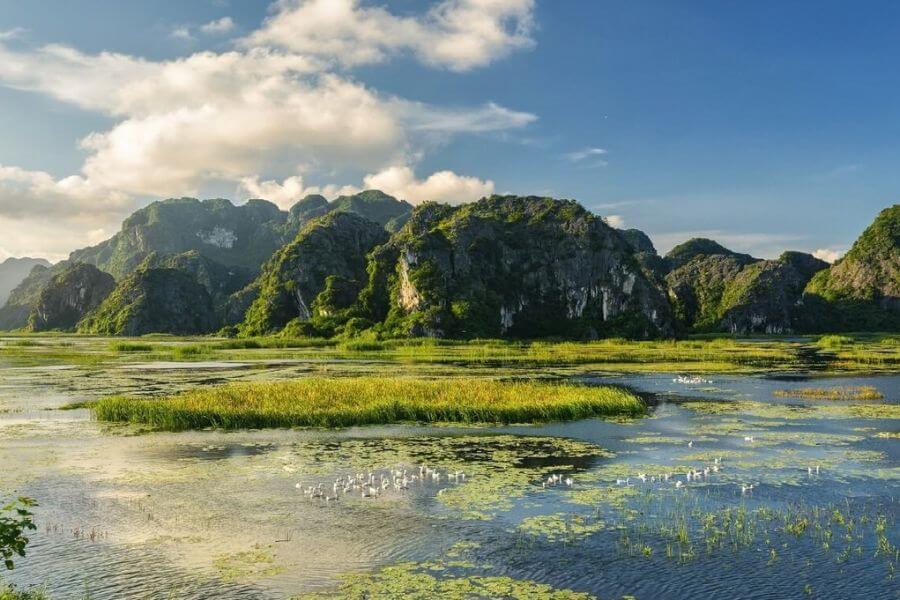
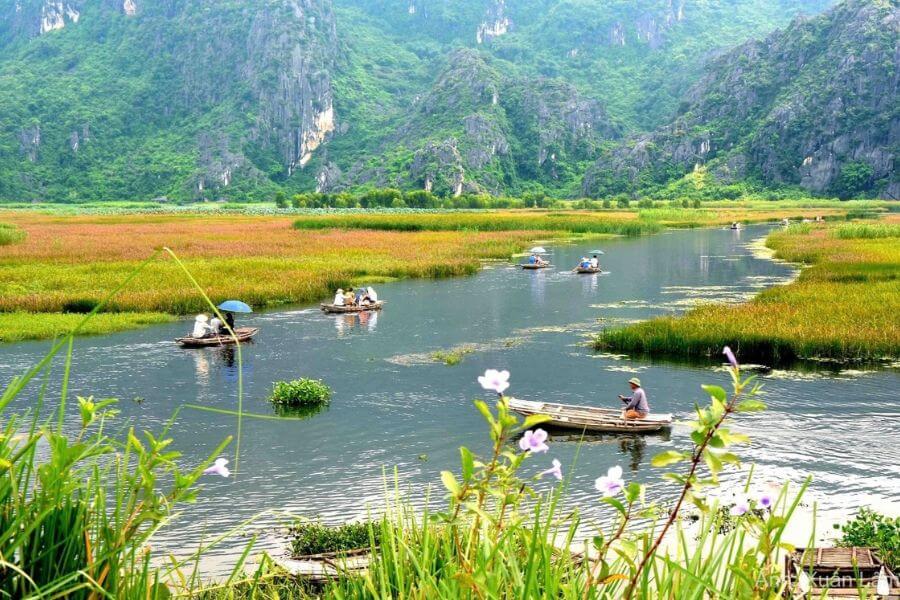
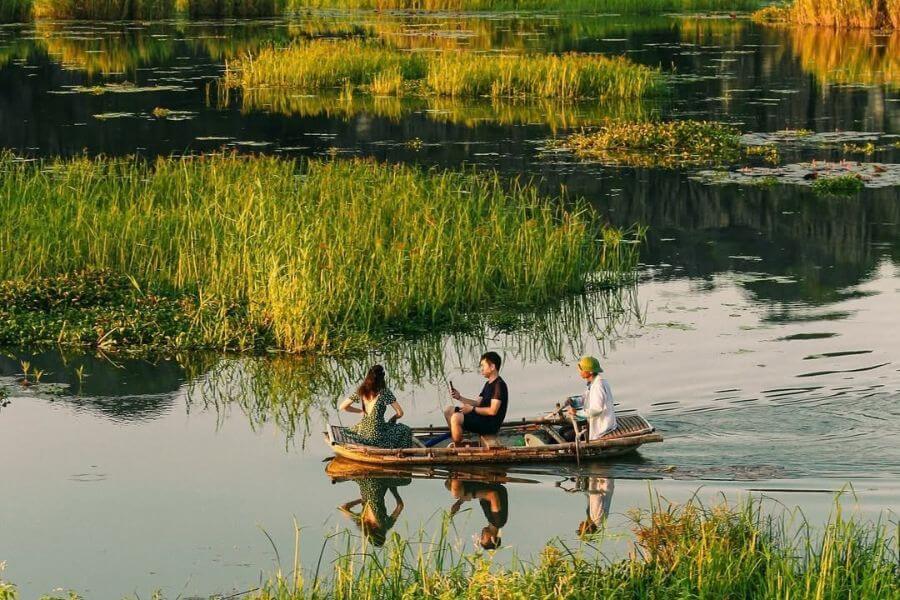
Van Long can be particularly appealing because it feels very different from the more heavily visited areas of Ninh Binh. A traditional rowing boat carries visitors quietly across the wetlands, where the water can become so still that the surrounding limestone cliffs appear almost perfectly reflected on its surface.
This is the reason Van Long is sometimes described as a “bay without waves.” The experience is less about checking off landmarks and more about slowing down, observing nature and appreciating a landscape that has remained closely connected with local life.
Where Is Van Long Nature Reserve?
Van Long Nature Reserve is located in Gia Van Commune, Gia Vien District, Ninh Binh Province, in northern Vietnam. The reserve lies northeast of central Ninh Binh and is accessible from Hanoi by road, making it suitable for a day trip or as part of a longer Ninh Binh itinerary.
The protected area covers a landscape of wetlands, shallow lakes, limestone karst mountains, grasslands and surrounding rural communities. According to the Ninh Binh Department of Tourism, the reserve itself covers about 2,743 hectares within a wider natural area of more than 3,500 hectares.
Its geography is one of the most distinctive features of Van Long Ninh Binh. Instead of a conventional lake surrounded by low hills, the wetlands are framed by dramatic limestone formations rising from the flat landscape. Channels and waterways wind between the vegetation and karst formations, creating an environment that is both peaceful and visually striking.
The area has also become an important example of how conservation and tourism can coexist. Local communities living around the reserve participate in tourism-related activities, while tourism provides additional livelihoods connected to the protection and appreciation of the natural environment.
Why Is Van Long Ninh Binh Worth Visiting?
There are many reasons travelers choose Van Long Nature Reserve, but its appeal is quite different from that of Ninh Binh’s better-known attractions.
Trang An is famous for its spectacular karst scenery and cave routes, while Tam Coc is known for its rice fields and iconic river landscape. Van Long, by comparison, offers a quieter wetland environment where wildlife and landscape take center stage.
A peaceful alternative to busy Ninh Binh attractions
One of the first things visitors notice at Van Long is the sense of silence.
There are no large urban buildings around the wetlands. Instead, the landscape consists of water, reeds, limestone cliffs, birds and distant rural scenery. When the boat moves away from the pier, the sounds of everyday life gradually fade.
The experience can be particularly attractive for travelers who prefer slow travel, photography, wildlife observation and authentic landscapes rather than crowded sightseeing.
A globally important wetland
Van Long is not simply a scenic tourist destination. It is an internationally recognized wetland ecosystem.
In 2018, Van Long Wetland Nature Reserve was designated as Vietnam’s ninth Ramsar Site, recognizing its importance as a wetland of international significance. The Ramsar information describes it as one of the remaining relatively intact lowland inland wetlands in the Red River Delta.
The ecosystem includes freshwater wetlands, shallow lakes, marshes, limestone karst and associated habitats. These environments support a diverse range of plants, aquatic species and birds.
Home to the Delacour’s langur
Perhaps the most important reason nature lovers visit Van Long Ninh Binh is its population of Delacour’s langur, a primate endemic to Vietnam and classified as critically endangered.
The limestone mountains surrounding Van Long provide important habitat for the species. Ramsar identifies the site as an important stronghold for Delacour’s langur, while the 2026 UNESCO tentative-list submission describes Van Long as hosting the world’s largest viable population of the species.
Seeing a langur is never guaranteed, of course. These are wild animals living in a protected environment, not animals kept for tourist viewing. This is precisely what makes a possible sighting so memorable.
What to See at Van Long Nature Reserve
A visit to Van Long Nature Reserve is primarily a journey through its natural landscape. The best experiences come from taking time to observe rather than rushing from one attraction to another.
1. The Van Long Wetlands
The wetlands are the heart of the reserve.
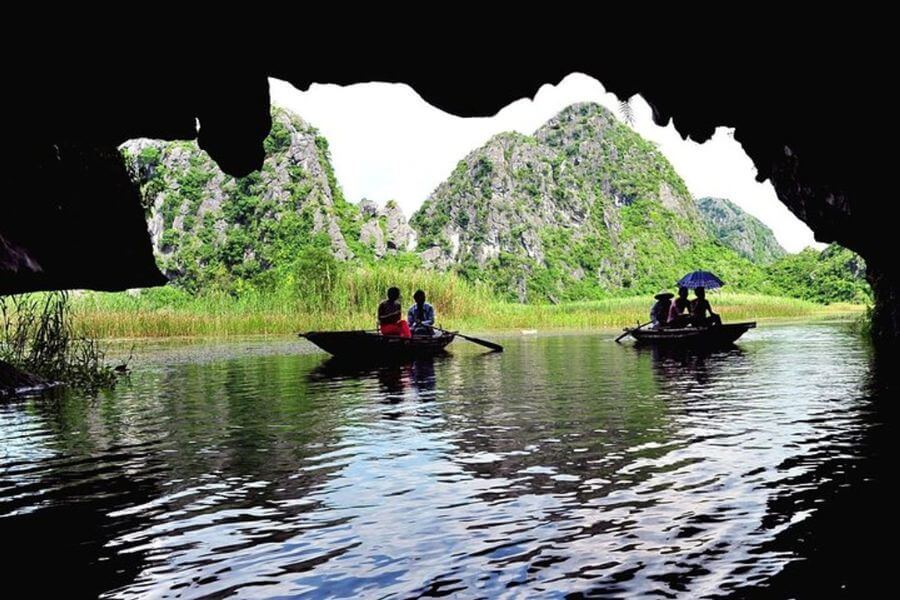
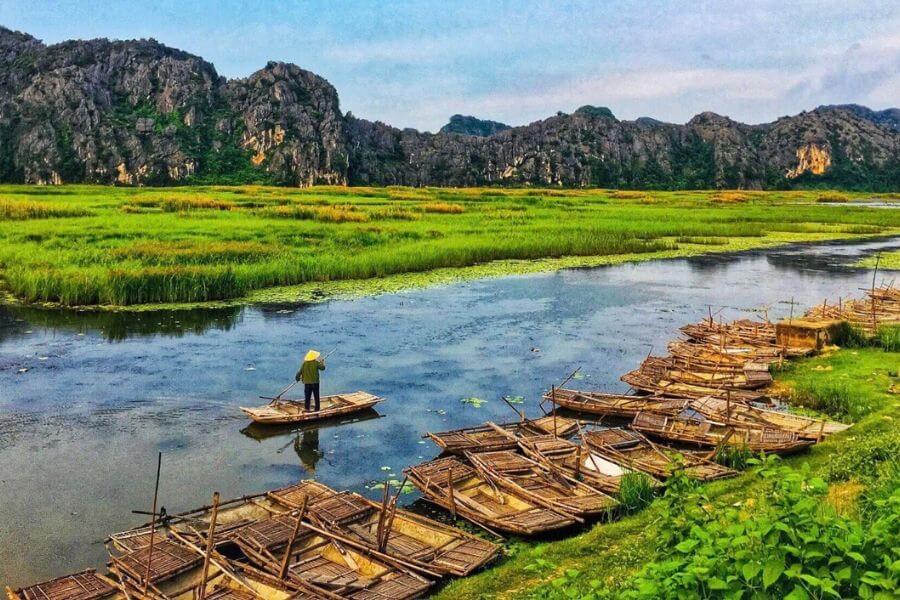
From a small traditional boat, visitors can travel through calm waterways surrounded by tall grasses and limestone formations. Depending on the season and time of day, the water may appear almost completely still.
The reflection of the karst mountains on the surface creates the distinctive scenery for which Van Long is known. In soft morning or late-afternoon light, the landscape becomes particularly atmospheric.
The boat ride is also a chance to observe the wetland ecosystem at close range. Birds may be seen along the water and vegetation, while fish and other aquatic life inhabit the shallow waters below.
2. Limestone Mountains and Karst Landscapes
The limestone formations are another defining feature of Van Long Ninh Binh.
The mountains rise dramatically from the surrounding wetlands and rice-growing landscape, creating a characteristic northern Vietnamese karst environment. Some formations have received names inspired by their shapes, including Meo Cao, Mam Xoi, Hom Sach and Da Ban.
Unlike a mountain trekking destination, Van Long allows travelers to appreciate the karst landscape from the water.
This makes the reserve especially accessible for visitors who want to experience Ninh Binh’s scenery without undertaking a demanding hike.
3. Caves and Hidden Grottoes
Van Long also contains an extensive network of caves and grottoes within its limestone landscape.
Among the better-known features are Ca Cave and several smaller caves distributed throughout the karst formations. The Ninh Binh Tourism Promotion Information Center notes that Ca Cave is the largest cave in the Hoang Quyen mountain range and that the reserve contains numerous other caves.
The caves are part of the geological character of the reserve rather than standalone tourist attractions. Their presence adds another layer to the boat journey, allowing visitors to see how water and limestone have shaped the landscape over thousands of years
Wildlife at Van Long Nature Reserve
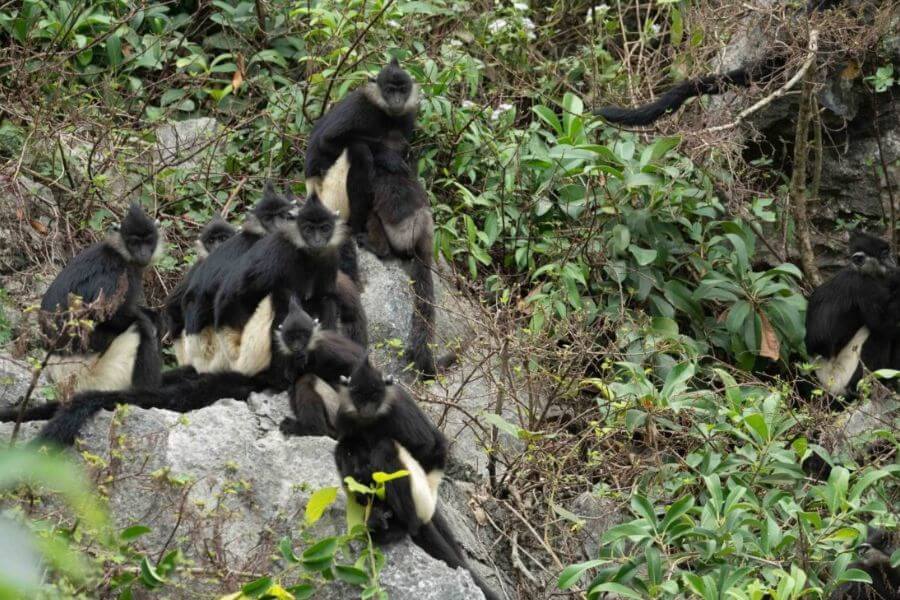
For travelers interested in wildlife, Van Long Nature Reserve provides an opportunity to experience a genuine wetland habitat rather than a conventional wildlife attraction.
The reserve supports a variety of aquatic animals, birds and plants. Its wetlands also provide important refuge and breeding habitat for aquatic species and serve as a staging area for waterbirds.
Delacour’s Langur
The Delacour’s langur is the most famous animal associated with Van Long.
This primate has distinctive dark and white coloring and is found only in northern Vietnam. Its survival is closely connected with the limestone habitats of the region.
Visitors may sometimes see langurs moving along limestone cliffs or through the vegetation. However, wildlife sightings depend on weather, season, time of day and the animals themselves.
For responsible travelers, the goal should not simply be to obtain a photograph. Maintaining distance, keeping noise low and following local guidance are important ways to minimize disturbance
Birds and Wetland Wildlife
Birdwatching is another reason to visit Van Long.
During the cooler months, particularly from around November through April, migratory birds can add considerable interest to the landscape. The local tourism authorities highlight species such as herons, storks and other waterbirds that use the wetlands during this period.
Early morning and late afternoon can be particularly atmospheric for wildlife observation. The cooler temperatures and softer light also make these periods more comfortable for photography.
If birdwatching is an important part of your trip, bringing compact binoculars can make a significant difference.
Best Time to Visit Van Long Nature Reserve
The best time to visit Van Long Nature Reserve depends on what you want to experience.
For general sightseeing, the reserve can be visited throughout the year. However, different seasons offer different advantages.
November to April: Wildlife and Birdwatching
The period from late autumn through spring is particularly interesting for travelers interested in migratory birds and wildlife. Ninh Binh’s tourism authorities note that Van Long becomes a wintering area for migratory birds from November onward.
The relatively cooler weather also makes boat trips more comfortable compared with the hottest months.
If wildlife observation is your priority, this period is worth considering.
May to June: Lotus and Green Landscapes
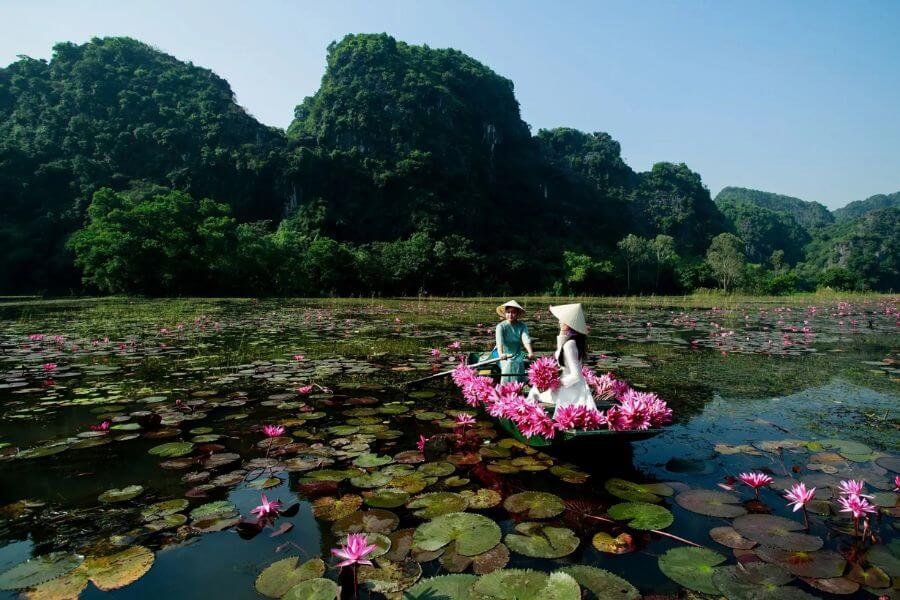
Late spring and early summer bring warmer weather and greener landscapes. Lotus can also become an attractive seasonal feature around the wetlands.
This period can be rewarding for photographers who want a more colorful and lush version of Van Long, although temperatures can be considerably higher.
Early Morning or Late Afternoon
The time of day can matter almost as much as the season.
Early morning offers soft light, cooler temperatures and active birdlife. Late afternoon is another attractive period, particularly for landscape photography and the possibility of seeing wildlife becoming more active.
The Ninh Binh Tourism Promotion Information Center specifically highlights late afternoon as a particularly beautiful time to experience Van Long, when the sunlight reflects across the water and birds return to their resting areas.
How to Get to Van Long Nature Reserve from Hanoi
For international travelers staying in Hanoi, visiting Van Long Nature Reserve is relatively straightforward.
The reserve is roughly 80–85 km from Hanoi, depending on the route and starting point.
By private car, the journey usually takes around two hours or more depending on traffic. This is the most comfortable option for travelers who prefer a flexible itinerary, especially when combining Van Long with other destinations in Ninh Binh.
A private transfer also makes it easier to arrange an early morning departure or return to Hanoi after sightseeing.
For travelers staying overnight in Ninh Binh, Van Long can be combined with nearby attractions such as Trang An, Hoa Lu, Bai Dinh or Tam Coc depending on the overall itinerary.
Van Long vs. Trang An vs. Tam Coc
Travelers often ask whether they should visit Van Long, Trang An or Tam Coc.
The answer depends on the type of experience you are looking for.
Van Long is particularly suited to travelers interested in wetlands, wildlife, photography and a quieter atmosphere. Its strongest appeal is the natural environment and possibility of observing rare wildlife.
Trang An is known for its dramatic limestone scenery, cave passages and highly organized boat routes. It is one of the region’s most famous scenic experiences.
Tam Coc is especially attractive when the rice fields are green or golden, creating the classic Ninh Binh landscape that appears in many photographs.
These destinations do not necessarily compete with each other. For travelers staying more than one day in Ninh Binh, combining two different experiences can provide a more complete understanding of the region.
Practical Tips for Visiting Van Long Ninh Binh
Before visiting Van Long Nature Reserve, a little preparation can make the experience considerably more enjoyable.
Wear comfortable, breathable clothing and bring sun protection, particularly during the warmer months. A hat, sunscreen and drinking water are useful for almost any Ninh Binh itinerary.
If wildlife observation is important to you, bring binoculars or a camera with a telephoto lens. Avoid relying on a smartphone alone if you hope to observe animals at a distance.
Comfortable shoes are recommended even though the boat ride itself is not physically demanding. You may still spend time walking around the entrance area and nearby attractions.
Most importantly, allow enough time to enjoy the landscape. Van Long is not a destination that needs to be rushed.
Current local tourism information lists an entrance fee of around VND 100,000 per person, but prices and operating arrangements may change, so travelers should confirm the latest information before their visit.
Frequently Asked Questions About Van Long Nature Reserve
Is Van Long Nature Reserve worth visiting?
For travelers interested in peaceful landscapes, wildlife and ecotourism, Van Long offers a distinctive experience within Ninh Binh. It is particularly different from the busier boat destinations because its emphasis is on wetlands, biodiversity and conservation.
How far is Van Long from Hanoi?
Van Long is approximately 80–85 km from Hanoi, depending on the route. A private vehicle generally takes around two hours or more depending on traffic.
How long should I spend at Van Long?
For the reserve itself, a half-day is generally enough to enjoy a boat trip and surrounding landscape without rushing. If you are traveling from Hanoi, it can also be incorporated into a full-day Ninh Binh itinerary.
Is Van Long suitable for older travelers?
Yes. The main sightseeing experience involves sitting in a traditional boat rather than hiking or climbing. Travelers should still consider weather conditions and mobility needs when planning their itinerary.
Is Van Long suitable for families?
Yes, particularly for families interested in nature and wildlife. Children can experience the wetlands from the boat while learning about Vietnam’s limestone ecosystems and endangered species.
Can You Visit Van Long as a Day Trip from Hanoi?
Yes. A Van Long Nature Reserve day trip from Hanoi is practical for travelers who want to experience Ninh Binh without changing hotels.
However, the best itinerary depends on your priorities.
If your main interest is wildlife and peaceful landscapes, spending more time around Van Long can be worthwhile. If you want to experience several of Ninh Binh’s famous attractions in one day, the schedule will naturally become more structured.
For a more relaxed premium experience, a private Ninh Binh itinerary can combine Van Long with one or two carefully selected attractions rather than trying to cover everything in a single day.
This approach is particularly suitable for international visitors who value comfort, flexibility and meaningful experiences over simply maximizing the number of sightseeing stops.