
Hanoi Tourist Attractions - Best Places to Visit in Hanoi
Ta Phin Village Vietnam – Ultimate Travel Guide, Things to Do & Best Tips Updated 2026 – 2027
14
Aug
Aug
If you are looking for a quieter, more culturally immersive side of Sapa, Ta Phin, Vietnam, is a destination worth adding to your itinerary. Located in the mountains outside Sapa, Ta Phin Village is best known for its Red Dao community, traditional herbal baths, embroidered textiles, terraced rice fields, and peaceful mountain landscapes.
Unlike the busier areas around central Sapa, Ta Phin offers a slower experience. The attraction is not a single spectacular landmark, but the opportunity to see how local communities have adapted to life in the mountains and preserved traditions that remain part of everyday life.
You can walk through village paths, admire the surrounding rice terraces, learn about Red Dao traditions, discover local handicrafts and, after a day of exploring, experience a traditional herbal bath prepared using medicinal plants. If you are planning a longer journey through northern Vietnam, you can also explore our Hanoi tours for authentic local experiences in Vietnam’s capital.
Where Is Ta Phin Vietnam?
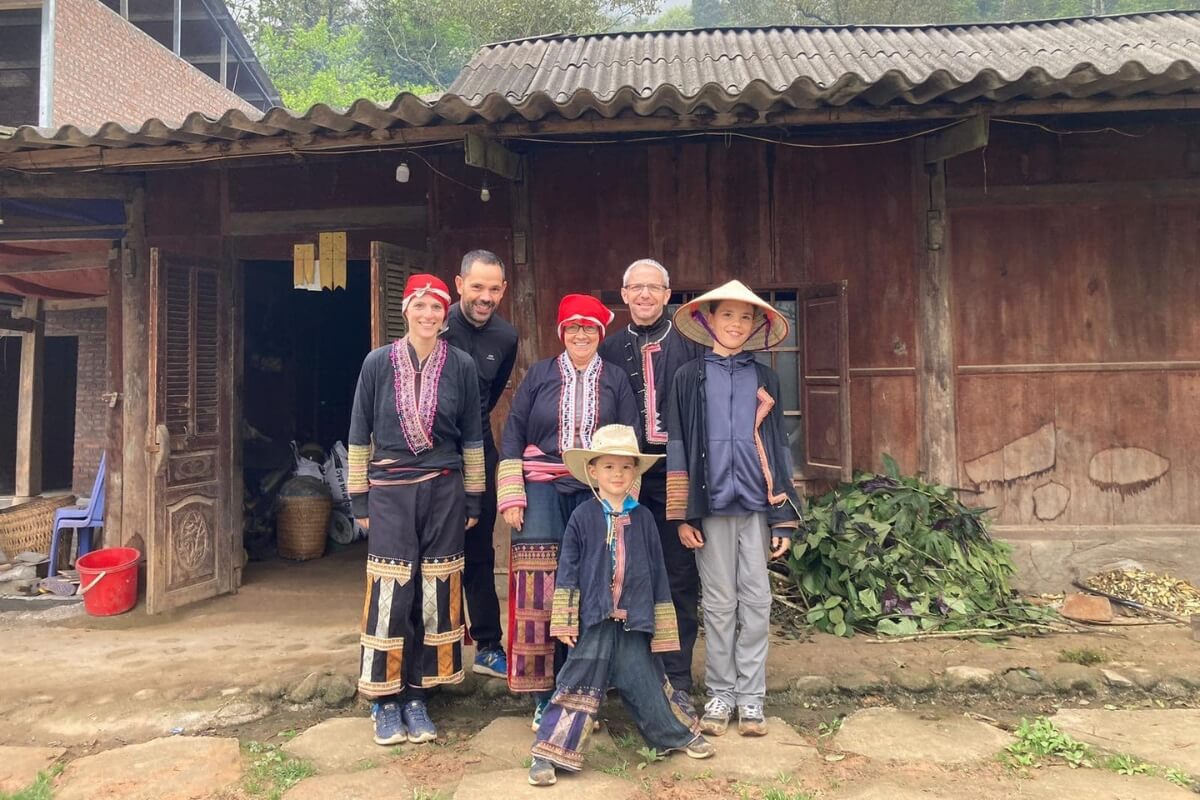
Ta Phin Vietnam is located in Ta Phin Commune in the Sapa area of Lao Cai Province, in northern Vietnam. The village lies roughly 11–12 km from Sapa town and is surrounded by mountains, forests, and agricultural landscapes.
The journey from Sapa to Ta Phin is relatively short in distance, but the mountainous terrain makes the route part of the experience. Roads wind through hills and valleys before reaching the village, where the atmosphere becomes noticeably quieter than in central Sapa.
According to the Sapa Tourism Office, Ta Phin is one of the area’s community-based tourism destinations and is particularly associated with the Red Dao people’s herbal bathing tradition.
For travellers staying in Sapa, this makes Ta Phin Village an easy destination to incorporate into a day of sightseeing. It can also be included in a longer Sapa itinerary alongside trekking, ethnic villages and the Muong Hoa Valley.
The landscape changes considerably throughout the year. During the growing season, the hills and rice fields can appear intensely green, while harvest season brings warmer golden tones to the terraces. Misty mornings and cooler mountain weather can add another dimension to the experience, particularly during the colder months.
Why Visit Ta Phin Village?
The appeal of Ta Phin Village lies in the combination of landscape, culture and local experiences.
Many visitors come to Sapa for its famous rice terraces and mountain scenery, but the region is equally important for its ethnic communities. Ta Phin is home primarily to the Red Dao, alongside Black Hmong residents, making it an interesting place to learn about the cultural diversity of northern Vietnam. Vietnam’s tourism authorities describe Ta Phin as a community tourism destination where visitors can experience traditional crafts and local cultural practices.
For international travellers, Ta Phin can feel more personal than simply visiting a viewpoint or taking photographs. The village provides opportunities to observe traditional embroidery, learn about herbal preparations, meet local residents and understand how handicrafts and agriculture remain connected to community life.
It is particularly suitable for travellers who prefer meaningful experiences over a checklist of attractions.
The Red Dao Culture of Ta Phin
One of the most important reasons to visit Ta Phin Vietnam is to learn about the Red Dao community.
The Red Dao are one of Vietnam’s ethnic minority groups and have a long history in the mountainous regions of northern Vietnam. Their culture includes distinctive clothing, embroidery, traditional knowledge of medicinal plants and community customs.
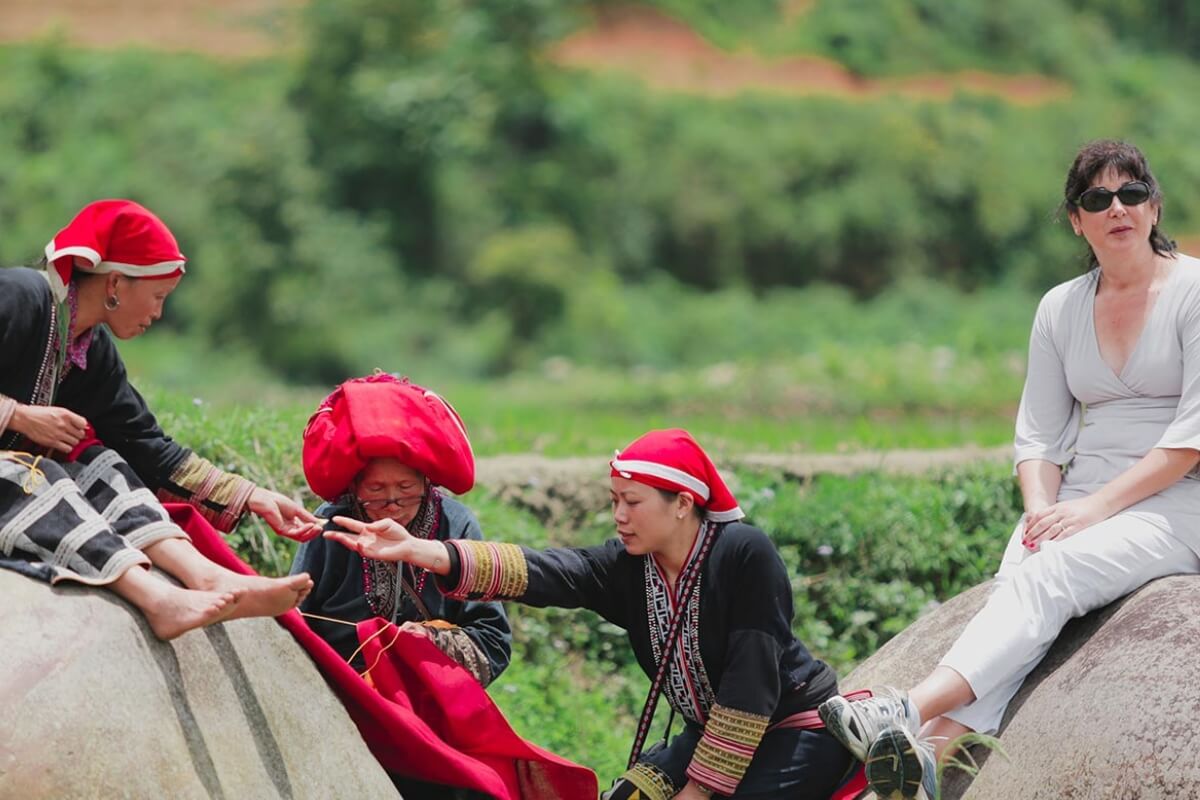
In Ta Phin, elements of this culture can still be seen in everyday life. Visitors may encounter women working with embroidery and indigo-coloured textiles, traditional houses and handicrafts made within the community.
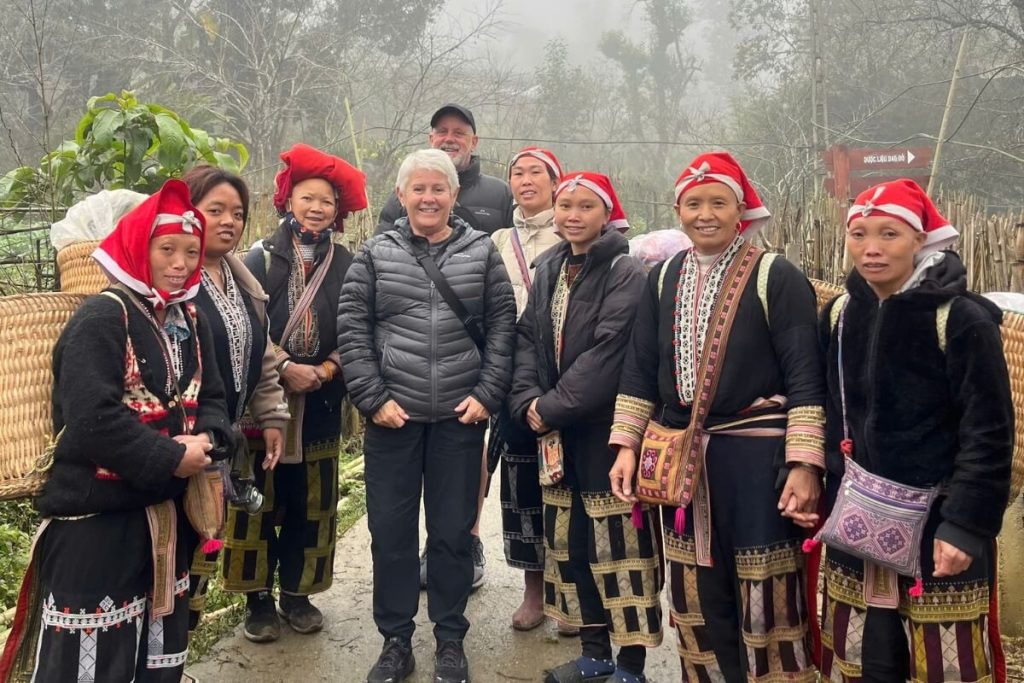
The clothing of Red Dao women is particularly distinctive. Rich embroidery, red head coverings and decorative details create a visual identity that is immediately recognisable. Rather than viewing these costumes simply as something for tourists, travellers should remember that traditional clothing can carry cultural meaning and remains connected to identity and community.
Vietnam’s rural tourism authorities have highlighted Ta Phin’s traditional crafts as part of the village’s tourism development, including brocade weaving, embroidery, flax-related crafts and the preparation of herbal bath products.
A visit to Ta Phin becomes more rewarding when travellers take time to understand these traditions rather than simply photographing them.
Traditional Brocade and Embroidery in Ta Phin
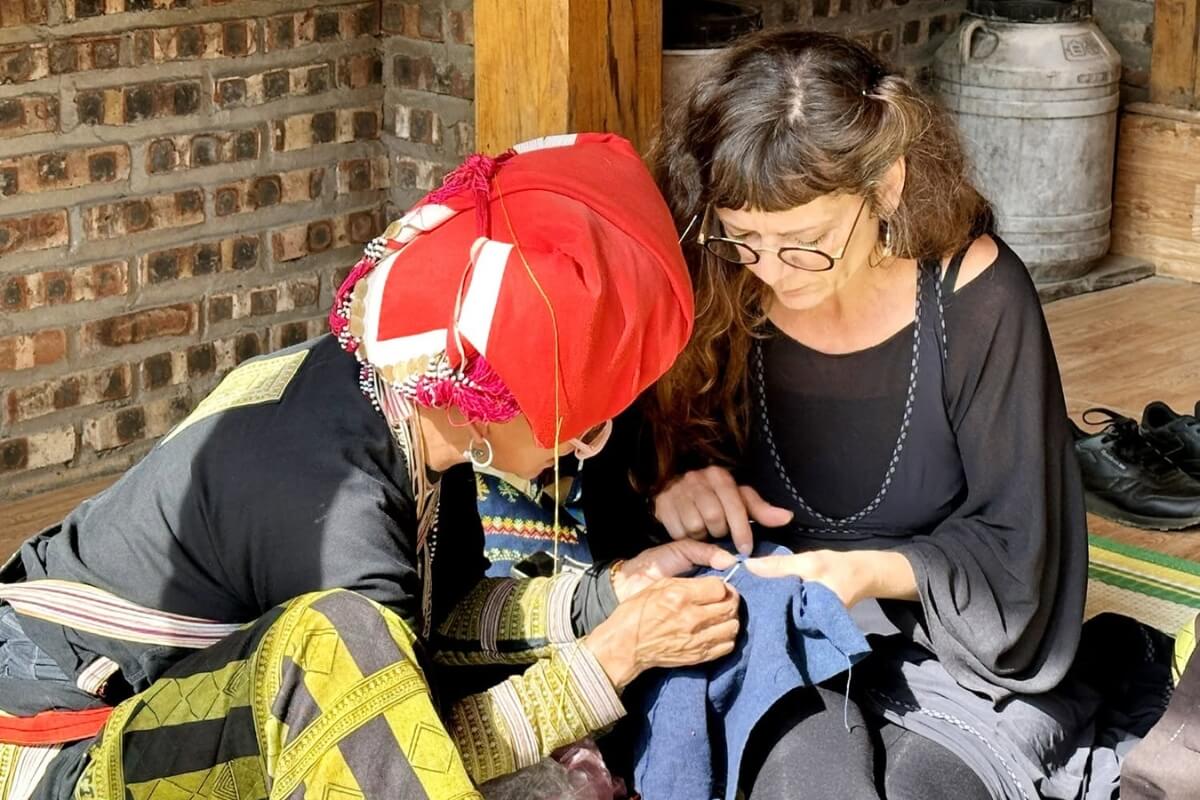
Handicrafts are an important part of the cultural experience in Ta Phin Village.
Brocade and embroidery are closely associated with the ethnic communities of northern Vietnam. In Ta Phin, visitors may see local women working with textiles and traditional patterns, sometimes creating products that are later sold to visitors.
The process is valuable to observe because it reveals the amount of time and skill involved in producing handmade textiles. Patterns are not simply decorative; they form part of a long-established visual tradition passed between generations.
For responsible travellers, purchasing a genuine locally made handicraft can also be a more meaningful souvenir than buying mass-produced products elsewhere. It provides a direct connection to the community and supports traditional skills that are increasingly difficult to maintain in a rapidly changing tourism environment.
Ta Phin’s current community tourism model specifically aims to connect tourism with traditional handicrafts so that local residents can benefit economically while cultural practices are preserved.
What to See and Do in Ta Phin Village
There is more to Ta Phin Village than the herbal bath. A visit can be structured around several complementary experiences, allowing travellers to explore the landscape while learning about local culture.
Walk Through Ta Phin Village

Walking is one of the simplest and most rewarding ways to experience Ta Phin Vietnam.
Instead of rushing between attractions, take time to follow the smaller village paths and observe the landscape. You may see terraced fields, vegetable gardens, traditional homes, livestock and local people carrying out their daily activities.
The scenery is particularly attractive when the rice fields are green or approaching harvest. Mountains rise around the village, creating the sense of being surrounded by a natural amphitheatre.
For visitors who enjoy photography, early morning and late afternoon can provide softer light and atmospheric conditions. The official Vietnam tourism portal also recommends late afternoon for enjoying views and sunset around Ta Phin.
Explore the Rice Terraces
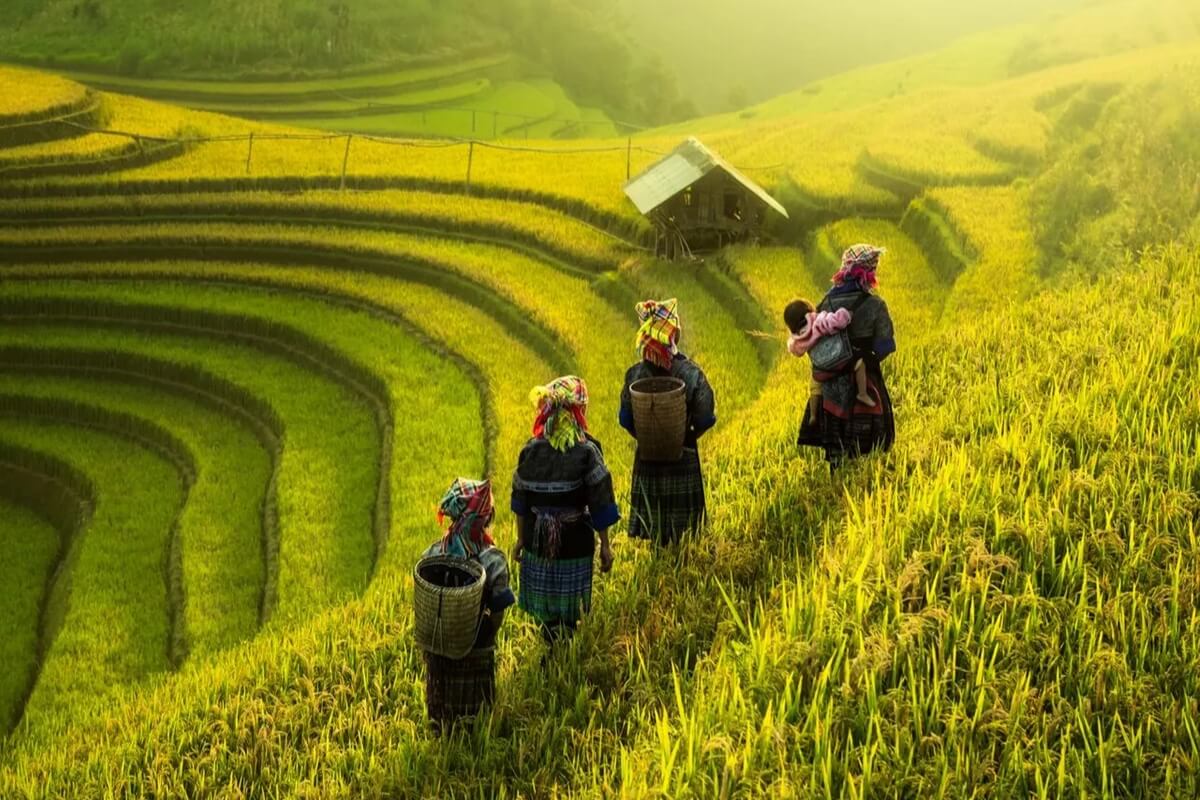
Rice terraces are one of the defining landscapes of northern Vietnam, and Ta Phin Village offers an opportunity to see them in a less urbanised setting.
The terraces are not simply scenic attractions. They represent an agricultural system developed to cultivate rice on steep mountain slopes.
Their appearance changes dramatically through the seasons. Young rice creates vibrant green terraces, while the weeks around harvest can transform the hillsides into layers of gold.
This seasonal character is one reason why returning to Ta Phin at different times of year can produce a completely different visual experience.
Visit Ta Phin Cave

Ta Phin Cave is another attraction associated with the area.
The cave is formed within the region’s limestone landscape and contains natural rock formations created over long periods. While it is not comparable in scale with Vietnam’s enormous cave systems, it offers an interesting addition to a village visit.
The cave is often included in local sightseeing routes together with Ta Phin Village, the surrounding countryside and cultural experiences.
If you enjoy combining nature with cultural exploration, visiting the cave can provide a useful change of pace from walking through the village and rice fields.
Discover the Old Ta Phin Monastery
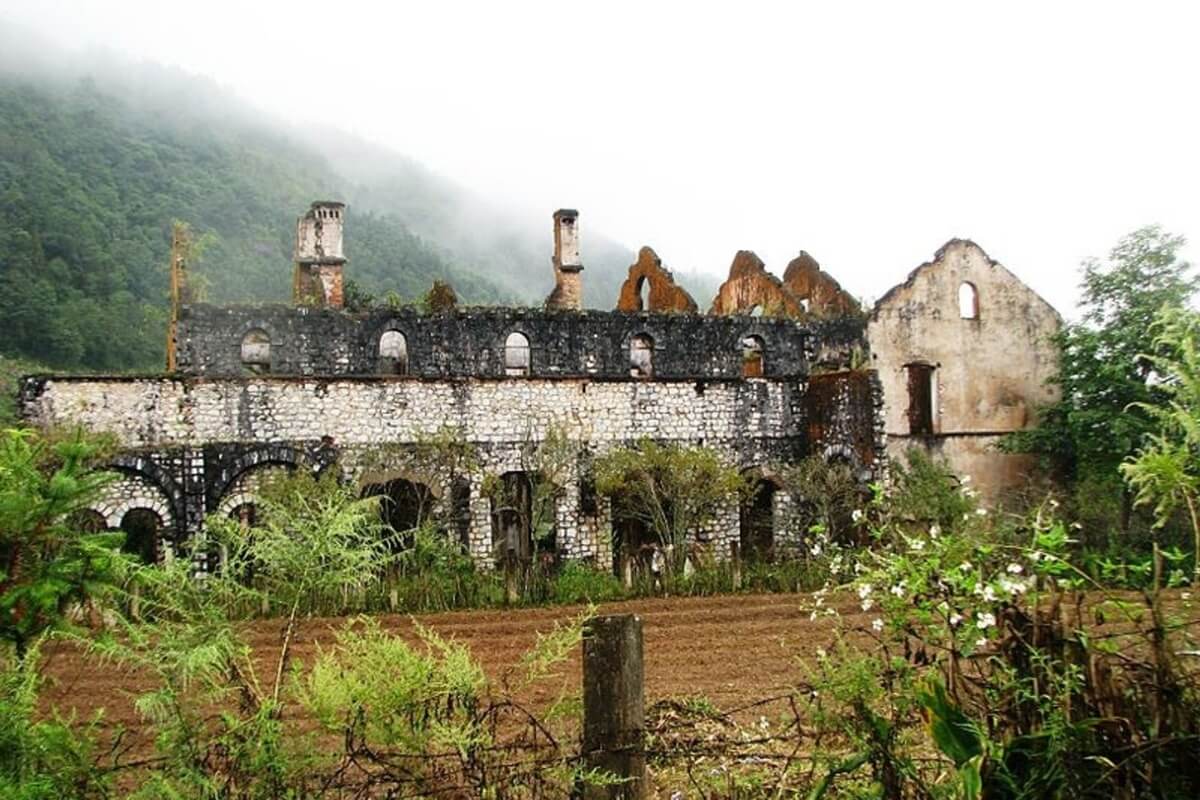
Another unusual feature of Ta Phin Vietnam is the remains of an old monastery dating from the French colonial period.
The structure is now associated with the abandoned monastery site and provides a glimpse into another layer of the region’s history.
Its weathered appearance contrasts with the surrounding mountain landscape, making it a popular stop for photography. More importantly, it reminds visitors that the history of Sapa extends beyond its ethnic communities and modern tourism development.
A well-planned Ta Phin Village excursion can therefore bring together several different aspects of northern Vietnam: ethnic culture, agriculture, architecture, history and nature.
Ta Phin Herbal Bath – A Signature Local Experience

Perhaps the best-known experience in Ta Phin Vietnam is the traditional Red Dao herbal bath.
For generations, Red Dao communities in the mountains of northern Vietnam have developed knowledge of medicinal plants collected from the surrounding forests. These plants are prepared in large quantities and boiled to create an aromatic herbal infusion used for bathing.
The tradition is deeply connected to Red Dao knowledge of nature and traditional wellness practices. Vietnam’s official tourism website notes that Red Dao families have their own herbal bath recipes, with knowledge traditionally passed down through generations, particularly among women in the family.
The ingredients can include a variety of leaves, stems, bark, and other plants. Depending on the preparation, the resulting bath water may have a deep reddish-brown colour and a strong herbal aroma.
The experience is particularly enjoyable after walking or trekking around the village. Sitting in a warm wooden tub surrounded by mountain scenery offers a relaxing contrast to the physical activity of exploring the area.
However, it is important to understand the herbal bath as a cultural wellness tradition rather than making unsupported medical claims. Traditional Red Dao bathing practices have been used for relaxation, recovery and general wellbeing, but travellers should not treat them as a substitute for professional medical treatment.
Trekking in Ta Phin Village

Ta Phin trekking is suitable for travellers who want to explore the countryside more actively.
Local tourism routes can combine Ta Phin with neighbouring villages and agricultural landscapes. Some itineraries involve several kilometres of walking across hills, terraces and village paths, while others use a vehicle for most of the journey and include shorter walks.
The Sapa Tourism Office lists a route connecting Ma Tra and Ta Phin that combines walking through hills, terraced fields and bamboo forests with cultural experiences in Ta Phin. It also offers shorter car-based sightseeing options for visitors who prefer a lighter physical itinerary.
This flexibility makes Ta Phin Village suitable for different types of travellers.
If you are reasonably fit and enjoy walking, a trekking route can reveal more of the countryside and provide opportunities to interact naturally with local communities. If you prefer comfort, a private vehicle combined with a short village walk can offer the same cultural highlights without turning the day into a demanding hike.
Best Time to Visit Ta Phin Vietnam
There is no single best month for Ta Phin Vietnam, because each season creates a different experience.
Spring
Spring brings fresh greenery and cooler mountain weather. The countryside can look especially vibrant, while flowers and new vegetation add colour to the landscape.
This is a good period for travellers who prefer pleasant walking conditions and lush scenery.
Summer
Summer is warmer and can be wetter. The rice terraces become increasingly green, creating some of the most attractive landscapes for photography.
Rain can also make mountain paths slippery, so travellers planning to trek should allow flexibility in their itinerary.
Autumn
Autumn is one of the most visually impressive periods in the Sapa region. Rice fields gradually change from green to golden as harvest approaches.
For photographers and travellers particularly interested in rice terraces, this can be an excellent time to visit Ta Phin Village.
Winter
Winter brings cooler temperatures, mist and a distinctly atmospheric character to the mountains.
The colder weather can actually make the Red Dao herbal bath particularly appealing. After exploring the village in cool mountain air, a warm herbal bath can become one of the most memorable experiences of the trip.
How to Get to Ta Phin Village from Sapa
Getting from Sapa to Ta Phin Village is relatively straightforward.
The village is around 11–12 km from Sapa town, and the journey usually takes considerably less time by road than travelling on foot. The exact journey time depends on weather, traffic, road conditions and the chosen route.
By Private Car
A private car is the most comfortable option for travellers who value convenience.
It allows you to combine Ta Phin with other attractions, stop for photographs and return to your hotel according to your own schedule.
For couples, families and travellers staying in 3-star, 4-star or 5-star accommodation, a private transfer can also make the experience considerably more relaxed.
By Motorbike
Experienced riders can travel to Ta Phin by motorbike. The mountain roads provide scenic views, but visitors should be confident riding in changing weather and on winding roads.
This option is best suited to experienced riders rather than travellers who have little experience with mountainous roads.
By Guided Tour
A guided tour is often the easiest choice for international visitors who want cultural context.
A knowledgeable local guide can explain the differences between ethnic communities, introduce traditional handicrafts, and help visitors understand the significance of the herbal bath rather than simply presenting it as a tourist activity.
A guide can also make communication easier when interacting respectfully with local residents.
How Long Do You Need in Ta Phin?
For most travellers, half a day is enough to experience the main highlights of Ta Phin Village.
A typical visit can include the journey from Sapa, a village walk, time to appreciate the rice terraces, a cultural or handicraft experience, a visit to one of the local attractions and a Red Dao herbal bath.
However, travellers who want a slower experience can stay longer.
Spending a night in or around Ta Phin allows you to experience the village at quieter times of day, when most day visitors have left. It also provides more time to interact with local hosts and explore the surrounding countryside.
The Sapa Tourism Office lists a Ta Phin sightseeing programme of approximately three hours, demonstrating that the village can comfortably fit into a half-day itinerary.
Where to Stay in Ta Phin Village
Staying overnight in Ta Phin Village is a good option for travellers who want a deeper cultural experience.
Local homestays provide a more intimate alternative to staying in central Sapa. Depending on the property, guests may be able to enjoy home-cooked meals, traditional herbal baths and village walks.
Some family-run homestays have also been involved in community tourism initiatives designed to preserve local culture and generate income for residents. For example, Red Dao Homestay describes its involvement in community-based tourism and offers accommodation alongside herbal baths, local meals and trekking experiences.
That said, accommodation standards can vary considerably. Travellers accustomed to upscale hotels should set expectations accordingly. A homestay in Ta Phin is primarily about cultural immersion and hospitality rather than resort-style facilities.
A practical approach is to stay in a comfortable hotel in Sapa and visit Ta Phin as a day trip if you prioritise comfort, or choose a carefully selected homestay if the cultural experience is your main priority.
What to Eat in Ta Phin
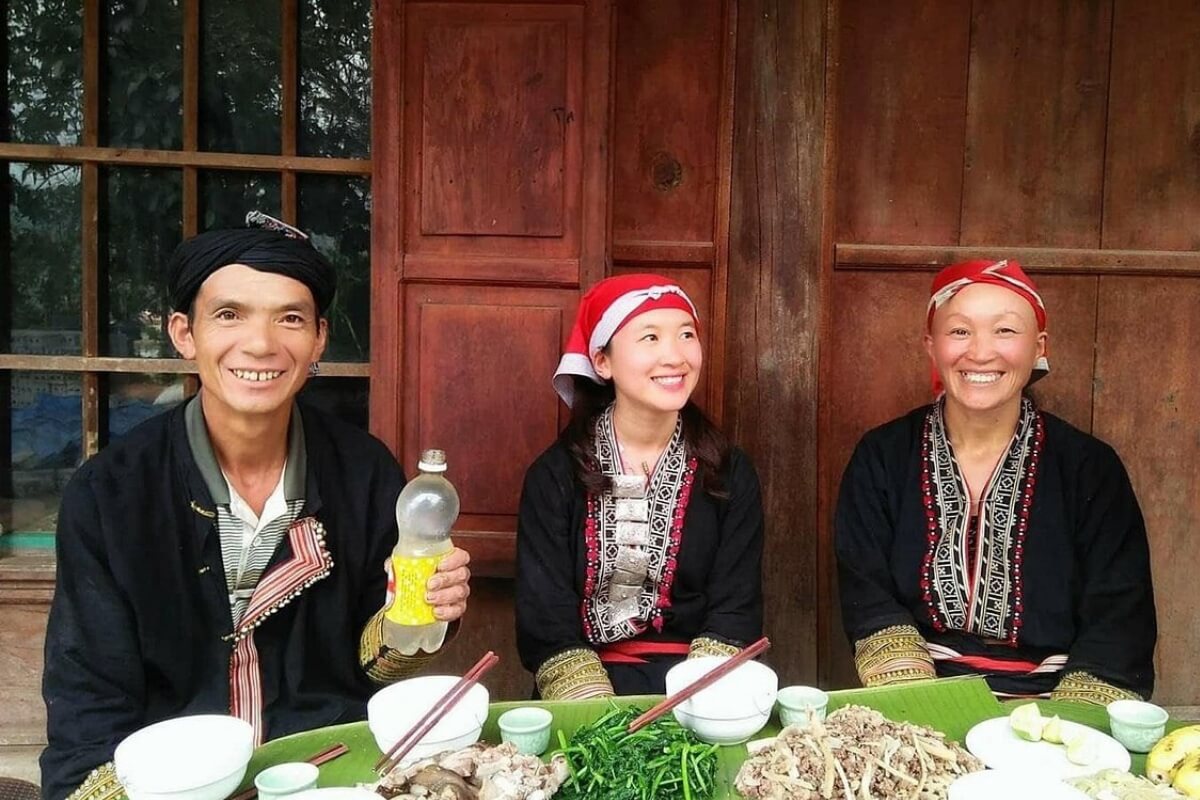
Food is another way to connect with local life in Ta Phin Vietnam. Local meals may feature ingredients commonly found in the northern mountains, including vegetables, rice, pork, chicken and locally grown herbs.
When staying with a local family, meals are often simpler and more home-style than those served in restaurants in central Sapa. That simplicity is part of the experience. Rather than expecting a long restaurant menu, travellers should approach local food as an opportunity to understand how ingredients from the surrounding environment become part of everyday meals.
If you are visiting on a day tour, combining a village visit with lunch can make the itinerary feel less rushed and give you more time to experience the destination.
Ta Phin Village vs. Other Sapa Villages
Sapa has several ethnic villages, and each offers a different experience.
Villages in the Muong Hoa Valley, such as Lao Chai and Ta Van, are particularly well known for trekking routes and expansive rice terrace landscapes.
Ta Phin Village, by comparison, stands out for its Red Dao culture, traditional herbal baths and handicraft traditions.
This does not mean one destination is better than another. The right choice depends on your interests.
If your priority is a longer trek through spectacular rice terraces, Muong Hoa Valley routes may be more suitable.
If you want to focus on Red Dao culture, herbal wellness and a quieter village environment, Ta Phin is an excellent choice.
For travellers with enough time, combining Ta Phin with other Sapa villages can provide a much more complete understanding of the region.
A Suggested Ta Phin Village Day Trip
A well-designed Ta Phin Village day trip does not need to be rushed.
Start from Sapa in the morning and travel towards Ta Phin, allowing time to enjoy the mountain scenery along the way. Once you arrive, explore the village on foot and learn about the Red Dao community and its traditional way of life.
Continue through the surrounding countryside, where the landscape changes between rice terraces, forested hills and small agricultural areas.
Depending on the season and local conditions, you can visit the old monastery, explore Ta Phin Cave or spend time learning about traditional embroidery and handicrafts.
After lunch, a traditional Red Dao herbal bath can be an ideal way to relax.
Return to Sapa in the afternoon, or extend the itinerary if you prefer a slower pace.
This style of itinerary works particularly well for travellers who want authentic experiences but do not want to spend an entire day on a strenuous trek.
Frequently Asked Questions About Ta Phin Vietnam

Where is Ta Phin Village?
Ta Phin Village is located approximately 11–12 km from central Sapa in northern Vietnam. It is surrounded by mountains, rice terraces and forests and is primarily associated with the Red Dao community.
What is Ta Phin Vietnam famous for?
Ta Phin Vietnam is best known for Red Dao culture, traditional herbal baths, embroidered handicrafts, rice terraces and peaceful mountain scenery. The village is also associated with Ta Phin Cave and the remains of an old monastery.
How far is Ta Phin from Sapa?
Ta Phin is approximately 11–12 km from Sapa town, depending on the route and the specific point used to measure the distance.
Can I visit Ta Phin as a day trip from Sapa?
Yes. Ta Phin is easy to visit as a half-day or full-day excursion from Sapa. Local tourism routes include short sightseeing programmes as well as longer walking itineraries connecting Ta Phin with nearby villages.
What is the Red Dao herbal bath?
The Red Dao herbal bath is a traditional wellness practice using a mixture of locally sourced plants prepared in hot water. Recipes vary between families, and knowledge of the practice has traditionally been passed through generations.
Is Ta Phin suitable for older travellers?
Yes. You do not need to complete a demanding trek to enjoy Ta Phin Village. Visitors can travel by vehicle, take shorter walks and choose a gentle cultural itinerary. The Sapa Tourism Office specifically lists car-based Ta Phin sightseeing routes suitable for visitors who cannot walk for long periods.
When is the best time to visit Ta Phin Village?
The best time depends on your interests. Spring and summer offer lush green landscapes, autumn is particularly attractive around the rice harvest, while winter provides cooler weather and atmospheric mountain scenery. Herbal baths can be enjoyed throughout the year.
Is Ta Phin Village better than other Sapa villages?
Not necessarily. Each village offers something different. Ta Phin is particularly suitable for travellers interested in Red Dao culture, herbal baths and traditional handicrafts, while other Sapa villages may be better known for trekking and expansive rice terrace landscapes.
Is Ta Phin Village Worth Visiting?
For travellers interested in culture, nature and authentic local experiences, Ta Phin Village is absolutely worth visiting.
It may not have the dramatic scale of Fansipan or the expansive valley views associated with some of Sapa’s most famous trekking routes. Its appeal is subtler.
You can walk through a mountain village, see rice terraces shaped by generations of farming, observe traditional embroidery, learn about Red Dao herbal knowledge and relax in a traditional herbal bath.
For first-time visitors to Sapa, Ta Phin is particularly valuable because it shows a different side of the destination. Instead of experiencing Sapa only through viewpoints and popular