Hanoi Travel Blog - Hanoi Introduction & Information
Mai Chau Vietnam Travel Guide 2026 – Best Things to Do & Time to Visit
10
Aug
Aug
If you are looking for a side of Vietnam that feels peaceful, authentic, and far removed from the pace of Hanoi, Mai Chau Vietnam is one of the most rewarding places to visit in northern Vietnam. Set among green mountains, rice fields, traditional stilt houses, and small ethnic villages, Mai Chau Valley offers a slower and more intimate experience of the country.
Mai Chau Vietnam is also remarkably accessible for international travellers. The journey takes roughly three hours by road, making Mai Chau suitable for a relaxed day trip from Hanoi as well as a more immersive two- or three-day countryside escape. For travellers planning a broader northern Vietnam itinerary, combining Mai Chau with carefully selected Hanoi tours is an excellent way to experience both the capital’s cultural highlights and the peaceful countryside beyond the city.
Where Is Mai Chau Vietnam?
Mai Chau Vietnam lies in the mountainous northwest of the country, approximately 140 kilometres west of Hanoi. The destination is centred around a broad green valley surrounded by forested mountains, with villages and rice fields spread across the valley floor.
Historically, Mai Chau was part of Hoa Binh Province. Following Vietnam’s 2025 provincial administrative reorganisation, the former Hoa Binh area became part of the new Phu Tho Province. For travellers and tourism searches, however, the destination continues to be widely known as Mai Chau, Mai Chau Valley, or Mai Chau, Vietnam.
The geographical setting is one of the reasons Mai Chau feels so different from Hanoi. Instead of busy streets, high-rise buildings, and constant traffic, visitors arrive in a valley framed by limestone mountains and agricultural land.
The first panoramic view of the valley is often one of the most memorable moments of a Mai Chau Vietnam journey. As the road descends from the mountains, rice fields, villages, and traditional houses gradually appear below, creating a landscape that feels distinctly rural and peaceful.
Why Visit Mai Chau Vietnam?
There are many reasons to include Mai Chau Vietnam in a northern Vietnam itinerary, but three stand out: nature, culture, and the opportunity to slow down.
The valley is particularly attractive to travellers who prefer meaningful experiences over simply checking famous landmarks off a list. A morning spent cycling through rice fields can be more memorable than a crowded sightseeing stop because it gives you the opportunity to observe how people actually live and work in the countryside.
Mai Chau is also home to a strong Thai cultural heritage. The Thai community represents the largest ethnic group in the area, and traditional architecture, weaving, cuisine, music, dance, and village life remain important parts of the local identity. Vietnam’s national tourism authorities describe Mai Chau as a notable model of community-based tourism, where local culture is closely connected with tourism development.
For international visitors, this creates a valuable cultural experience. Instead of simply looking at traditional buildings in a museum, travellers can stay in a stilt house, eat with local families, see traditional textiles, and explore the villages where these traditions continue to form part of everyday life.
The Landscape of Mai Chau Valley
The scenery is one of the strongest reasons travellers fall in love with Mai Chau Vietnam.
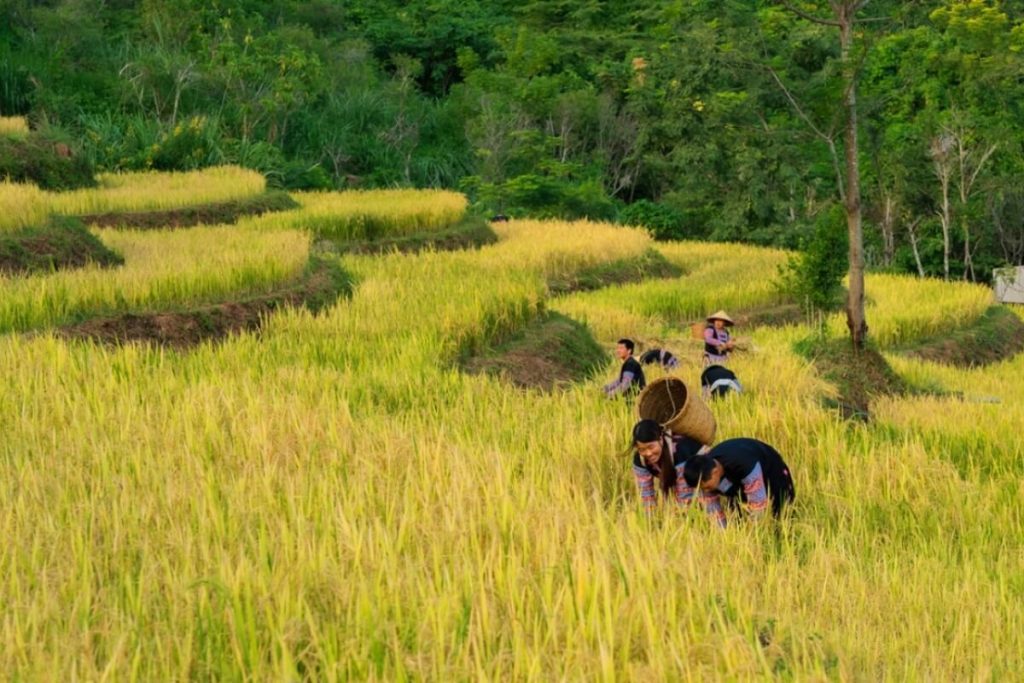
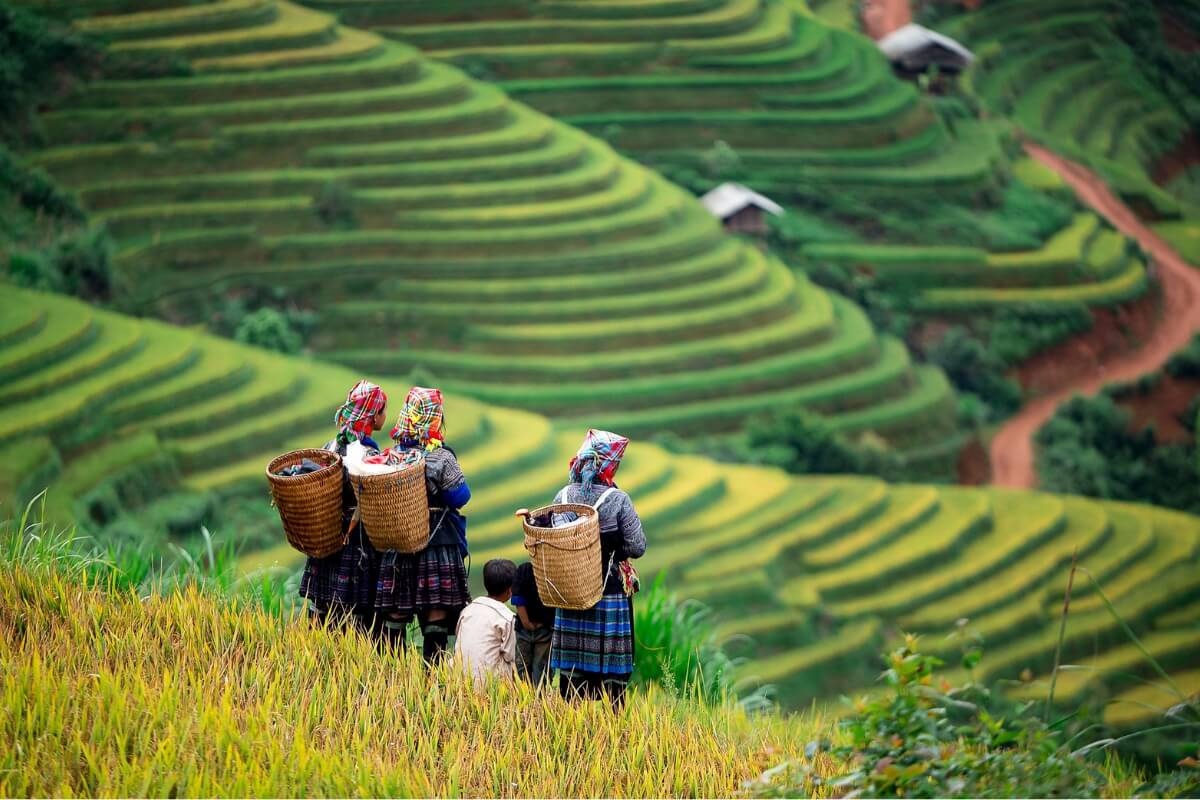
The valley is surrounded by mountains and covered with a patchwork of rice paddies, gardens, streams, and small settlements. Depending on the season, the fields may appear bright green, mirror-like after irrigation, or golden during harvest.
This seasonal variation gives Mai Chau Valley a different personality throughout the year. Spring brings flowers and fresh vegetation, summer creates an intensely green countryside, while autumn is particularly attractive when rice fields turn golden. Vietnam’s tourism authorities highlight March to May and September to November as especially good periods to visit, with October often considered one of the most attractive months because of the rice harvest.
The landscape is best experienced slowly. Rather than rushing from one attraction to another, travellers can spend several hours walking or cycling through the valley, stopping for photographs, coffee, local food, or conversations with residents.
For photographers, early morning and late afternoon are especially rewarding. The softer light brings out the contours of the mountains and creates beautiful reflections across the rice fields.
Top Things To Do & Attractions in Mai Chau
Lac Village – The Cultural Heart of Mai Chau
When researching things to do in Mai Chau, Lac Village is usually one of the first places that appears, and for good reason.
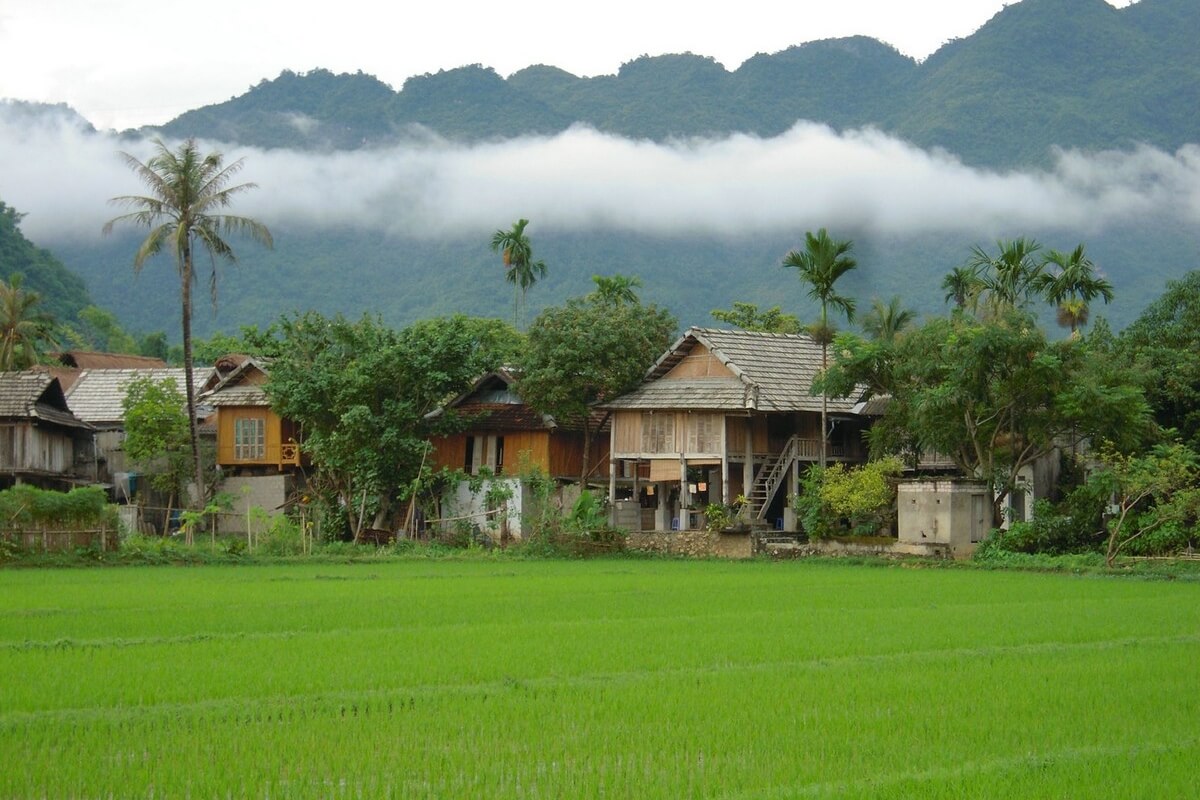
Known locally as Ban Lac, the village has a history of more than 700 years and is closely associated with the White Thai community. Traditional stilt houses, rice fields, handicrafts, and community-based tourism have made Lac Village one of the best-known cultural destinations in Mai Chau Vietnam.
Walking through Lac Village is less about visiting a single monument and more about experiencing the atmosphere of a living community. Traditional houses line the village paths, while local families offer accommodation, food, handicrafts, and cultural experiences.
The village is also a good place to discover locally produced textiles. Thai artisans have long been associated with weaving, and visitors can find colourful fabrics, bags, scarves, clothing, and other handmade products.
A respectful approach to shopping is important. Instead of treating handicrafts simply as souvenirs, travellers can see them as an opportunity to support local artisans and community-based tourism.
For visitors staying overnight, Lac Village can also provide an opportunity to experience traditional Thai hospitality after the day-trippers have left.
Pom Coong Village and Rural Life
Another village worth exploring in Mai Chau Vietnam is Pom Coong.
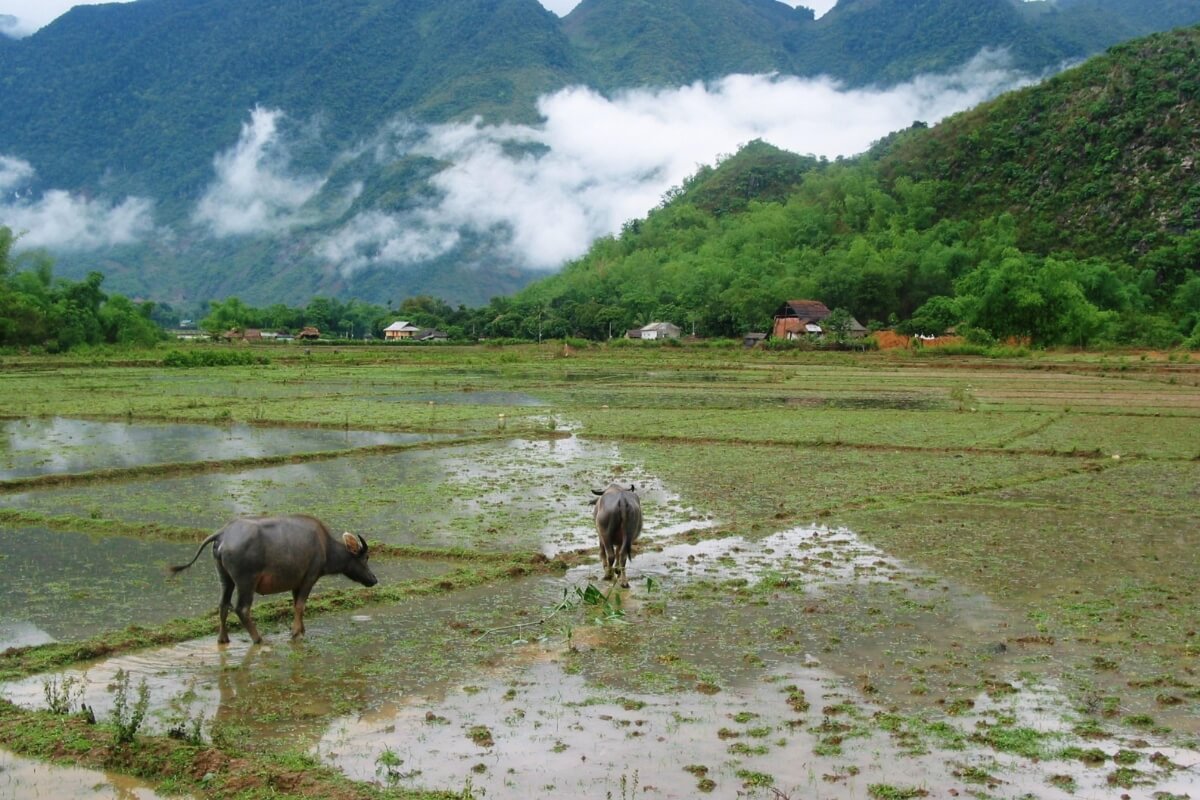
Like Lac Village, Pom Coong is associated with Thai culture and traditional stilt-house accommodation. The atmosphere is generally peaceful, with rice fields, gardens, village paths, and mountains creating a distinctly rural setting.
One of the best ways to experience Pom Coong is simply to walk without a strict itinerary. Rural Vietnam is often most interesting when you pay attention to small details: farmers working in the fields, children returning from school, chickens wandering around traditional houses, or families preparing meals.
This slower style of travel is particularly suitable for mature international travellers who want to understand Vietnam beyond the major tourist attractions.
Cycling Through Mai Chau Valley
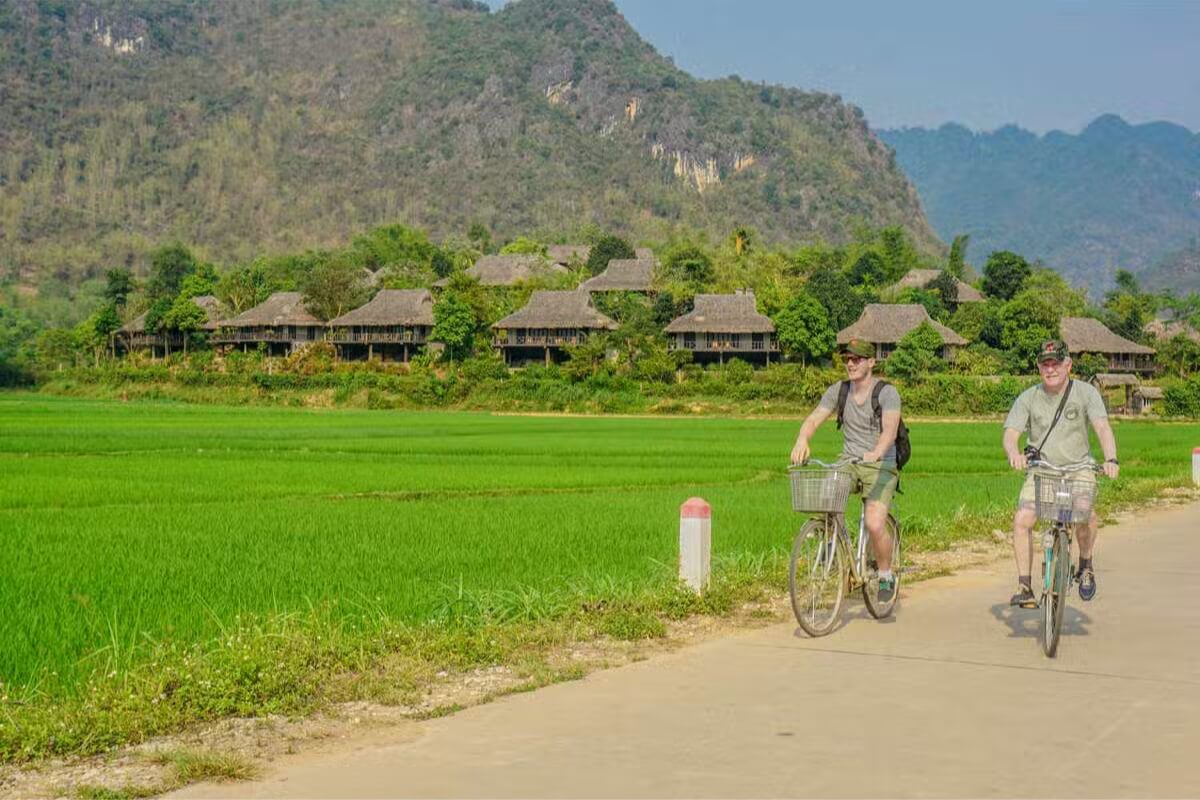
Cycling is arguably one of the best ways to experience Mai Chau Valley.
The relatively quiet roads and narrow paths connecting villages make cycling an enjoyable alternative to travelling everywhere by car. Vietnam Tourism specifically recommends bicycles for exploring the valley because small paths connect villages, farms, and rice fields.
A typical cycling experience does not need to be physically demanding. Travellers can choose a gentle route through Lac Village, Pom Coong, surrounding rice fields, and nearby communities.
The appeal is not speed but immersion. You can stop whenever you want to photograph the landscape, visit a local craft shop, have Vietnamese coffee, or simply enjoy the mountain scenery.
For travellers who are not comfortable cycling independently, guided cycling tours are a better option. A knowledgeable local guide can explain the agricultural landscape, introduce local communities, and recommend quieter routes away from the busiest tourist areas.
Trekking and Nature Experiences Around Mai Chau
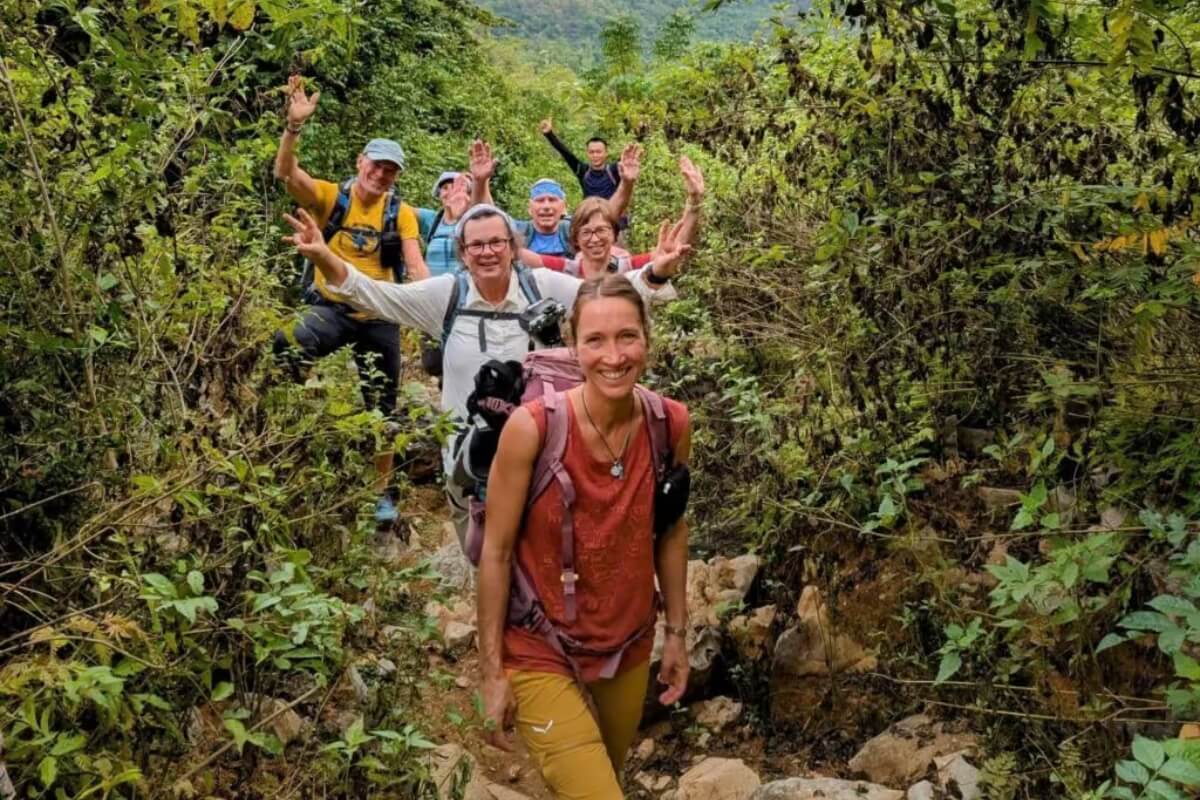
While cycling is ideal for exploring the valley floor, trekking provides another perspective on Mai Chau Vietnam.
The surrounding mountains and rural communities offer opportunities for walks ranging from gentle countryside strolls to more demanding hikes. Depending on your itinerary and fitness level, a local guide can help select a suitable route.
One advantage of trekking with a local guide is cultural interpretation. A mountain trail is much more meaningful when you understand the villages, farming practices, plants, and traditions encountered along the way.
Travellers who want a longer nature experience can also consider combining Mai Chau Vietnam with nearby Pu Luong Nature Reserve. Vietnam Tourism recommends Pu Luong for trekking and outdoor experiences, making the two destinations a natural combination for travellers interested in northern Vietnam’s rural landscapes.
Thung Khe Pass – The Scenic Gateway to Mai Chau
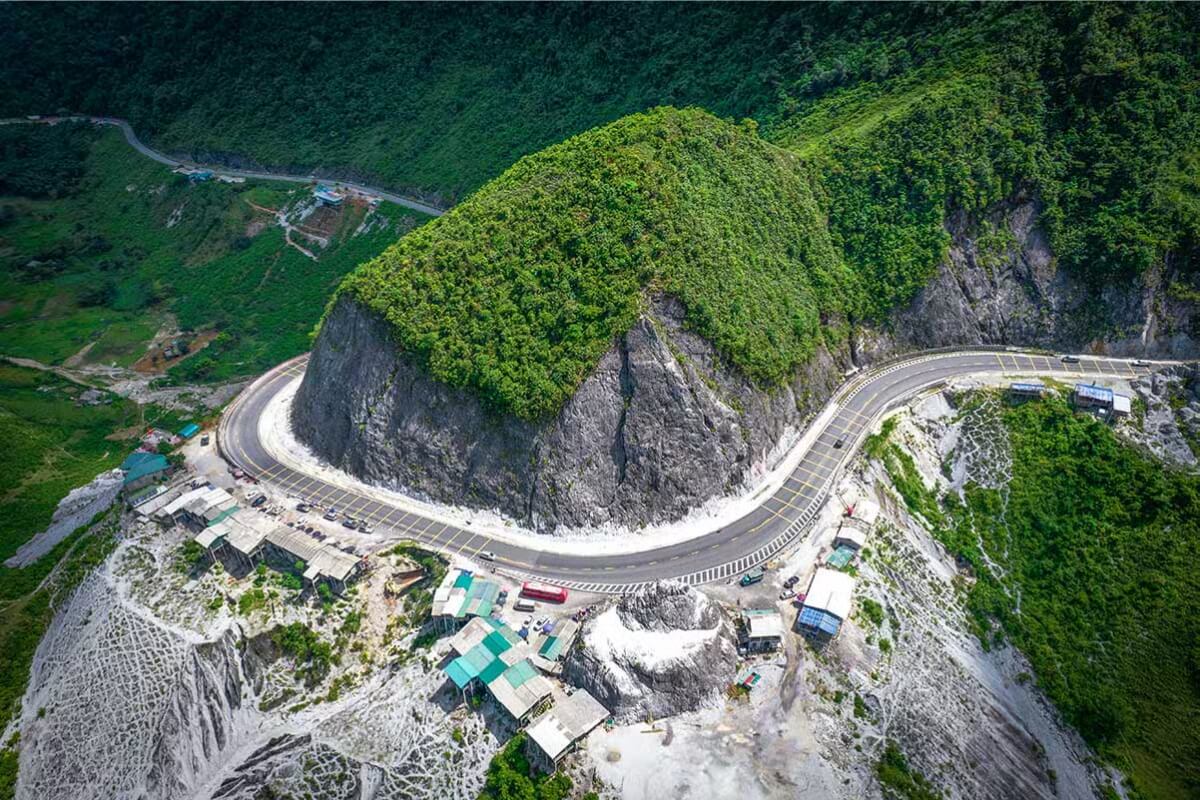
For travellers arriving from Hanoi, Thung Khe Pass is an important scenic point on the journey to Mai Chau Vietnam.
The mountain road offers expansive views over the surrounding landscape, and the descent toward Mai Chau provides the first dramatic glimpse of the valley.
For this reason, the journey itself becomes part of the experience rather than simply transportation between Hanoi and Mai Chau.
Travelling in the morning is particularly appealing because the light is generally softer and there is more time to enjoy the scenery before arriving in the valley. Vietnam Tourism also recommends the morning journey for travellers who want to appreciate the views around Thung Khe Mountain Pass.
If you are travelling with a private car and driver, Thung Khe Pass can be incorporated naturally into the route, allowing time for photographs and a short break.
Best Mai Chau Food You Should Try
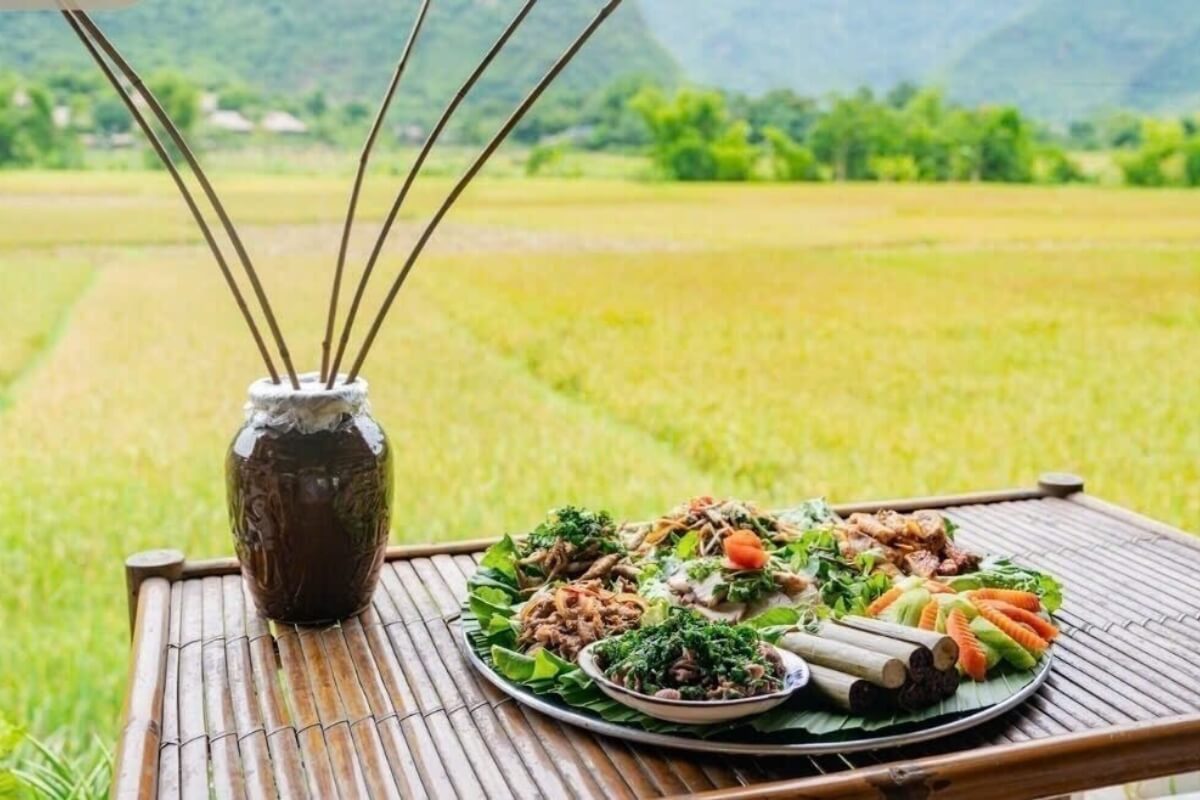
Food is an important part of the experience in Mai Chau Vietnam, particularly when staying in a local homestay or community-based accommodation.
Traditional Thai-influenced cuisine is generally based on fresh local ingredients, rice, vegetables, herbs, bamboo shoots, river fish, and grilled meats.
One of the best-known local specialities is com lam, sticky rice cooked inside bamboo. The bamboo gives the rice a distinctive aroma while creating a simple but memorable dish that is closely associated with the mountainous regions of northern Vietnam.
Other regional dishes may include grilled stream fish, grilled meats, hill chicken, bamboo shoots, local vegetables, and different preparations of sticky rice. Vietnam’s tourism authorities also highlight com lam, grilled fish, hill chicken, and mountain-grown sticky rice among the foods visitors can experience in Mai Chau.
For international travellers, the most rewarding dining experience is often not at a conventional restaurant but at a well-managed local homestay or boutique lodge where meals are prepared using regional ingredients.
A shared dinner can also become a cultural experience. Food provides a natural way to learn about local agricultural traditions, family life, and the importance of rice in Vietnamese rural culture.
Staying in a Mai Chau Homestay
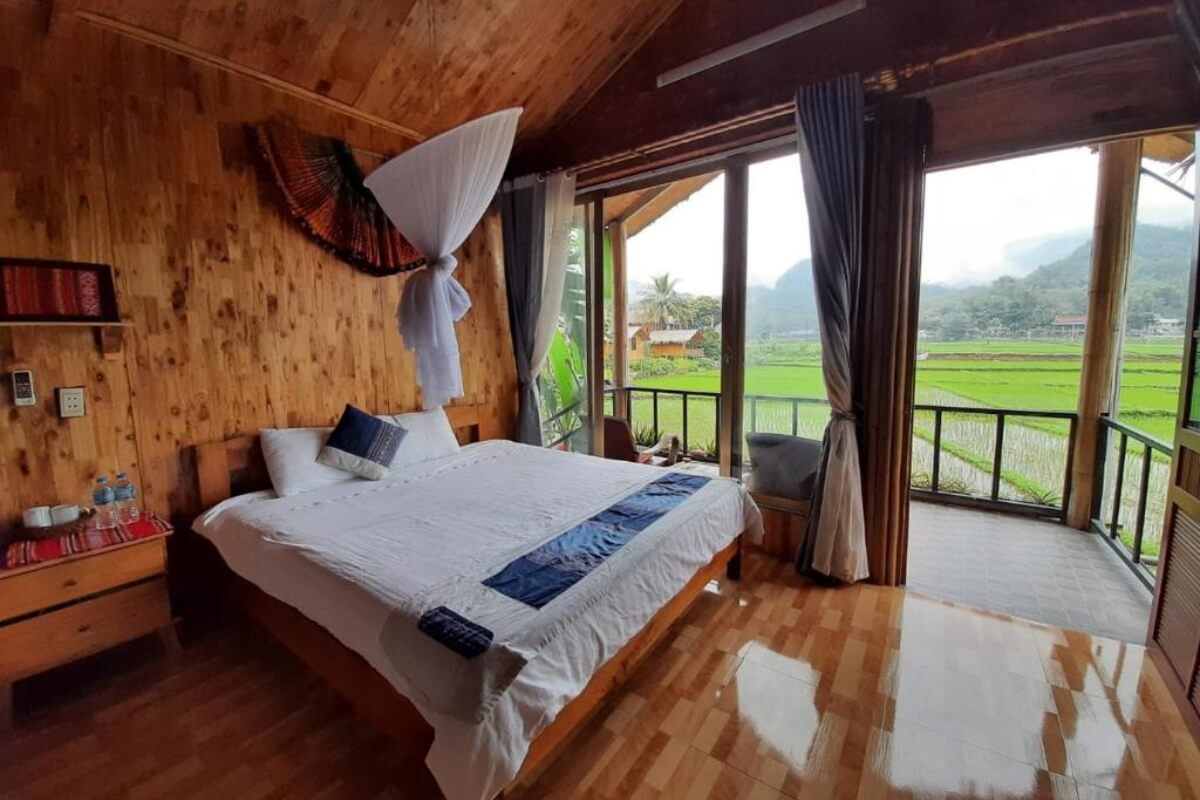
A Mai Chau homestay offers one of the easiest ways to experience local culture.
Traditional Thai houses are typically elevated on stilts, with living spaces above the ground and open areas that allow air to circulate. Many have been adapted to accommodate travellers while retaining elements of traditional architecture.
Not every homestay has the same level of comfort, so accommodation should be chosen carefully. Budget travellers may prefer simple community accommodation, while international visitors seeking more privacy and comfort can choose boutique lodges or higher-end properties around the valley.
Vietnam Tourism notes that Mai Chau offers a range of accommodation, from traditional homestays to boutique farm stays and four-star hotels.
For travellers accustomed to 3-star accommodation and above, a good strategy is to choose a property with private bathrooms, quality bedding, air conditioning or appropriate seasonal facilities, and strong guest reviews. This allows you to experience the cultural character of Mai Chau Vietnam without compromising too much on comfort.
When Is the Best Time to Visit?
The best time to visit Mai Chau depends partly on what you want to see.
March to May is one of the most pleasant periods, with fresh green landscapes and comfortable conditions for cycling and walking. September to November is another excellent period, particularly for travellers interested in rice harvest scenery.
October is especially attractive because the rice fields can take on a rich golden colour during harvest season.
June to August can be hot, humid, and wetter. Heavy rainfall can occasionally affect rural roads, so travellers planning outdoor activities should allow some flexibility.
Winter can bring cooler and mistier conditions. While the landscape may be less vibrant than during harvest, the atmosphere can be atmospheric and peaceful.
In short, if your priority is comfortable outdoor exploration and beautiful rice fields, March to May and September to November are particularly strong choices.
How to Get to Mai Chau from Hanoi
One of the biggest advantages of Mai Chau Vietnam is its accessibility from Hanoi.
The distance is approximately 140 kilometres, and the journey generally takes around three hours by road, depending on traffic, weather, and stops.
International travellers have several options.
A private car is the most comfortable choice for travellers who value flexibility. You can leave Hanoi at a convenient time, stop at scenic viewpoints, and travel directly to your hotel or homestay.
Shuttle vans are another convenient option and can work well for independent travellers who do not require a private vehicle.
Public buses are available from Hanoi, although they may be less comfortable and less convenient for visitors travelling with luggage.
Motorbike travel is possible for experienced riders, but the mountain roads require appropriate confidence and caution.
For a premium Mai Chau Vietnam experience, a private transfer with an experienced driver is generally the most convenient option, especially when combining Mai Chau with destinations such as Ninh Binh, Pu Luong, or Hanoi.
Can I Visit Mai Chau on a Day Trip from Hanoi?
Yes. A Mai Chau day trip from Hanoi is possible and is a popular choice for travellers with limited time.
However, the experience is very different from staying overnight.
A day trip allows you to see the valley, visit villages, cycle through the countryside, enjoy a local lunch, and experience the main cultural highlights before returning to Hanoi.
If your itinerary allows it, spending one night in Mai Chau Vietnam is more rewarding. Staying overnight gives you time to experience the valley after the day-trippers leave, enjoy a slower dinner, wake up among the rice fields, and cycle or walk before the main daytime activity begins.
A Suggested 2-Day Mai Chau Vietnam Itinerary
A well-planned two-day journey can begin in Hanoi in the morning.
On the first day, travel west toward Mai Chau with a stop around Thung Khe Pass for panoramic views. Continue into the valley, check into your accommodation, and enjoy lunch featuring local dishes.
The afternoon can be spent cycling or walking through Lac Village and Pom Coong, with time to visit local craft workshops and photograph the rice fields.
In the evening, enjoy a traditional dinner and, where available, a cultural performance featuring Thai music and dance. Keng loong, a traditional Thai performance involving a wooden mortar and rhythmic beating, remains part of cultural events and community tourism in Mai Chau.
On the second morning, wake early for a peaceful walk or cycle through the valley. This is one of the best times to appreciate Mai Chau without crowds.
After breakfast, travellers can choose between additional village exploration, a short trek, or a nature excursion. After lunch, return to Hanoi, arriving in the late afternoon or evening depending on the route.
This itinerary works particularly well for travellers who want to combine cultural discovery with nature rather than spending the entire trip on strenuous trekking.
Mai Chau vs. Sapa: Which Should You Choose?
Travellers often compare Mai Chau Vietnam with Sapa because both offer mountain scenery and opportunities to experience ethnic cultures.
The two destinations, however, provide quite different experiences.
Sapa is higher, more mountainous, and generally more focused on dramatic landscapes and trekking. It is a strong choice for travellers who want challenging hikes, mountain viewpoints, and access to the Fansipan area.
Mai Chau is gentler and more intimate. The valley is easier to explore by bicycle, and the experience is strongly centred on village life, rice fields, traditional stilt houses, and community tourism.
If you want a peaceful countryside escape from Hanoi, Mai Chau Vietnam is often the better choice. If your priority is high-altitude trekking and dramatic mountain scenery, Sapa may be more suitable.
For travellers with enough time, there is no need to choose only one. They can be combined into a longer northern Vietnam itinerary.
Practical Travel Tips for Mai Chau Vietnam
A little preparation can make your Mai Chau Vietnam experience significantly more comfortable.
Wear comfortable shoes because many of the best experiences involve walking or cycling on uneven village paths. Bring sun protection during the warmer months and a light jacket during cooler periods.
If you are travelling during the rainy season, a lightweight rain jacket is useful. Mountain weather can change quickly, so flexibility is preferable to an overly rigid itinerary.
Cash is also useful for small purchases in rural areas, particularly when buying handicrafts or local snacks.
Most importantly, avoid trying to see everything in a few hours. The charm of Mai Chau lies in its pace. Give yourself time to sit, observe, walk, cycle, eat, and talk.
Frequently Asked Questions About Mai Chau Vietnam
Is Mai Chau Vietnam Worth Visiting?
For travellers who want to experience a quieter and more cultural side of northern Vietnam, Mai Chau Vietnam is absolutely worth visiting.
It combines accessibility from Hanoi with mountain scenery, rice fields, traditional villages, Thai culture, local cuisine, cycling, trekking, and community-based tourism.
Its greatest strength is not a single spectacular attraction. Instead, it is the combination of small experiences: waking up beside a rice field, cycling between stilt houses, sharing a local meal, seeing traditional textiles being made, and watching the mountains turn golden at sunset.
That is what makes Mai Chau Valley particularly memorable.
For first-time visitors to northern Vietnam, Mai Chau is also a practical way to experience rural life without committing to a long journey into the far northwest. A carefully planned day trip works well, while an overnight stay provides a much deeper experience.
How far is Mai Chau from Hanoi?
Mai Chau is approximately 140 kilometres from Hanoi. The journey by road usually takes around three hours, although actual travel time depends on traffic, road conditions, weather, and stops along the way.
What is the best time to visit Mai Chau?
The best periods are generally March to May and September to November. October is particularly attractive because rice harvest can transform the valley into a landscape of golden fields.
How many days do you need in Mai Chau?
One day is enough for a quick introduction, but one night or two days is recommended for a more relaxed experience. An overnight stay allows travellers to explore the villages at a slower pace and experience the valley in the early morning and evening.
What are the best things to do in Mai Chau?
The most rewarding activities include cycling through the rice fields, exploring Lac Village and Pom Coong Village, staying in a traditional-style homestay, tasting local food, shopping for Thai textiles, walking through the countryside, and joining cultural experiences. Longer trips can include trekking and excursions toward Pu Luong or Hoa Binh Lake.
Is Mai Chau suitable for older travellers?
Yes. Mai Chau Vietnam can be an excellent destination for mature travellers because many experiences do not require strenuous physical activity. Gentle cycling, village walks, scenic drives, cultural experiences, and comfortable boutique accommodation can all be incorporated into a well-planned itinerary.
Is Mai Chau better as a day trip or overnight stay?
A day trip is suitable when time is limited, but an overnight stay is recommended for travellers who want to experience the destination more deeply. Staying overnight gives you more time for cycling, walking, local dining, and experiencing the quieter atmosphere of the valley after daytime visitors have departed.
Can Mai Chau be combined with Pu Luong?
Yes. Mai Chau and Pu Luong complement each other particularly well. Mai Chau is strong for cultural experiences, village life, and relaxed cycling, while Pu Luong is especially appealing for trekking and nature. Together they create a rewarding rural northern Vietnam itinerary.
Experience the Authentic Side of Mai Chau Vietnam with Hanoi Local Tour
At Hanoi Local Tour, we believe the best Mai Chau travel experiences should go beyond sightseeing. A thoughtfully designed journey can combine comfortable transportation, knowledgeable local guides, authentic cultural encounters, scenic cycling or walking, and carefully selected accommodation to create a more personal experience of the Mai Chau Valley.
If you are planning a northern Vietnam itinerary from Hanoi and want to discover a destination that feels authentic without being difficult to reach, Mai Chau Vietnam deserves a place on your journey.
Come for the rice fields and mountain scenery. Stay for the culture, food, hospitality, and slower rhythm of village life.